
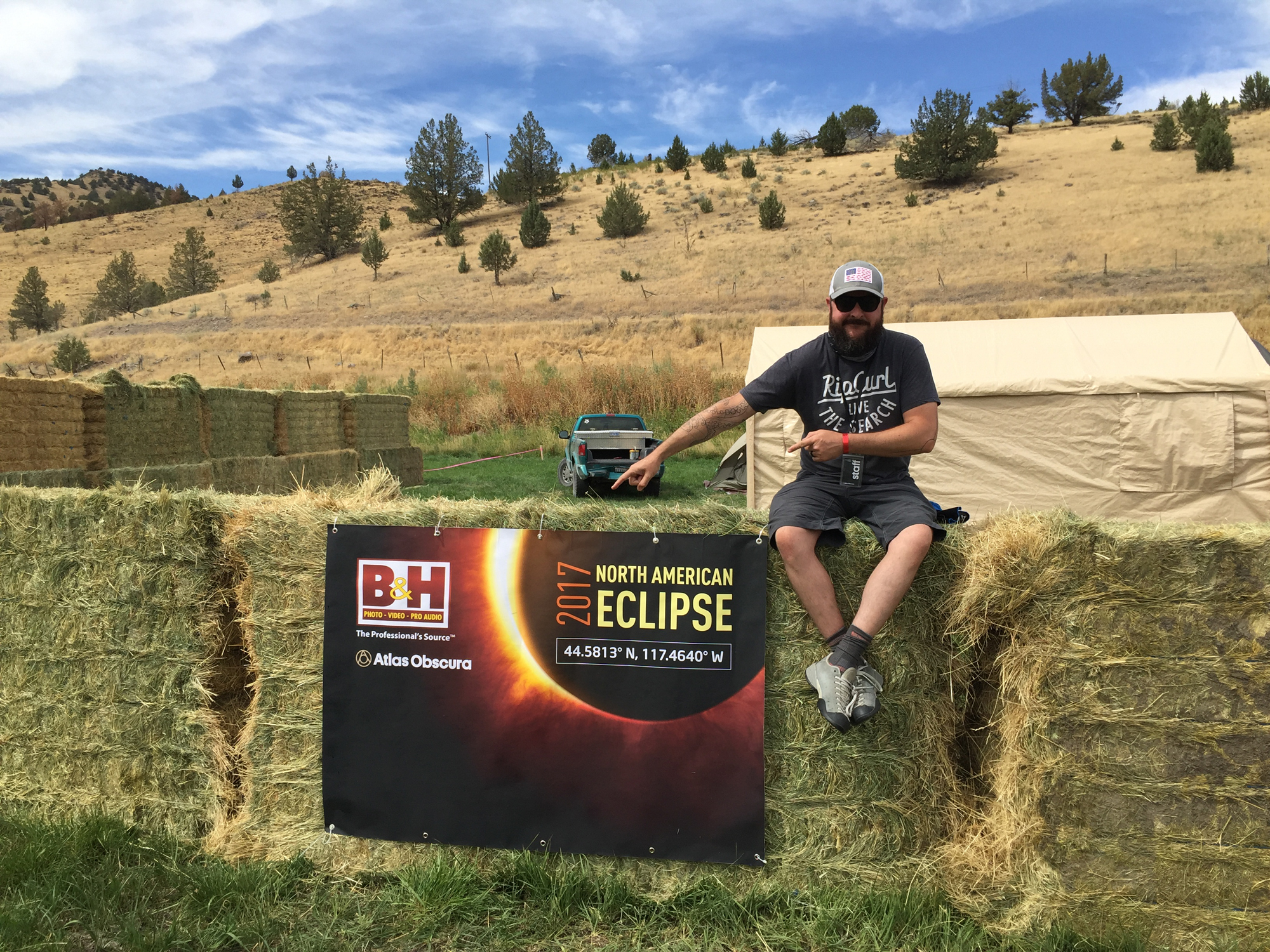
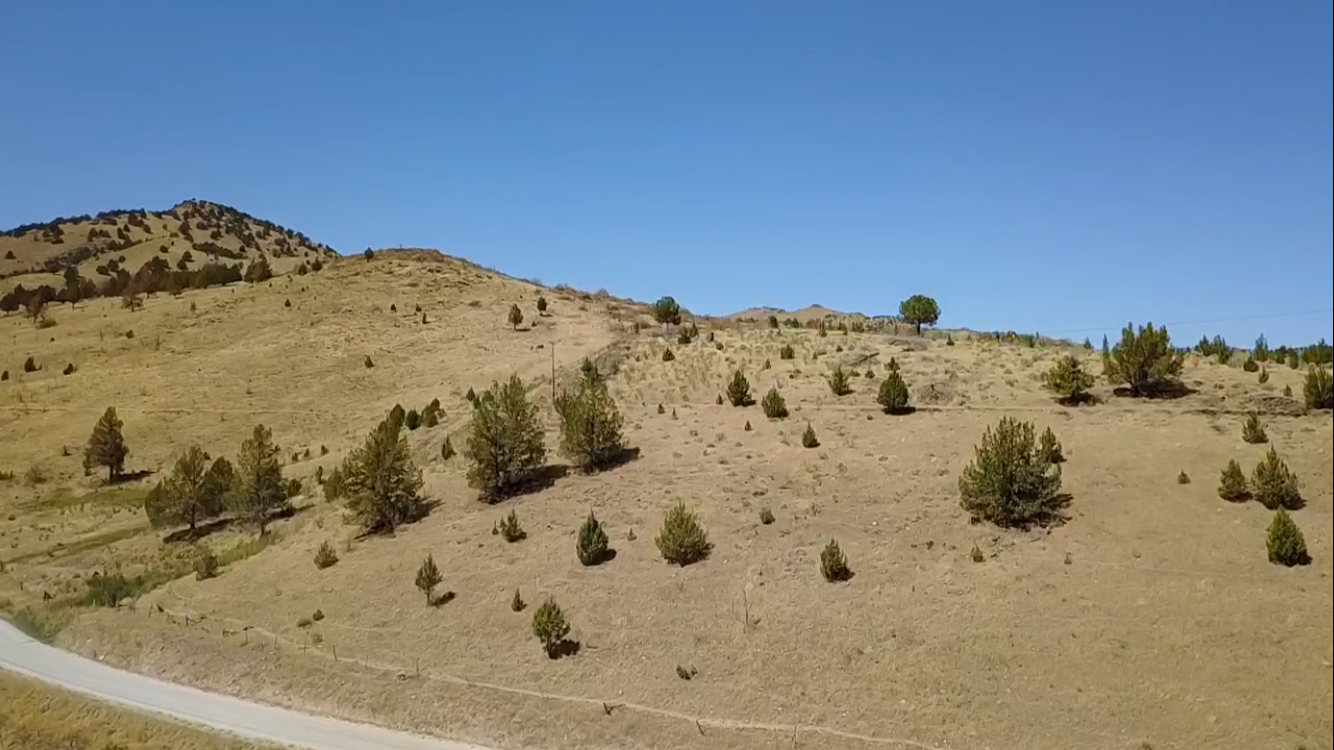
My car companion for the last two hours, and B&H Social Media Manager, Michael Hollender handles our SUV deftly around a bend in the dry dirt road. As we clear the hill, we see the recently vacated cow pasture below us. Nestled in the desert valley is a colony of dedicated workers frantically erecting stages, scaffolds, and tents of all sizes. The gentle whir of a generator can be heard across the field.
Above photograph © Michael Hollender

These are the very early stages of what would become the Atlas Obscura Eastern Oregon Total Eclipse Festival—or “Nerdstock,” as I like to call it. All day and most of the night on Friday, August 18, and Saturday, the field is transformed into a festival that would culminate in experiencing, for many there, a once-in-a-lifetime event: a total solar eclipse.
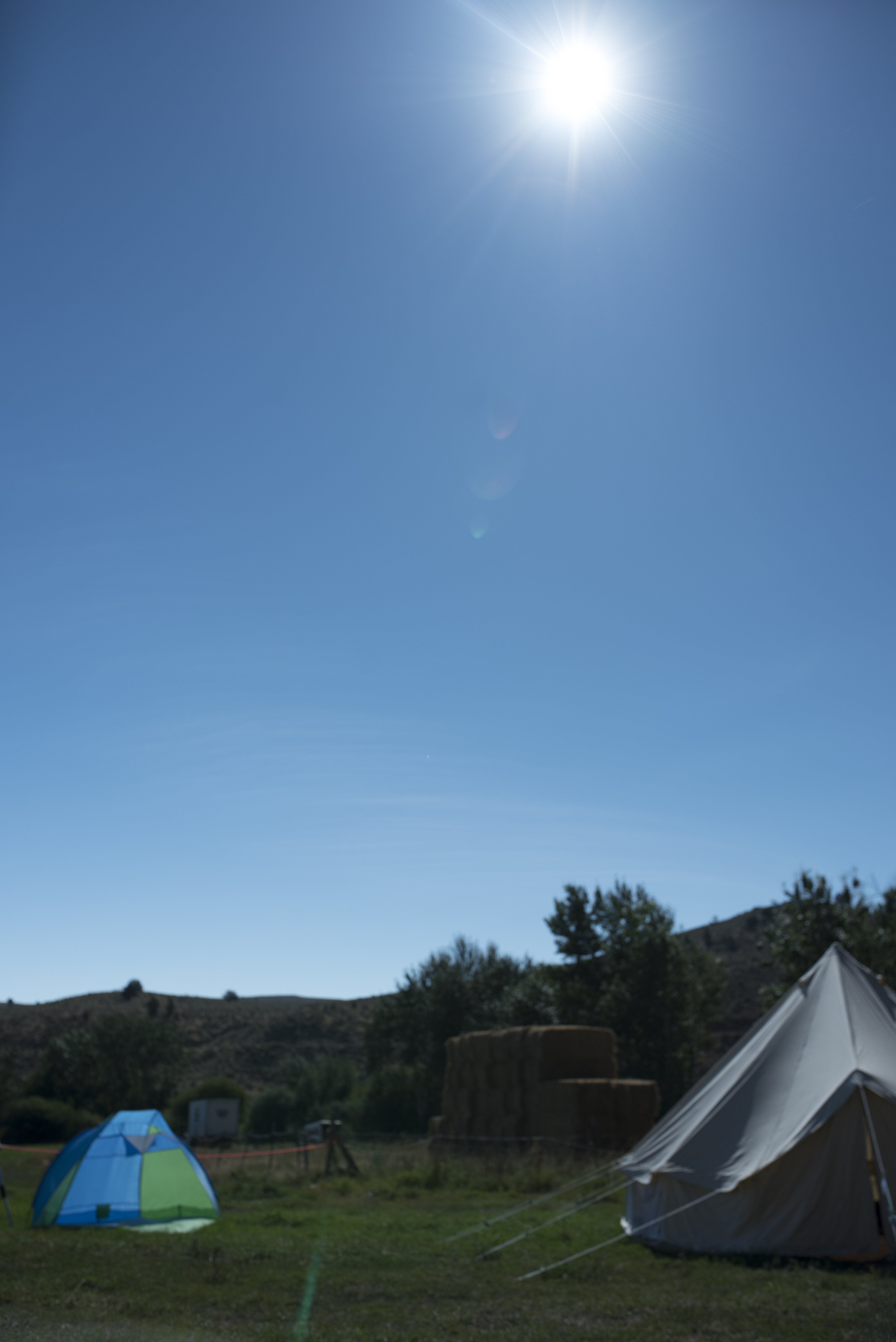
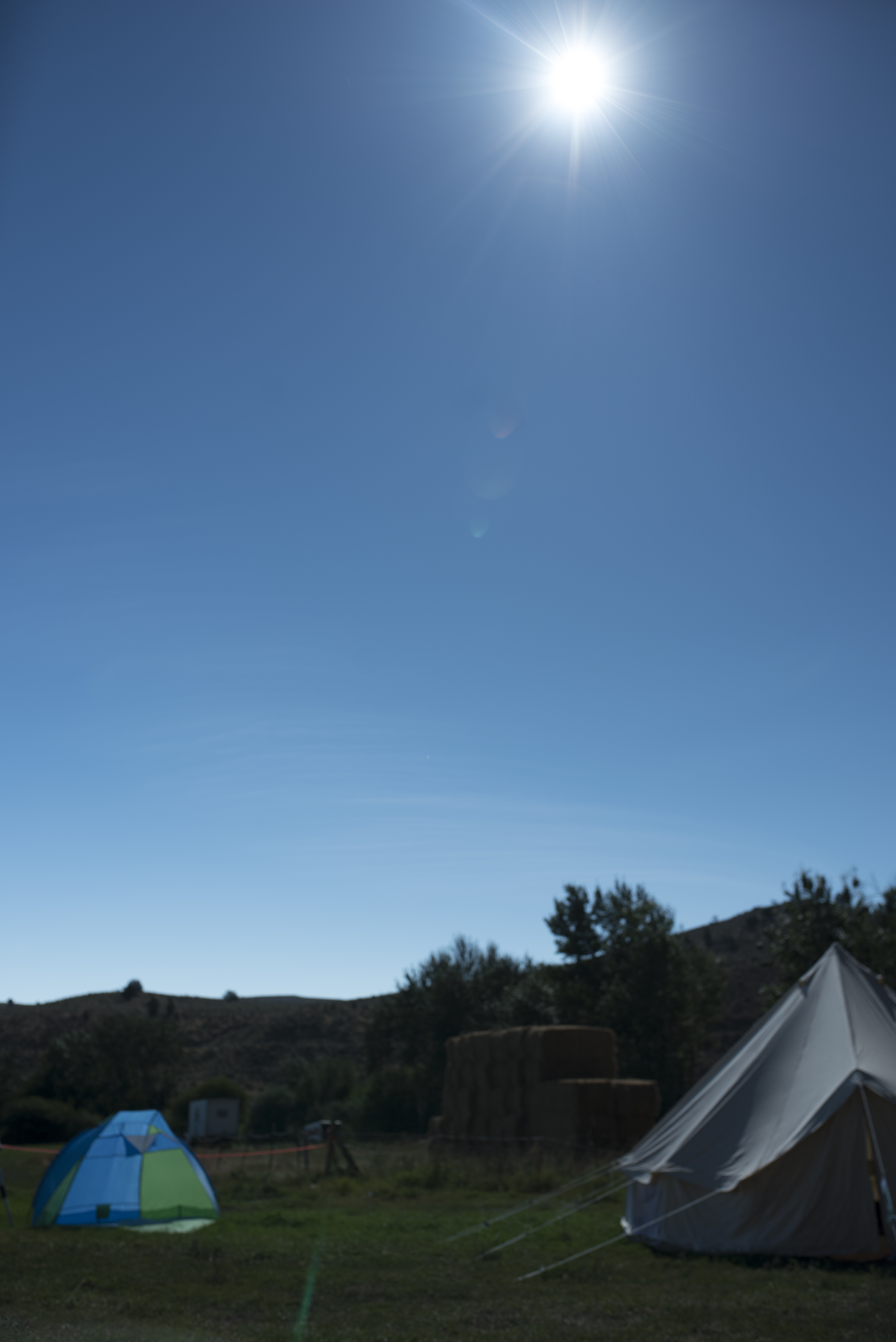


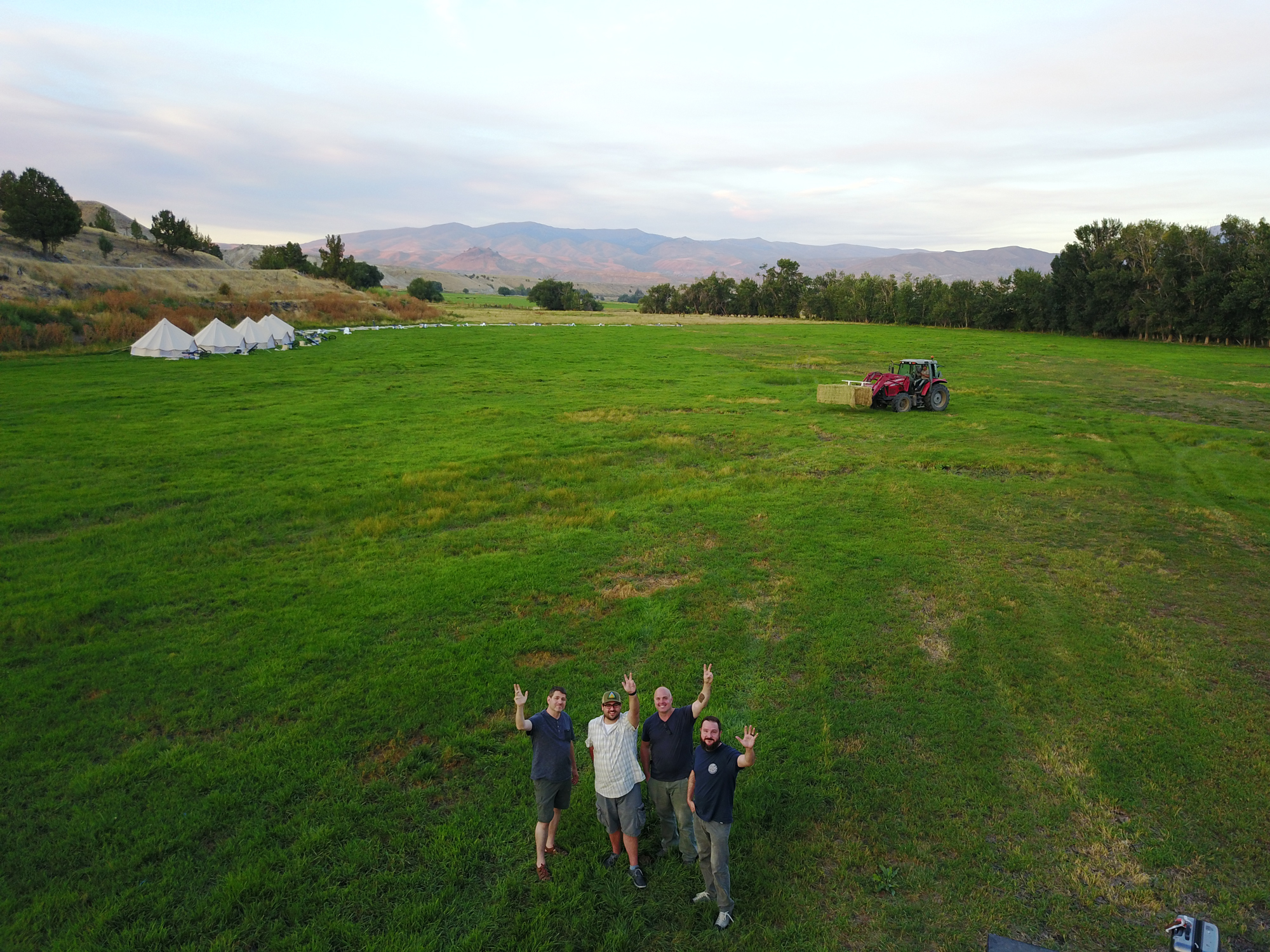
As an avid amateur astronomer for more than 20 years, the fact that we’d essentially be camping in a field filled with cow patties and swarms of ravenous mosquitoes, without running water or cell and Internet access, felt like a small sacrifice to be a part of such a momentous event. Now that we’re all back home and showered, I spoke to the B&H road crew members who went with me to that field in Durkee, Oregon (plus a couple of Atlas Obscura people who helped put the whole thing together), to get their perspectives on the event.
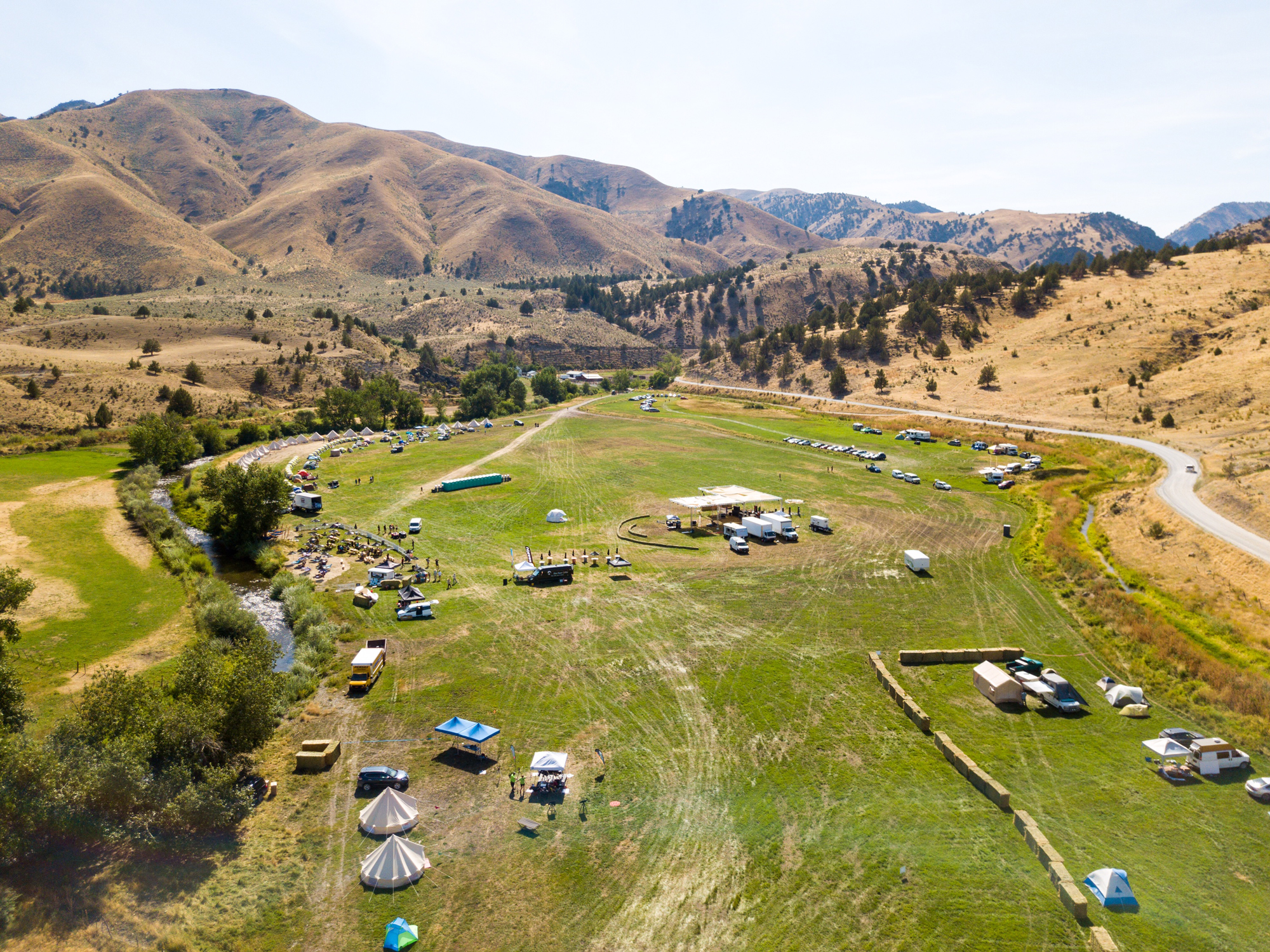
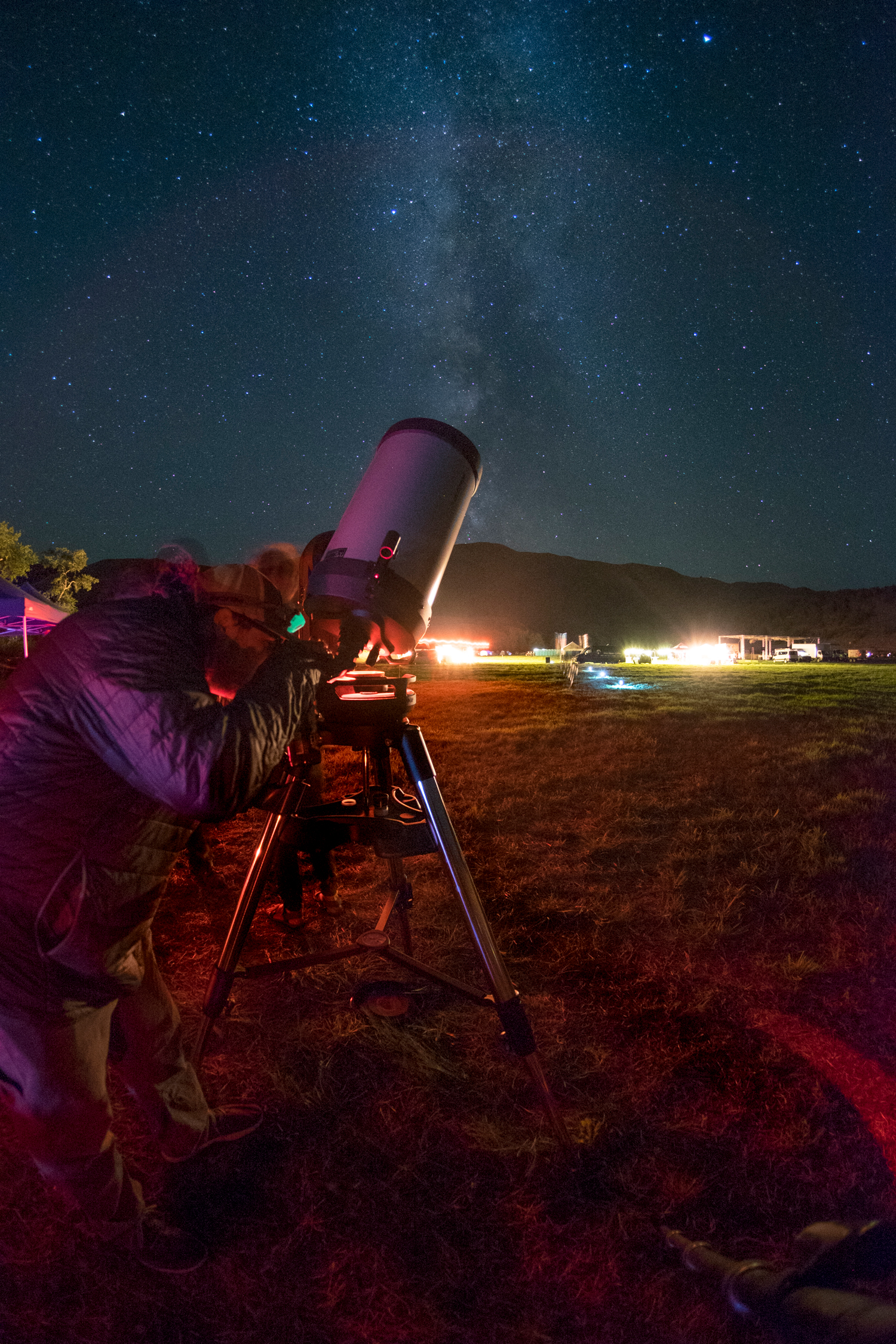
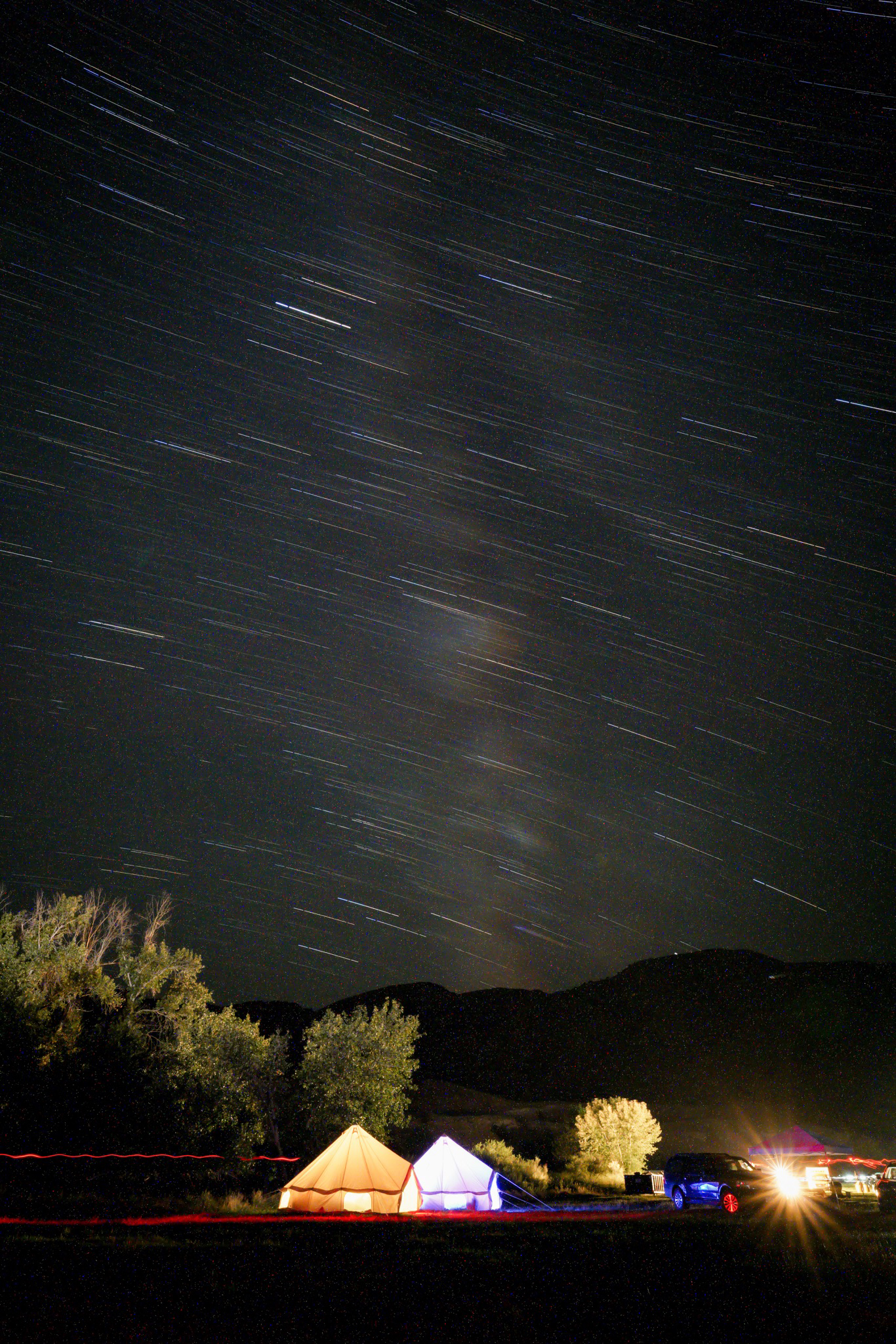
On the location, Josh Foer, co-founder of Atlas Obscura, had this to say: “We believed we’d picked a location that would give us the best chance of having clear skies for viewing the eclipse during the day. I, for one, didn't realize what an amazing spot we'd picked for star-gazing at night. I don't think I've ever seen so many stars so clearly. Of course, it helped that we had some pretty great telescopes and guides from B&H.”

John Faison (Senior Pro-User Outdoor Marketing Manager here at B&H, and our intrepid leader on this trip), a pro photographer and avid outdoor enthusiast, took the lack of technology and amenities in stride while he worked the crowds like a Kennedy on the campaign trail. John remembers the people most: “I found the culture of the attendees to be my greatest memory. I made many great connections and felt very relaxed, inspired, and deeply connected to almost everyone I was able to speak with. The stunning views and epic depth of the star gazing did, in fact, help solidify the experience, as well!”
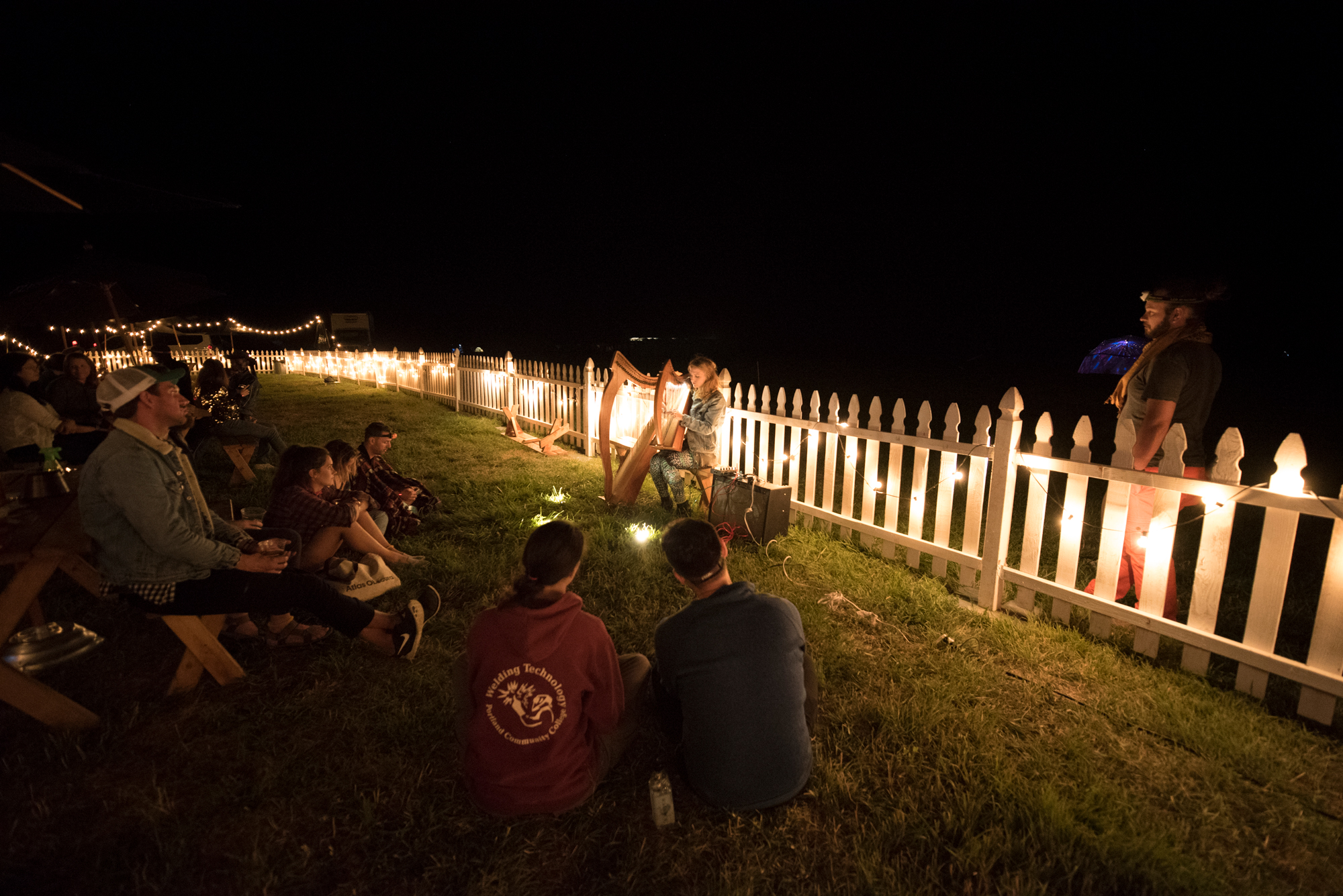
Atlas Obscura’s Director of Events, Megan Roberts, who organized the festival, had similar thoughts to share: “For me, the highlight of the weekend (aside from actually viewing the eclipse) was having such an intimate and inspiring shared experience with attendees, presenters, and performers representing a variety of backgrounds and interests. Watching prominent scientists and musicians engage in in-depth conversations about astrophysics and the possibility of parallel universes, and witnessing how we all came together to create a community built around the awe and wonder of space, the cosmos, and the natural world we live in—that was really special, and something I'll remember for the rest of my life.”
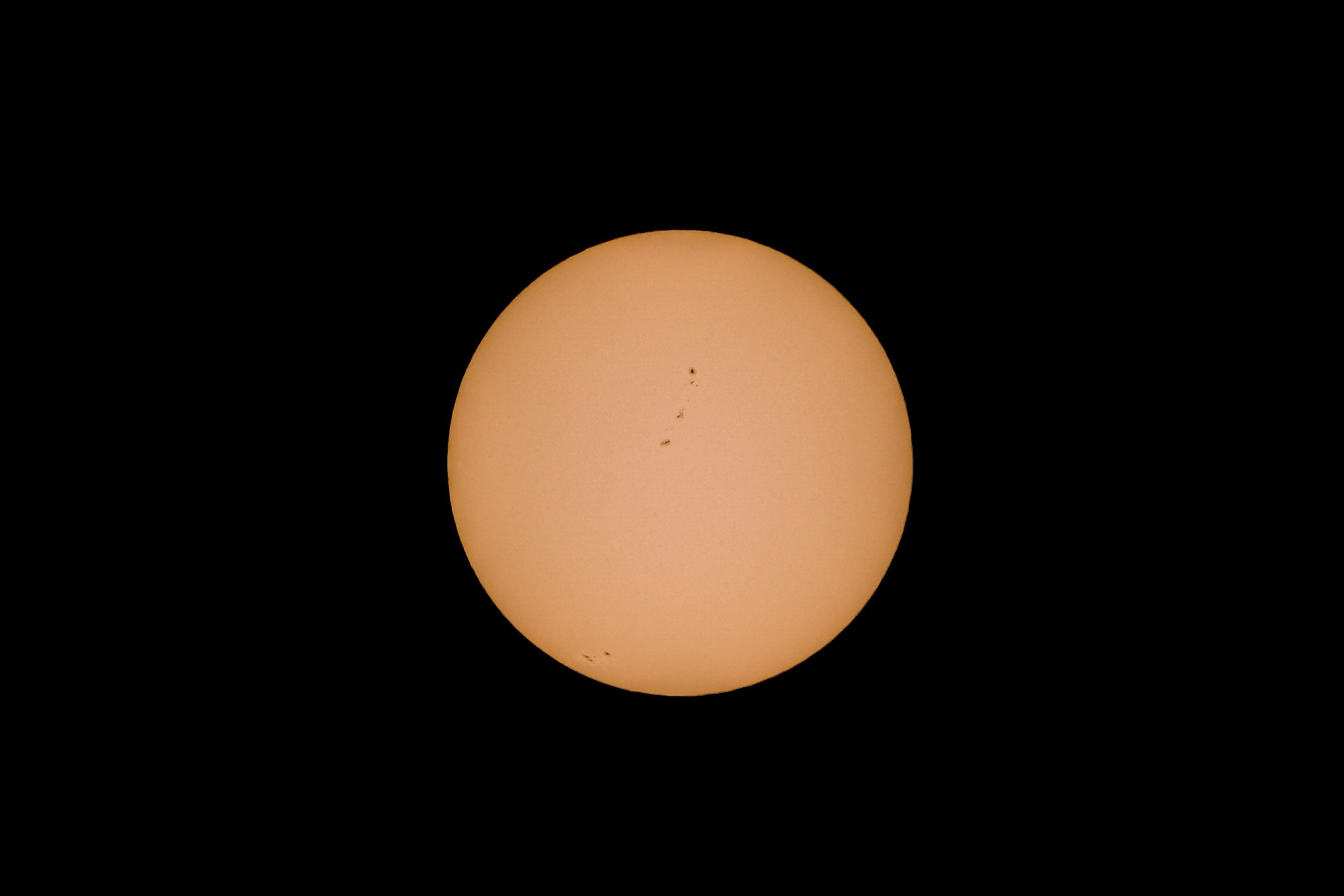
For Christian Domecq, Senior Pro-User Marketing Representative at B&H, it was his first looks at the sun that struck him deeply: “Leading up to the Eclipse, we had a couple of iOptron solar telescopes set up for people to look at the sun safely. For many, myself included, this was the first time looking directly at the sun with any magnification. We could clearly see sun spots on the surface, which was interesting enough. However, my favorite moments came as people learned those spots were each about the size of the Earth. Watching as people wrapped their heads around the massive scale of it all, and being humbled by this myself, definitely left me with a deeper sense of awe than I had anticipated.”

Joel Lowy, one of the principal people involved in B&H’s educational efforts for the eclipse, summed up the stages leading to Totality this way: “In terms of time, experiencing a total eclipse was pretty surprising—it takes a while, but then it’s over in a flash. A few minutes before ‘contact,’ a friend showed me how the moon was hovering just above the sun. There are the shouts welcoming the very powerful ‘first bite.’ I found it very exciting. It's when the moon seems to take a very firm foothold on the sun.

“Then there is kind of a lull as we go partial.

“Towards the second half, there is tremendous anticipation. Then, as we go to 80-90%, the little thin part of exposed sun looks like a hot, fiery metal shaving. It's just beautiful.


“Then it gets cold and dark, and [then,] Totality. Glorious, glowing, luminous Totality. 2 minutes. It's a whirlwind. It's so busy and exciting. You don't know what to do with yourself.

“Then there is the very powerful diamond ring. I felt it like a force, like a powerful kick of light, a pure glint. It was the highlight.

“And then, for the rest of second partiality, nobody even looks up. Its gets warm and bright again, and the day is regular again. It's shocking how quickly we fall back into place. There just is no aftermath. There is a definite finality to this experience which has to be part of it.”
For Michael Hollender, B&H’s Social Media Maven, being off the grid with the lack of Internet access was a blessing in disguise. “Taking the Internet away from someone who lives on social media was difficult at first, but it allowed me to disconnect, relax, and make real connections with the amazing Atlas Obscura attendees from around the country. When I finally got cell service after the event, I had over 100 text messages! Instead of diving right into them, I decided to wait an extra hour or two and enjoy the drive through the Eastern Oregon high desert.”
Hollender adds: “The anticipation to photograph the solar eclipse was off the chains! I was quite stressed with no experience photographing an event like this. After Totality and a quick image review and confirming my images were in focus, a huge weight was lifted off my shoulders. That adrenaline rush of relief and a surprise second set from Sun Ra Akrestra turned into a big celebration. Some attendees rushed off to beat the traffic but most were dancing and enjoying a final few minutes of the sun and moon and the many new friends we all made.”
Matt Hill, from National Parks at Night, did what turned out to be one of the stand-out activities of the festival: Light Painting. Here’s a time-lapse he put together from it.
As a life-long nerd, I found that the hundreds of people who spent the weekend in anticipation of the eclipse to be my favorite part of the trip. Whether I was talking to two older women (those awesome cousins, Alex and Abby) or a young man and his sister’s boyfriend, they all had a passion for science and astronomy. Being someone who often watches the eyes of their audience glaze over when I’m talking about astronomy, it was amazing to see eager faces with glittering eyes as they enthusiastically took up the thread of the conversation we were having. I got the feeling that in that group of 450+ people, many of them felt—maybe for the first time in their lives—that they belonged… that they weren’t weirdos or geeks. They were finally the normal ones. Speaking from experience as someone who absolutely felt that way, it was glorious in its unabashed nerdiness.
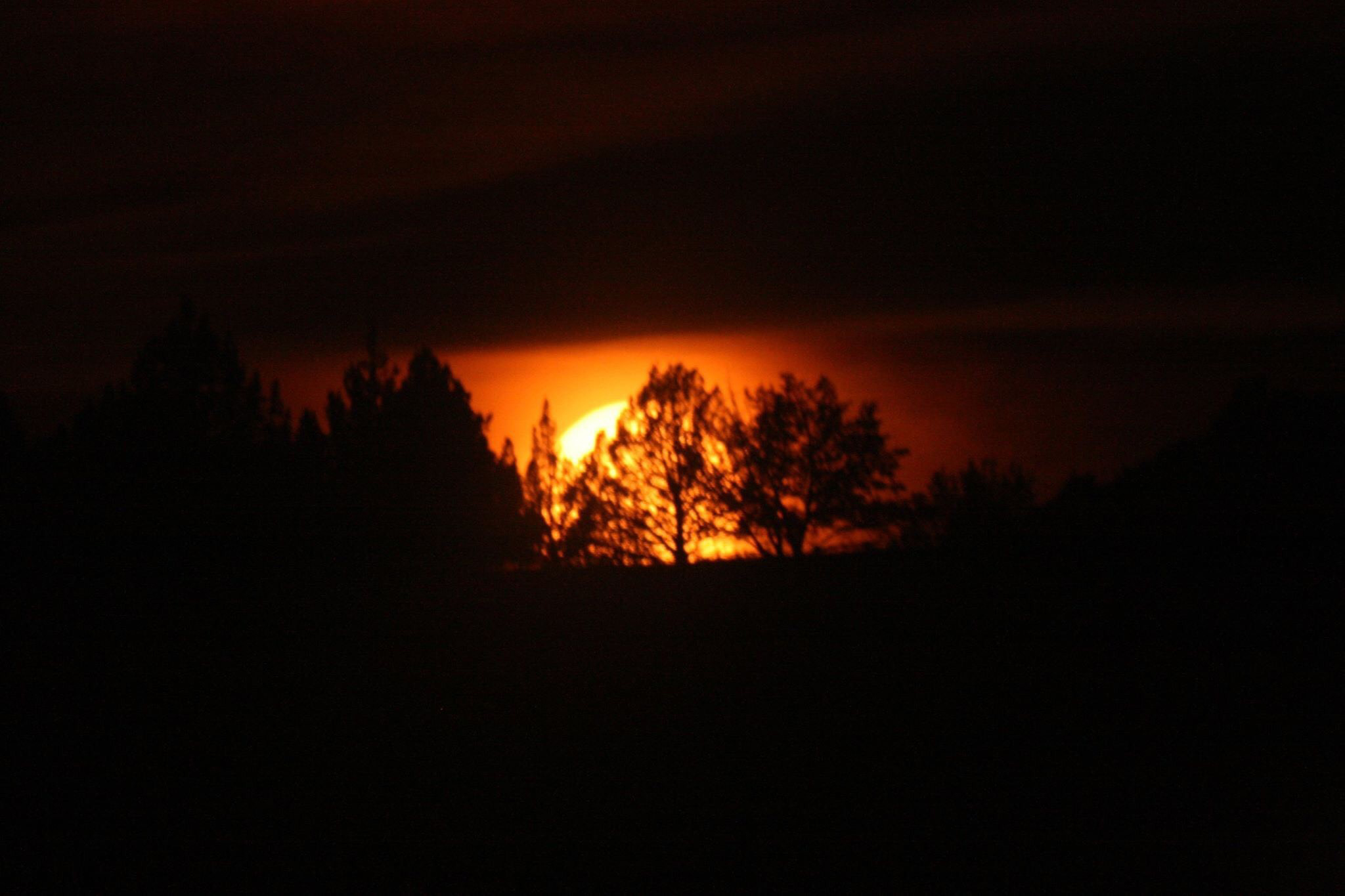
The moment that I’ll most treasure, again besides the eclipse itself, was on Saturday night when I got back to our gear from dinner. The solar telescopes had been left on and tracking the sun. Someone happened to look through the eyepiece as the sun was setting behind the mountains and, through the solar filter, the trees were back-lit. I hastily took the eyepiece out of the drawtube, grabbed my Canon EOS and threw my telescope adapter onto it, then jammed it onto the telescope—I quickly focused as best as I could in the fading light and caught the following picture:
All of us in that field in Oregon were touched on some level—call it spiritual, existential, emotional, personal, whatever—and having spent days with those people, both the Atlas Obscura staff and festival attendees, we are now bonded in friendship and the shared experience of witnessing a truly wondrous event: a total solar eclipse. The actual eclipse was an amazing sight to behold and I plan on being somewhere in the path of Totality in 2024, with my wife and (as of this writing) soon-to-be-born daughter—and so should you!
What was your stand-out experience from witnessing the most viewed, the most photographed, the most studied, and the most shared astronomical event in human history? Comment below and let us know—we’d love to nerd-out with you here.
