
It would be foolish to claim that there is only one way to take a portrait, but there are some accepted norms and basic camera settings that you should understand if portraiture is to become your area of photographic interest. Remember though, as you walk down your creative path, that a portrait is more than a headshot, more than a beautiful photo of your subject; it is an opportunity to get to know someone, to have a visual conversation with a person, and to use your photographic skills to pass that understanding of the person on to the viewer.

Cameras
Cameras are a fluid piece of gear when it comes to portraiture—Nan Goldin used a beat-up 35mm Nikon in her early work and Richard Avedon used an 8x10" Deardorff camera, among others. For some photographers, high resolution is critical to a good portrait, while others prefer a dreamy softness. In general, full-frame mirrorless, DSLR, or medium format cameras are the choices of experienced portraitists. But do not limit your creativity because of the camera you don’t have; find ways to interact with your subject and get to the moment where they are showing you their true self and be ready to capture it. Andy Warhol did it with a Polaroid Big Shot camera.
ISO
ISO is a calibration carried over from the days of film photography, and on a digital camera it indicates the light sensitivity setting of the sensor. A high ISO enables brighter image capture in low-light situations, but the downside is that this brighter image can be “noisy” or, using another word from the film days, grainy. These digital artifacts that become noticeable at high ISO settings are not conducive to flattering portraits. Historically, it was considered best practice to use as low an ISO setting as your light source will allow, creating smooth and consistent color tones. However, noise management has improved considerably across recent generations, and, depending on your lighting, camera stability, and subject stillness, higher ISOs are potentially in play that weren’t thought possible even five years ago. A good rule of thumb is that the larger the final presentation (whether in print or on screen), the lower the ISO. If you are using strong continuous light or daylight or have a strobe setup, consider an ISO of 100 for the best skin tones and overall image clarity.


Shutter Speed
Shutter speed is a measure of the time your film or digital sensor is exposed to light. Short shutter speeds are good for freezing movement while long shutter speeds allow more light but may introduce blur. Even momentary gestures like a glance sideways or a blink of an eye can result in enough blurring to ruin the portrait you were hoping to make. The same goes with the movement of the camera at slow shutter speeds.
So, what is an ideal setting for shutter speed when taking a portrait? Again, this is as subjective as the day is long and dependent on the type of portrait you want to take. Think of Avedon’s portrait of Killer Joe Piro or blurred smoke from a cigarette in classic Hollywood portraiture or, conversely, a dancer suspended in mid-leap. But because this is an introductory article, consider a shutter speed of at least 1/60 of a second as the minimum to avoid blur. Many photographers will push this even slower in the right conditions, especially when using a tripod or other support. However, the shutter speed is not the be-all and end-all of your setting decisions because the other camera settings, particularly the aperture opening, will determine how fast your shutter speed can be. And remember, during a portrait session, you can control the movement of your subject to some degree and can place the camera on a tripod or other stable support.


We will get to the aperture setting momentarily, but a final word on shutter speed—your light source, whether it be a corresponding flash duration or the golden light of sunset, will also dictate what your shutter speed should be. Be flexible with this setting and adjustment as you photograph. There is a rule of thumb that suggests the slowest shutter speed usable when shooting handheld should correspond with the focal length of the lens you are using. If, for example, you are using an 85mm lens, the slowest shutter speed to avoid blur would be approximately 1/85 of a second. In general, it seems better to me to err on the side of underexposure (a faster shutter speed, in this case) rather than overexposure, which could create a washed-out tone and/or display movement blur.
Continuous vs. Single-Shooting Modes
Related to shutter speed are the camera’s shot modes, specifically the continuous shooting and single-shot modes, which allow the photographer to adjust the rate at which the camera shoots with each shutter button press.
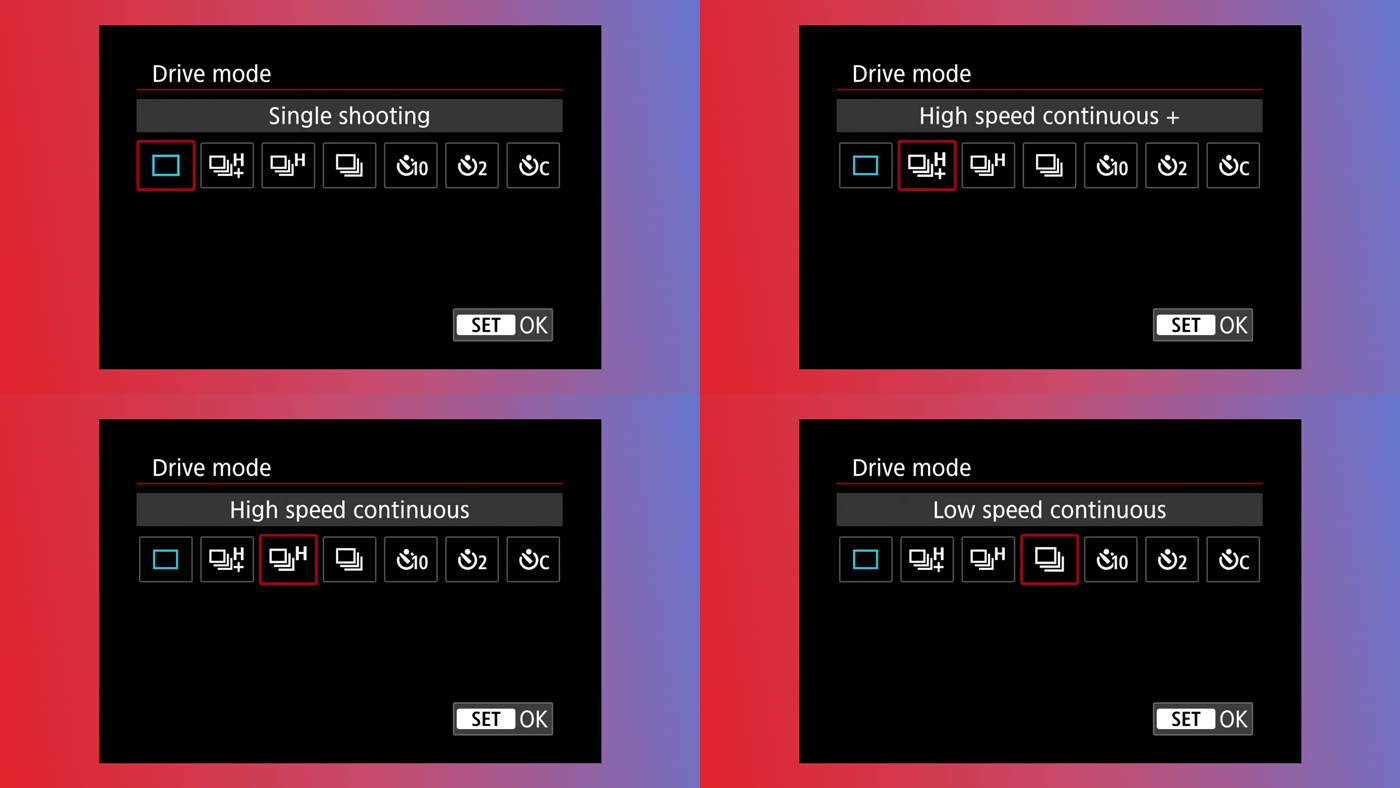
Single shot is the simpler of the two: one shutter press, one picture. It’s the more deliberate mode for photographers, and is best used in slower, more controlled settings for headshots, studio portraits, formal portraits, some editorial portraits, or any other situation where you the photographer are exercising a lot of directorial control over your subject. It keeps the session calm and cuts down on post-production image culling, but it also makes catching movement and candid micro-expressions more difficult.
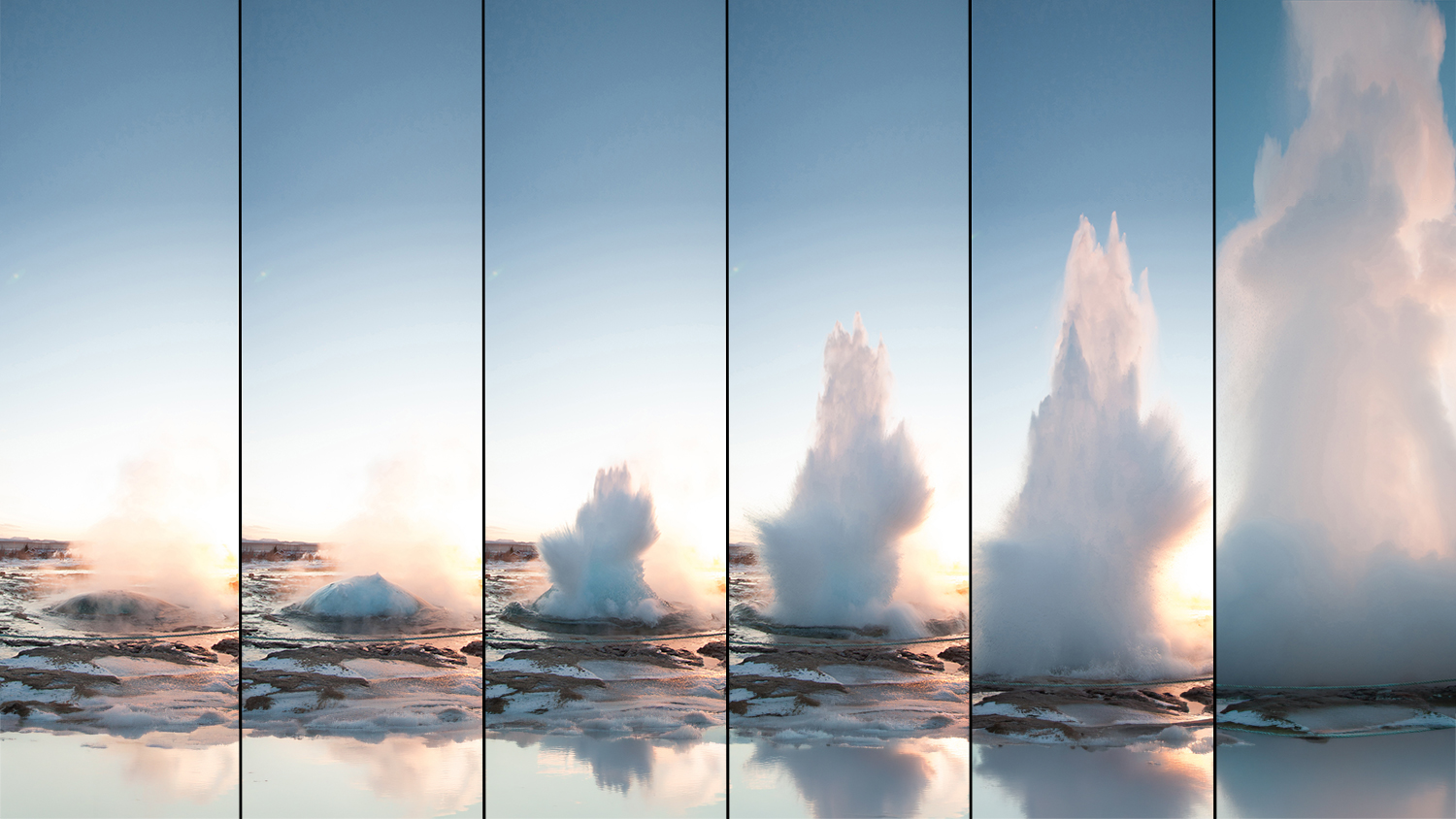
In continuous shooting mode, also known as “burst mode,” the camera continually releases the shutter at a pre-determined rate, known as “frames per second,” for as long as the photographer presses the shutter button or until the camera runs out of available memory. Most cameras offer low- and high-burst modes (fewer or more frames per second), but either burst setting will unlock your subject’s more subtle bodily movements and facial expressions. Now, depending on your camera, your high-end burst mode could be anywhere from 15 fps, 30 fps or even faster in some models. You’re exponentially increasing the number of images per session, which requires a lot work on the back end, even if you’re shooting in low-burst mode.
Nonetheless, giving your portraits an air of naturalism almost demands the use of burst mode, and portraits that incorporate any kind of peak action component will require continuous high. It’s important to note that high burst rate will not freeze action—only fast shutter speeds will accomplish that. There’s nothing worse than 200 pictures worth of blurry, unusable images.
Aperture
Aperture setting determines the size of the opening in the lens or camera allowing light in. The aperture is normally adjustable and measured as an f-number, which is colloquially called an “f-stop.” F-stops on most portrait lenses range from f/1.4 to f/22 but can go higher or lower. A lower f-stop number is a setting for a larger aperture opening and vice versa. An aperture setting of f/22 is a tiny hole that lets minimal light in the frame and an f/2.8 is a relatively large opening that allows in more light. The trick of photography is balancing the ISO sensitivity, the shutter speed, and the amount of light coming through the aperture, so that the image is exposed well—neither too dark nor too bright.
But aperture also has a secondary phenomenon and function that is specifically important to portraiture. The aperture size also determines the depth of focus, also called the depth of field, and what that describes is how much of your image—front to back—is in focus. An image with deep depth of field will be in focus from foreground through background, and shallow depth of field will create images in which the focus is only on a specific point within the frame. Adjusting the aperture for the look you want is fundamental to portraiture. For an environmental portrait, in which the background and physical space of your subject are important to an understanding of the person, you want an aperture setting no lower than f/5.6 so that much of the items in the composition are in focus. When you want the eyes of your subject to be in focus and the rest to become a beautiful haziness or contain “bokeh,” set your aperture to f/2.8 or lower, if your lens allows. As a rule of thumb, an open aperture is often considered a setting conducive to beautiful portraits.


When you establish your aperture, then you can set your ISO and shutter speed settings. Most cameras have some form of light metering built in, but to best measure light and determine these camera settings, photographers often use light meters.
Autofocus
Autofocus is the process by which the camera and the lens work together to automatically determine the point of focus. The sophistication of this process has developed and progressed over the years, but the core concept remains the same. So has the philosophy for focus in portrait photography, which prioritizes sharpness of the subject’s eyes. This article, in addition to dispensing the received wisdom of eyes and souls, is a great rundown of exactly why and how targeting the eye is table stakes for 95% of portrait photography.

While camera companies can have differing feature sets and nomenclature, there some basic settings that apply across manufacturers, like single vs continuous autofocus, single point vs zone autofocus, and subject detection and tracking. For most cameras, the autofocus process involves aiming a highlighted segment of the viewfinder at the intended point of focus and half-pressing the shutter button, yielding a green outline to the segment (and often a sound) when successful and a red outline when not.
Single autofocus, or AF-S, focuses once and locks in. It’s simple and encourages photographers to decide for themselves the point of focus. Single autofocus works well for subjects who are mostly still, as in studio portraits, headshots, seated portraits, and environmental portraits where the subject largely remains stationary.
Continuous autofocus, or AF-C, continually adjusts the focus as long as the shutter remains half-pressed and is best suited for subjects in motion or to capture subtle facial shifts. It’s great for kids, couples, walking portraits, wedding portraits, event portraits, lifestyle portraits, or anything else in which the portraiture must represent movement.
The question of how much area in the frame is used to determine the point of focus is split between single point autofocus and zone autofocus. Each camera will be different in the number of individually selectable focus points, as well as larger swatches, or “zones,” of focus, and a central focus point. Single point focus is the sniper’s choice, offering precision and maximum control. The camera focuses exactly on that point and is therefore slower and more deliberate. It benefits posed portraits, shallow depth-of-field portraits, portraits with foreground objects or busy backgrounds, or any other situation where a wider zone of focus might select the wrong object. Zone focus, on the other, uses a larger section of the frame and is more approximate in its determination. It’s the faster, more candid, and more continuous option, but also the most prone to mistakes.
Accommodating these mistakes accounts for much of the most recent technological developments in autofocus, namely, algorithmic subject detection and subject tracking. As the computers inside cameras have both shrunk and sped up, it’s opened the ability for the camera to know what it’s looking at and prioritize that recognition. Again, every manufacturer has their own specific feature set and nomenclature, but most contemporary cameras will feature humans, specific animals, and specific vehicles as available subjects for focus detection, as well as faces and eyes. Algorithmic subject tracking extends this subject detection across time and space so you don’t lose the subject once detected.

Given the importance of eye sharpness in portrait photography, using the Eye AF setting in your camera (if available) can go a long way to locking in your portrait. It’s especially useful when shooting with wide open apertures.
Lenses
Certain lenses are often called “portrait lenses” and are considered tools of the trade but, as with cameras, great portraits have been made with every kind of lens, from wide angle to telephoto and all in between. And of course, the lenses ideal for portraiture can also be used for a range of photo disciplines.
Focal length is the most common way we describe and categorize lenses. A long focal length is from 85mm to 600mm and upward, and is called telephoto; short focal length lenses are from 8mm fisheye to 35mm and are referred to as wide angle. While there is some gray area and, of course, disagreement, the general area in-between—from 40mm to 70mm—is considered a standard focal length. These standard and shorter telephoto lenses, specifically the focal lengths between 85mm and 105mm, are often used for portraiture. Whether using a zoom lens, which provides a range of focal lengths, or a “prime” lens with just one focal length, it is this set of focal lengths that is considered optimal for capturing facial features.

A significant reason that wide-angle lenses are not the choice for portrait work is because they create distortion that is not flattering to human subjects—a nose will seem extra big, the eyes set apart, and the overall shape of the face odd, especially if captured from the side. This does not mean that a portrait cannot be made with these distortions; at times it adds to the understanding of a character, but it can be problematic. With a long telephoto lens, an image is compressed within the frame, making the background and foreground seem unnaturally close. There is an element to this that is useful to portraitists, but too much is not recommended.
Another reason to avoid telephoto lenses is simply practical; unless you are at a great distance, you will be too close to your subject and cannot achieve focus or cannot include enough of their face and body in the frame. Likewise, with a wide-angle lens, you may have to get uncomfortably close to have the face be primary within the frame. Wide-angle lenses are more often chosen for the above-mentioned environmental portraits, which incorporate (and keep in focus) items within the entire frame.
When using portrait lenses within that middle set of focal lengths, the subject’s head and face appear more naturally shaped and realistically scaled. With a mild telephoto effect, they place the subject in a comfortable spot in relation to their background, not overly compressed, but separate enough to focus on the face with the background slightly out of focus. This out-of-focus aspect points to another important part of lens selection and camera settings. As discussed above, lenses that offer a large maximum aperture (below f/2.8) enable shallow depth of field, and this is useful for portraiture. To be able to pull focus to the face, specifically to the eyes, while keeping the background in soft focus, is often the most critical aspect of portrait photography, and a short telephoto lens, with a wide maximum aperture, is the best way to do this.
Taking creative and interesting portraits is more than just proper camera settings, and there is much to discuss in future articles about light placement and control, about the use of shadows and contrast, about locations, and certainly about interaction with your subjects, but if you are shooting in full-frame or 35mm format in natural light, consider these as practical introductory settings to get you started: an 85mm focal length, with an f/2 aperture, using ISO 100 and a corresponding shutter speed setting that maintains the overall exposure of the image—not too dark, not too light.

To learn more, check out our other guides and articles available on our dedicated portrait photography page!
