Search results for: photography beyond manual focal length perspective
About 16 filtered results
by Mathew Malwitz · Posted
Let's face it: smartphone cameras are not the vibe anymore. What we want is a dedicated point-and-shoot camera, whether it be a classic hand-me-down model from the early 2000s or a more current spec'd out model with modern bells and whistles. These small point-and-shoot cameras may be made for travel but they excel in some scenarios more than others.
In today's guide, we're covering just a few of the best travel-friendly

by Steven Gladstone · Posted
Whether you’re a student or a seasoned veteran, selecting the right camera can make your head spin with questions. Does sensor size matter? What’s the difference between 4:2:0 and 4:2:2? Do I really need a camera that can record 8K? What about raw? We’ll explain the key components that help a camera produce cinematic images, and in doing so, hopefully help you make that all-important decision.
Evaluate Your Needs and Your Budget
Before considering certain cameras, you must know your needs and your budget. And be realistic. If you are a student

by Mathew Malwitz · Posted
This holiday season, we’re looking at fun and affordable lenses for mirrorless systems. There will be both unique lenses and some overlap thanks to the vast number of third-party lenses hitting the market for all major brands. In this guide, we’re covering lenses for the L-Mount. From ultra-wide-angle lenses suited for landscapes and architectural images to super telephoto ones for sports and wildlife, we’ll be covering a variety of focal lengths are variety of uses. Of course, the L-Mount is shared across brands like Leica, Sigma, and Lumix,

by Todd Vorenkamp · Posted
There are many ingredients in the recipe that make a good photographic portrait—foreground, background, setting, pose, expression, color, lighting, and so on—but one element that can be as important to the result as the portrait sitter is the lens used to capture the portrait and help create the art.
Technically, any lens can be used to take a portrait with your camera, and there are traditional focal lengths for “portrait lenses” like 85mm and 105mm, but I asked my fellow B&H photographers, as well as our B&H Creative partners and

by Mathew Malwitz · Posted
Lens selection is a highly personal choice for the professional photographer. Your shooting style, client needs, and cost all factor into how you choose to build your kit. Wedding photographers require a greater variety of lenses as they must cover a diverse assortment of compositions in various environments and lighting conditions. As working professionals, it’s only natural to begin investing in high-quality professional glass. For Canon users, this is the L series.
Easily identified by a thin red line circling the lens barrel, L glass is

by Rachel Leathe · Posted
There's nothing quite like the thrilling spontaneity of grabbing your camera and stepping out the door with no plan other than to point and shoot at whatever captivating scenes you encounter. In the realm of professional photography, where meticulous control over light, talent, and location is the norm, street photography throws all of that out the window, transforming the world into your unscripted canvas. The absence of predetermined variables and the sheer randomness of it all can be an incredibly liberating and enlightening experience for
by Bjorn Petersen · Posted
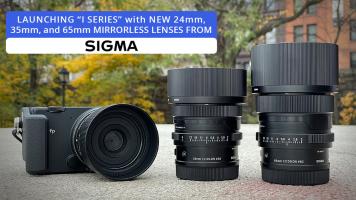
Continuing to add to its growing DG DN lineup of full-frame mirrorless lenses, Sigma has just released a trio of new lenses, along with a new designation for lenses that are sleek and stylish. Introducing the 65mm f/2 DG DN Contemporary, 35mm f/2 DG DN Contemporary, and 24mm f
by Bjorn Petersen · Posted
It has been about two years since the formal debut of the L-Mount Alliance and, in that time, we've seen a fledgling mount grow into a well-rounded, three-pronged system. As a refresher, the L-Mount Alliance is a collaboration of sorts between Leica, Panasonic, and Sigma, who are all actively developing mirrorless cameras and lenses using a common lens mount. The brands are still functioning
by Shawn C. Steiner · Posted
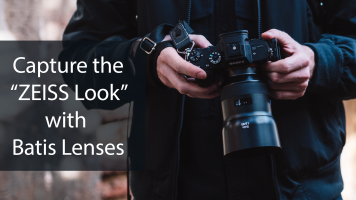
There are a few names in the photo industry that inspire confidence. ZEISS is certainly one of them. Just seeing its logo can make a product—be it a lens or a smartphone camera—appear trustworthy. This work goes beyond simply making lenses. A core part of its imaging business involves partnerships with other leading brands, and the one with the most eyes on it today must be Sony. ZEISS and Sony have maintained a mutually beneficial relationship for years,

by Bjorn Petersen · Posted
Over the past couple of years, a transition has occurred that is finally bringing medium format digital photography to the masses. With the introduction of the first mirrorless systems in the genre, as well as more players in the game than ever, medium format will likely continue to expand and evolve at a faster pace in the future. More brands are treading into the larger-than-full-frame waters, and evolutions are also taking place in the high-end segment of this market. With more eyes on medium format than ever, it is exciting how this
by Justin Dise · Posted
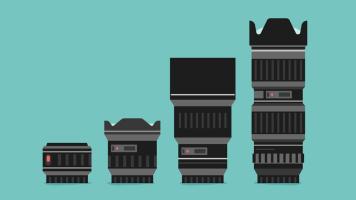
Whether you’re assembling a personal lens kit or compiling the equipment-rental list for your next film, selecting a lens package is an important decision. It can also be a daunting one, especially if you’re new to the game. So what lenses should you get? A complete set of primes? A couple of zooms? Both? The answers aren’t always clear. Ask ten DPs what their favorite lenses and focal lengths are, and you’ll likely get about as many answers.
The fact is that everyone has his or her own preferences, from focal length to build quality, to a

by Bjorn Petersen · Posted
When you look beyond the 24-70mm f/2.8, the 50mm f/1.4, and the 18-55mm f/3.5-5.6 lenses of the photography world, you can quickly discover there is a huge array of exciting, noteworthy, or in some cases, just weirdly enticing optics. And once you dig even deeper than the 12-24mm f/2.8, the 58mm f/1.4, or the 200mm f/2, you get to some of the most unique optics out there; a select group of lenses that instantly trigger a picture in your mind or are simply well known for how they operate, look, or even just the prestige they exude. Though some

by Todd Vorenkamp · Posted
Make no mistake: the Nikon COOLPIX P900 is a photo-taking telescope that you hold in your hand. The superzoom point-and-shoot camera has been around for years, albeit under the radar, as the point-and-shoot market has been waged in a war against two competing genres of cameras. On one end: the smartphone camera. On the other: the entry-level DSLR camera with its lower and lower price point. If the point-and-shoot is going to survive this war, it is the superzoom camera that will save it. Put simply, there is no smartphone or DSLR on the
by Bjorn Petersen · Posted
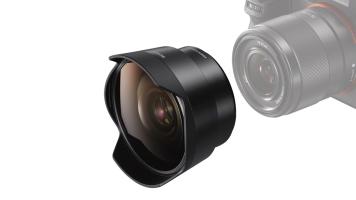
Greatly expanding the current lineup of full-frame-compatible, E-mount lenses, Sony has just introduced a quartet of new FE lenses ranging from prime wide-angles to an all-inclusive zoom. The FE 28mm f/2 is a standard wide angle that is compatible with two other new optics, the Ultra Wide Converter and Fisheye Converter, to further broaden its perspective. The Distagon T* FE 35mm f/1.4 ZA features a sophisticated optical design for enhanced sharpness and correction of aberrations, and also features a unique responsive aperture ring that can be

by Bjorn Petersen · Posted
Throughout the course of 2014, a number of notable SLR lenses were released, running the gamut from optically refined, fast primes to versatile and long-reaching zooms, with all other realms covered in between. While the lens releases varied from manufacturer to manufacturer and system to system, a number of distinct themes became recognizable, which act as foundation points from which to compare and contrast different lenses, as well as gauge expectations regarding the future of contemporary SLR lens design.
High-Quality, Fast Primes
One of