Search results for: photography buying guide how to choose best camera for wildlife photography
About 11 filtered results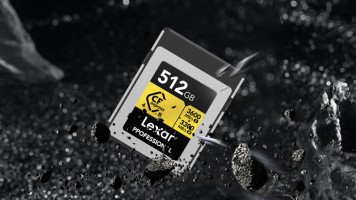
by Mathew Malwitz · Posted
Recording work and data in the form of thousands of pictures or hours of video is made possible by compact memory cards. These devices are the standard for photo and movie storage, saving and protecting your files until you can transfer them safely to a more permanent home on your computer or external hard drive. They are available in an array of different types, with a broad range of capacities and data-transfer
by Mathew Malwitz · Posted
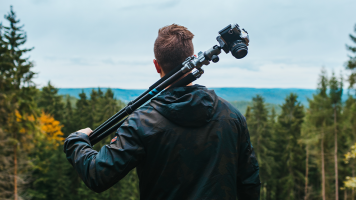
As complementary as peanut butter is to jelly, the camera and tripod are an age-old pairing that still manages to maintain relevance and unmatched functionality in a world dominated by image stabilization and Photoshop tricks. While the form and function of a tripod is far simpler to understand than the scrolling menus of today’s feature-packed cameras, it can still be a chore to choose the right setup for your needs from among a sea of manufacturers and seemingly comparable models.
Now, what’s the big deal with tripods? Most photographers

by Mathew Malwitz · Posted
Landscapes and wildlife are among the most challenging subject matter to capture well with a camera. Wildlife is unpredictable and despite your best efforts, will not respond to posing instructions. Landscapes are stationary but at the mercy of available light and weather conditions. All that being said, it is the unpredictable nature of landscape and wildlife photography that has earned these genres a very large, very dedicated, and very passionate following. The dedication of these photographers can make finding the right gift all the more

by Bjorn Petersen · Posted
A pioneer of full-frame mirrorless, Sony has expanded its system into a full-fledged lineup that caters to all varieties of image makers. No longer a niche market, Sony recognizes the value and versatility of a full-frame sensor: Its large form factor yields excellent image quality, it’s the same size as 35mm film for a sense of familiarity, and it’s still small enough so the overall camera size remains portable and compact.
Now that Sony has a grip on how to use full-frame sensors, and has released such a bevy of different cameras over the

by Jill Waterman · Posted
No matter how many lenses a photographer has, there are often added lenses we still wish for, and even more lenses after which we lust.
There are so many options that choosing your next lens can often involve a dizzying cavalcade of choices—manufacturers, focal lengths, prime or zoom functionality, auto or manual focusing, and price. Below, we offer up some thoughts on what your next lens might be based on your shooting preferences and needs.
To keep things simple, our suggestions are based on the use of a full-frame camera—those seeking a

by Allan Weitz · Posted
Before heading out on assignment, I make a mental checklist of the gear I will be needing, and camera supports are always on that list. Depending on where and what I plan to photograph, I might take a mid- or full-size tripod and be done with it. If I anticipate taking low-angle photographs, I will also pack along a tabletop-size tripod and, for ground-level shooting, one of my Platypods. Truth is, if I have the space, I take all three options, because if I leave any of these options behind, I know I will need it when I get where I’m going.

by Lawrence Cohen · Posted
Waterproof point-and-shoot cameras have changed the reason many people scuba dive. In the early days, ocean explorers like Jacques-Yves Cousteau used scuba and cameras to explore the deep for scientific research purposes. Now, sport and hobbyist divers want to capture images and video to share their underwater experiences. Simple digital cameras in basic housings allow all divers to capture underwater snapshots and movies. However, many divers want to take their imaging to new depths.
Using a DSLR or mirrorless camera with interchangeable

by Jill Waterman · Posted
In an era that has witnessed rampant outsourcing of products and services, and innumerable items manufactured in foreign lands, it’s heartening to know that the B&H website offers more than 8,000 product SKUs from close to 250 companies promoting a Made in America status.
Featured below are 18 such companies, and their associated products that caught our attention.
Imaging Products
* The golden era of American-made cameras harks back to the 1880 launch of the Kodak Box Camera, which had the slogan “You press the button—we do the rest.”

by Peter Ward_1 · Posted
Things aren’t as simple as the days when most video cameras (broadcast and ENG cameras aside) just came with a built-in lens and that was that. Now, between DSLRs, mirrorless cameras being used for video, and cinema cameras that have still-camera lens mounts, one is stuck with the daunting task of picking out a set of lenses.
If I can only choose one lens, what is the best?
First, I would like to dispel any notion that there is one “best” lens. There isn’t. Lenses come in different focal lengths because different shots work best (or at all)

by Daniel Wagner_1 · Posted
Always shooting with an on-camera flash is like always shooting with the sun behind your back. While this is a good way to illuminate a subject and capture an image, it may not be the best way to capture your imagination creatively. Positioning your flash off-camera, using an on-camera flash for fill with a second flash, or shooting with three or more Speedlites at the same time, is a great way to add a new level of expression and control to your photography. And, thanks to the integration of radio transmission on Canon’s latest Speedlites,

by Allan Weitz · Posted
What is a lens?
Superficially, a lens is little more than a cylinder containing optical elements that shift about as you focus by turning a ring around the cylinder. But even in its most basic form, a camera lens is far more complex than it might appear.
A lens is more than the sum of its parts. When you attach a lens to a camera, your choice of lens is very much like a painter's choice of brush. For finer details, the painter will choose a narrow, pointier brush. For cloud-free skies, a broader brush would be a wiser choice. Wide-angle lenses