
It's been a strong year for the L-Mount Alliance, who recently announced the addition of their tenth member Viltrox to bring a credible low-cost manufacturer into the fold for the future. The three pillars of the group—Leica, Sigma, and Panasonic—each had distinctive years in 2025, further entrenching in their proven lanes to build out an ecosystem that, as of the time of writing, boasts more than 20 camera options and 120 lens options.
Sigma: The Tip of the Spear
Sigma had the splashiest year of the L-mount big three. Coming off a 2024 that saw highs in both production and innovation, in 2025 the company pressed the accelerator to the floor, producing nine brand-new lenses and one truly singular camera.
Sigma BF Mirrorless Camera

Released in late February, the Sigma BF landed like an alien from the future in a market booming with vintage aesthetics and nostalgia trappings. The first full-frame camera to offer an aluminum unibody, its design minimalism extends the body's control options, which feature just three buttons, one dial, and a shutter release. The main display is a rear touchscreen which serves as a live view, while a status monitor provides at-a-glance settings information. The camera is internal storage only, and its only link to the outside world is a single USB-C port.


Unsurprisingly, the BF was polarizing. Its striking and experimental design yielded strong gains in user experience that were almost entirely negated by the near-universal rejection of the camera's ergonomics. Third-party accessory manufacturer SmallRig moved quickly to create a mount-plate grip that could solve the handle problem. Whether its visual integration with the camera disrupts its singular feature—its space-age, aluminum-unibody design—remains to be seen.
To complement the release of the BF, Sigma released silver models of all nine I series L-mount lenses.
Nine (!) New Lenses
Sigma's productivity over the past year hasn't come at the cost of quality, and while not every lens was necessarily a homerun, they all got on base. Spanning world-first primes, a company-first cine lens, and zooms of all shapes and sizes, Sigma proved that their willingness to take big swings need not come at the expense of functional, workaday glass.
The Big-Time Primes
Sigma's 2025 headliners were its full-frame prime lenses: the all-new 135mm f/1.4 DG Art and 200mm f/2 DG OS Sports, and the second generation 35mm f/1.2 DG II Art.
135mm f/1.4 DG Art Lens
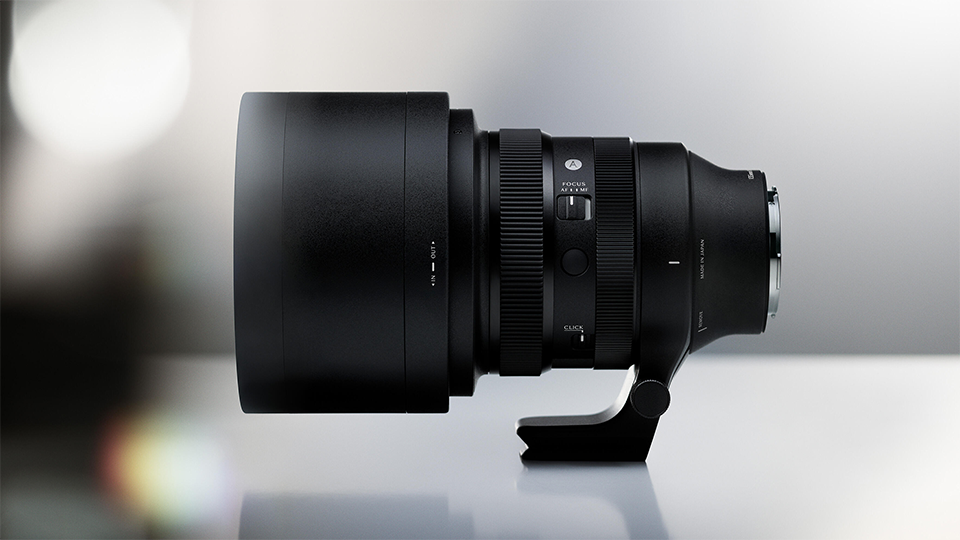
The 135mm f/1.4 DG Art lens made the biggest waves upon release, as Sigma claimed it was "the world's first 135mm autofocus lens to achieve its maximum aperture." A lens that compromises neither for size nor for quality, the company also contends that the new lens's large bokeh out-butters its infamous "Bokeh Master" 105mm f/1.4 DG HSM lens, long a favorite of portrait photographers. It's a very competitive entry into the focal length class, with its bokeh, depth-of-field, and price point all outperforming its conventional f/1.8 competitors.


200mm f/2 DG OS Sports Lens
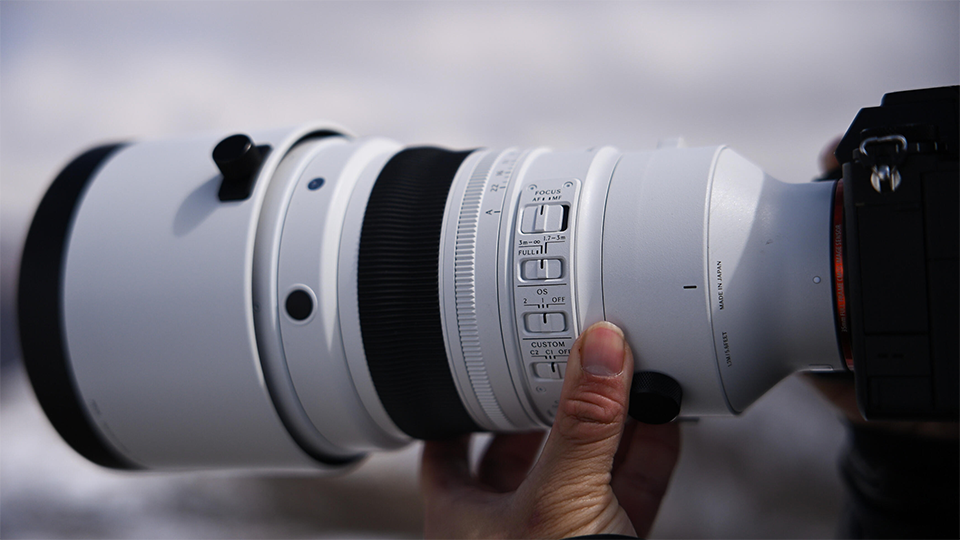
Another large lens, the 200mm f/2 DG OS Sports came to market as the first of its kind for full-frame mirrorless cameras. Designed as a low-light workhorse for indoor sports, the lens boasts accurate, high-speed autofocus, 6.5-stop image stabilization, and a large maximum aperture. It also does double duty as a portrait lens with beautiful bokeh and the depth compression created by the lens’s long focal length. Still, at four pounds, 7.9” long, it requires as much athleticism to wield as the sports it’s meant to capture. The lens also benefits from a robust, weather-resistant construction that includes its handsome all-white, thermal-insulated paint job.


35mm f/1.2 DG II Art Lens
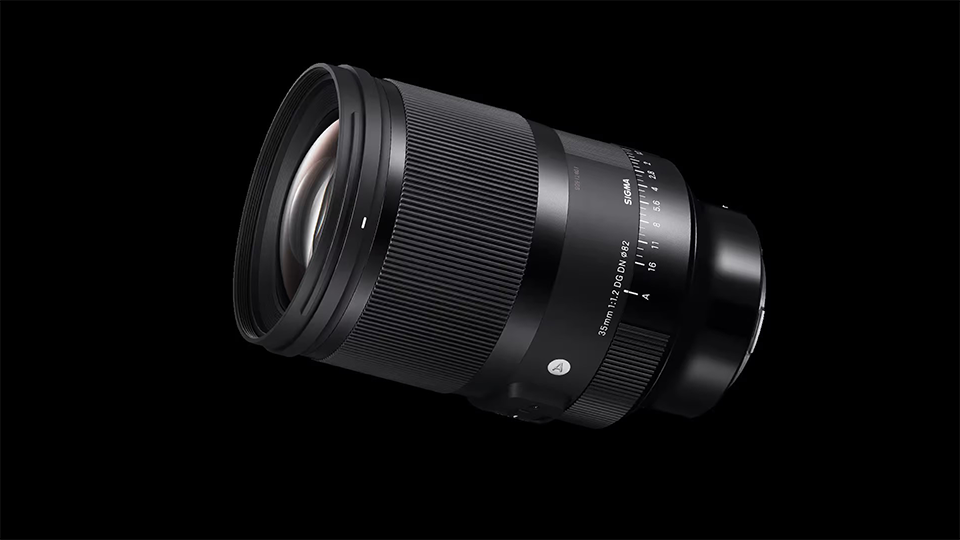
The 35mm f/1.2 DG II Art lens is a follow-up to the popular 2019 model and improves upon the original's strong optical performance while reducing the overall footprint. Another optical stunner, the elements are arranged in a floating focus design that allows the groups to move independently of one another and yields the newly achieved compact form factor. The f/1.2 class of 35mm lenses excels at environmental portraiture, with the large maximum aperture offering exceptional subject isolation in the wider perspective. This lens balances subject sharpness with high-quality bokeh that suppresses color bleeding and double-line artifacts.


Full-Frame Zoom Lenses
Sigma also released two full-frame zoom lenses in 2025: the 300-600mm f/4 DG OS Sports and the 20-200mm f/3.5-6.3 DG Contemporary lenses. Satisfying different customers, the former is a professional sports and wildlife behemoth offering the equivalent of four super-telephoto primes in one, while the other is a compact and lightweight wide-to-tele lens that's built to carry all day and capture the breadth of everyday life.
APS-C Lenses
The year also brought three new lenses for APS-C cameras, two zooms and a prime: the 17-40mm f/1.8 DC Art, the 16-300mm f/3.5-6.7 DC OS Contemporary, and the 12mm f/1.4 DC Contemporary lenses.
17-40mm f/1.8 DC Art Lens
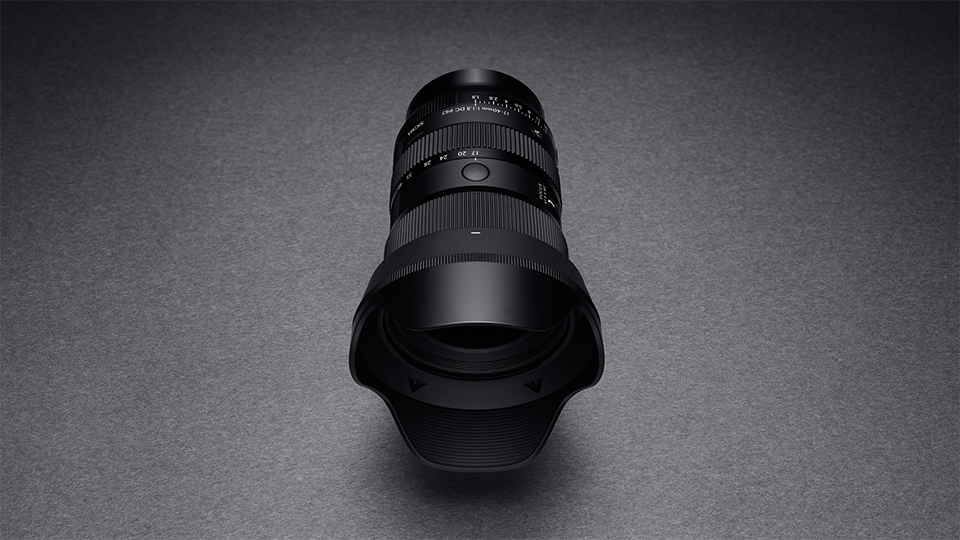
A successor to their wildly popular, nearly 10-year-old 18-35mm f/1.8 DC HSM Art lens for APS-C SLRs, this new lens—for APS-C mirrorless cameras—expands the zoom range while borrowing optical design principles from the full-frame 28-45mm f/1.8 DG DN Art lens. Smaller and lighter than its predecessors, this 17-40mm f/1.8 DC offers the flexibility of a zoom with the speed of a prime. It's a certified go-to option for solo filmmakers, vloggers, and other creatives, thanks to its emphasis on features that benefit the video process, while also appealing to photographers looking for a solid single lens for travel and other everyday subjects.


16-300mm f/3.5-6.7 DC OS Contemporary Lens

Offering extreme versatility and little fuss, this lens offers a full-frame equivalent zoom range of 24-450mm. Its headline 18.8x zoom range is the top feature, though a 1:2 maximum magnification ratio and up to 6 stops of optical image stabilization offer a compelling feature set. An HLA motor also ensures speedy, accurate autofocus.


12mm f/1.4 DC Contemporary Lens

For the APS-C crowd, the 12mm f/1.4 Contemporary entered the Sigma lineup as the widest autofocus-enabled f/1.4 prime lens on the market. The optical design contributes to the lens’s compact and lightweight form factor, which in turn makes the lens a good choice for group selfies and front-facing video. In fact, the lens is well-suited to videographers in general, with smooth, stepping motor-driven autofocus, suppressed focus breathing, and compatibility with grips and gimbals for stable footage. Overall, the lens delivers sharp, bright images for outdoor landscapes, travel, street, and astrophotography.


Sigma's First Cine Lens
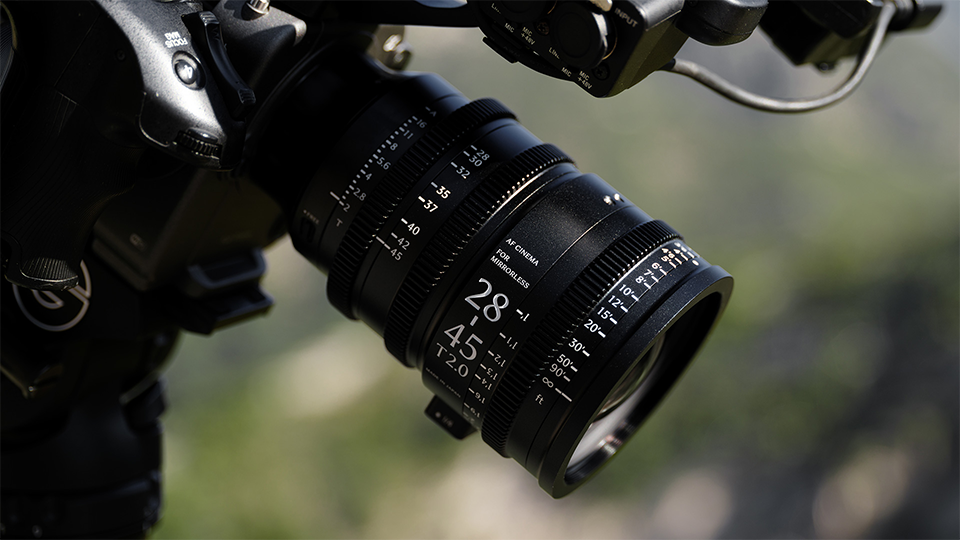
Rounding out Sigma's big year in lenses was its first-ever autofocus-enabled cine lens, the 28-45mm T2 AF Cine Zoom. Intended to bring the optical prowess of its Art lenses into the dedicated filmmaking space, the AF Cine lens takes that exceptional resolving power and beautiful bokeh and puts it in a cinema-style body with a limited rotation focus ring and a clickless aperture ring. The well-balanced construction also benefits use on gimbals or even shooting handheld.


Leica: 100 Years of Aptitude
Leica spent the year celebrating its centenary, marking "100 Years of Leica" with the anniversary of the release of the Leica 1. In addition to commemorative builds of existing cameras and other gifts, Leica rolled out the SL3-S Mirrorless Camera, a fast and flexible upgrade to 2024’s SL3, and a silver chrome edition of the Summilux-M 50mm f/1.4, resurrecting the look and feel of the company's film-era origins with modern optics to match their stable of high-resolution mirrorless cameras.
SL3-S Mirrorless Camera
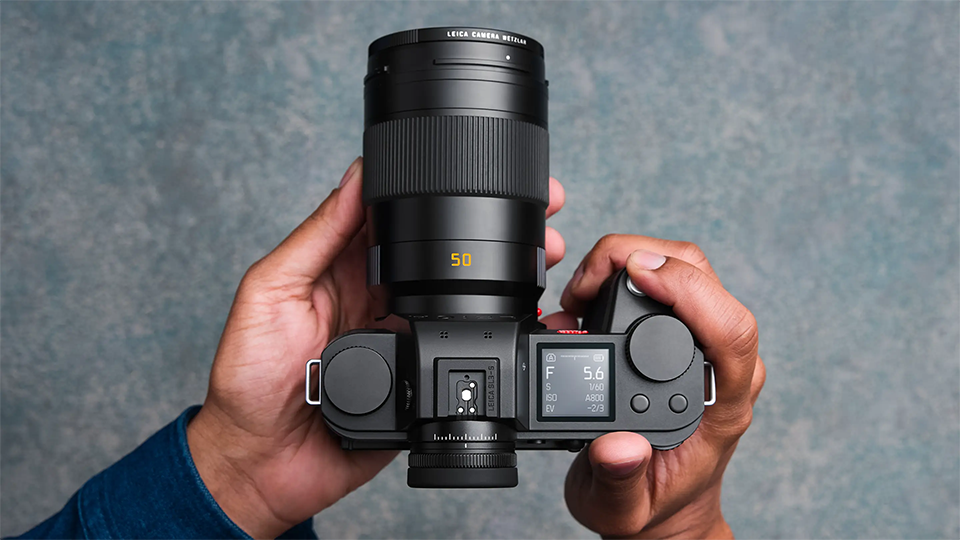
Leica’s latest hybrid interchangeable lens camera boasts a new 24MP full frame sensor capable of 30 fps capture, while also introducing a new autofocus system and unlimited Open Gate 6K video recording. Encased in a weather-resistant, all-metal body, the SL3-S was designed around satisfying the professional’s needs for hybrid image quality and simplified workflow. It's also the first camera in the SL-System to be equipped with Content Credentials technology, which allows each image to be signed with tamper-proof metadata to authenticate content and protect creators.

Summilux-M 50mm f/1.4 Lens

The fifth member of the Leica Classic Line, the 2025 Summilux 50mm f/1.4 takes its vintage barrel design cue from the very first generation of the lens that debuted in 1959. Optically, the construction is inspired by the second generation Summilux released in 1962—considered by many to be the pinnacle of the lens class—and features the same seven-element, five-group structure and manual focus design. The lens’s wide maximum aperture and naked-eye focal length yield outstanding results in both sharpness and bokeh, making it ideal for portrait photography.

Panasonic: The Alliance Backbone for Camera Bodies
With Sigma's new camera coming from outer space and Leica's coming from the top-most shelf, it was Panasonic who spent the year debuting L-Mount bodies for everyday shooters. "Everyday" isn't pejorative here, as the company shored up their flagship S tier with the first new bodies since 2022: the S1 II, S1 IIE, and the S1R II. Panasonic also released two zoom lenses to fill out their existing collection.
S-Tier: The Second-Generation Flagships
S1 II/S1 IIE Mirrorless Cameras
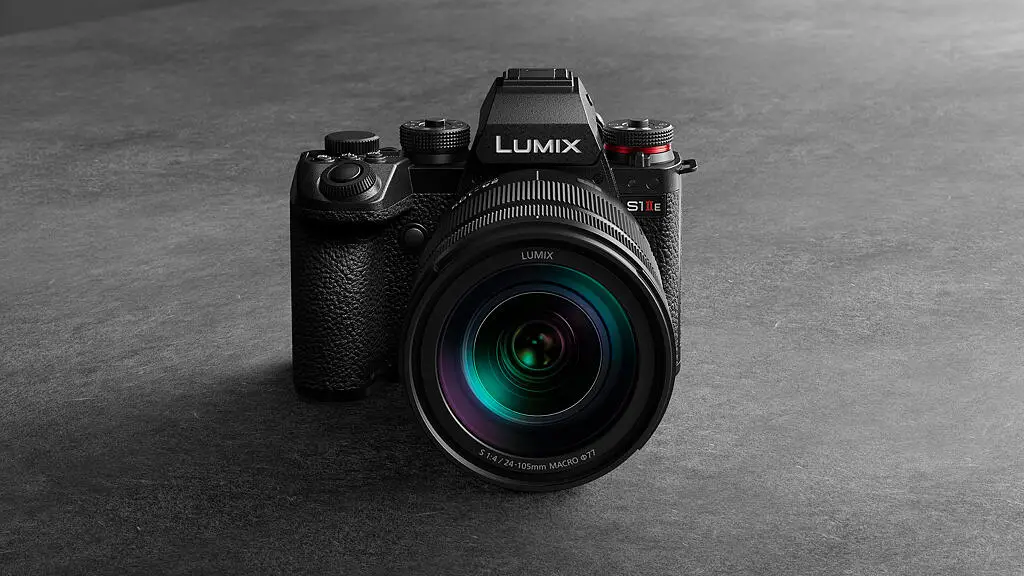
Smaller and lighter than the first generation S1 cameras, the S1 II and it's S1 IIE "Essentials" brother were aimed at hybrid creators in need of high-speed, high-quality workhorses. To that end, the 24.1MP S1 II boasts Panasonic’s first partially-stacked sensor, improving read out speeds to deliver both 6K30p open-gate video and up to 70 fps continuous, blackout-free stills shooting—all-time highs for the Lumix line in both categories.

The Essentials S1 IIE has a 24.1MP BSI CMOS sensor with burst shooting up to 30 fps. It features the same autofocus and image stabilization capabilities as the S1 II, sharing 6K30 open-gate recording and the production ecosystem as well, but at a lower price point.
S1R II Mirrorless Camera

A powerful, high-resolution camera that marks the Lumix brand’s entry into 8K video, the versatile S1R II is aimed at high-end, hybrid creators of all stripes. Also smaller and lighter than its predecessor, the weather-resistant build houses a camera that’s as equally at home in sports and wildlife applications as it is in landscape, portrait, advertising, product, fashion, wedding, event, and more. A newly designed 44.3MP sensor and a new, high-performance L2 engine, unlock the S1R II’s sweeping set of upgrades, which include subject detection and tracking, improved accuracy in face and eye detection, 40 fps blackout-free shooting in AF-C and AF-S modes when using the electronic shutter, eight stops of image stabilization, and, of course, the aforementioned 8K30 video, accompanied by open gate 6.4K 30p and up to 4K 120p.


Two Zoom Lenses
Lumix S 24-60mm f/2.8 Lens
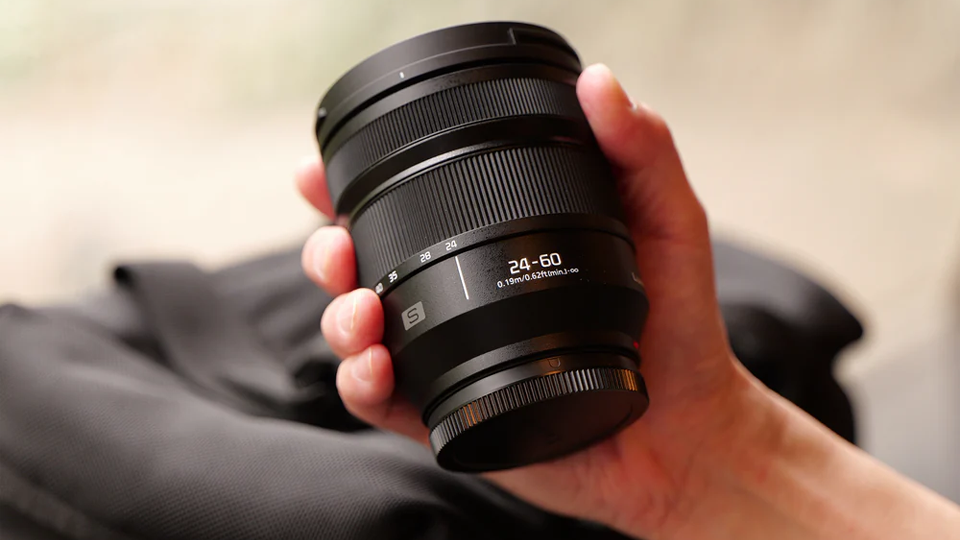
To accompany the release of the S1 II/IIE, Panasonic released the wide-to-telephoto Lumix S 24-60mm f/2.8 zoom lens intended for use with the S tier, full-frame cameras. It’s a highly portable lens, coming in at 1.2 lb. and 3.9” in length and boasting a close focusing distance of 7.4” for creative close-up work. The lens offers smooth bokeh, close focusing, Hybrid Zoom with compatible cameras, and a customizable control ring in the classic mid-range zoom space.

Lumix S 100-500mm f/5-7.1 O.I.S. Lens

The company's first S-tier ultra-telephoto zoom, the Lumix S 100-500mm f/5-7.1 O.I.S. gives significant reach and versatility for shooting wildlife, motorsports, and distant landscapes. Seven stops of image stabilization and a compact, lightweight build allow users to achieve that reach handheld. Smooth bokeh, weather resistance, close-focusing capability, and teleconverter compatibility round out the lens's robust feature set.

With a wide array of lenses from the remaining alliance members and third-party manufacturers, and continued integrations into hybrid and cine ecosystems, in 2025 the L-Mount Alliance solidified itself as a diverse and robust imaging family. For more information about the L-Mount releases from 2025, check out the blog or the B&H SuperStore.
