Search results for: photography buying guide real estate photography lenses
About 6 filtered results
by Stepan Andranikian · Posted
Fashion photography undertakes the deceptively difficult task of capturing the nature and spirit of a garment while conveying the designer's underlying vision. Doing so successfully already requires immense skill and artistry, so it helps to have the right camera for the job. We’ll be looking at a few cameras suitable for fashion photography, as well as some camera fundamentals to help inform your future purchase. Let’s begin with essential features.
Camera Sensor
Your camera’s sensor should be your first consideration, because it is

by Allan Weitz · Posted
Camera gear protectors accomplish several goals. If you should accidentally drop or otherwise bump your camera or lens against a hard surface, depending on the particulars—including the degree and point of impact—camera protectors can minimize, if not prevent, serious damage or dents to your gear, and possibly spare you the time and expense of repairs. Depending on the product, many gear protective products offer varying degrees of added weather- and moisture proofing, which is important if you have a proclivity to photograph in inclement
by Allan Weitz · Posted
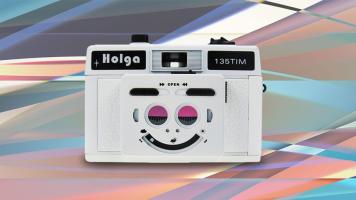
There’s no law that says cameras must look boring. Not that there’s anything wrong with boring-looking cameras, but there’s something to be said about a camera that turns heads out of curiosity, intrigue, confusion, or a combination of the three.
The following cameras are “statement makers” that are guaranteed to turn heads and, better yet, elicit wonderful smiles.
1. Polaroid Originals 600 96 Cam Instant Film Camera
Something old, something new, something orange, something blue, something pink, something yellow, something cyan, and “somewhat

by Todd Vorenkamp · Posted
The premise of the camera is simple: it's a box that allows a measured amount of light into it in order to create an image on a photo-sensitive material. Stroll through the B&H Photo SuperStore and you'll see there are literally thousands of different interpretations of how to best do this. Cameras of all shapes, sizes, and colors are on the shelves—all of them begging to be held and used to make photographs.
The camera, one of the world's ultimate gadgets, has an appeal that transcends a great cross section of the human race.
by Theano Nikitas · Posted
Each year, photographers of all levels, from professional to enthusiast, can reliably expect new and improved tools to help them realize their vision. Higher-resolution cameras, faster computers, as well as more powerful imaging software continuously expand what is possible in the process that begins within the photographer’s eye and ends inside the finished frame. Arguably though, the most critical juncture in that process is not the camera used, but the lens. The lens on your camera can determine qualities ranging from the objective, such as

by Allan Weitz · Posted
What is a lens?
Superficially, a lens is little more than a cylinder containing optical elements that shift about as you focus by turning a ring around the cylinder. But even in its most basic form, a camera lens is far more complex than it might appear.
A lens is more than the sum of its parts. When you attach a lens to a camera, your choice of lens is very much like a painter's choice of brush. For finer details, the painter will choose a narrow, pointier brush. For cloud-free skies, a broader brush would be a wiser choice. Wide-angle lenses