Search results for: photography buying guide what are tripod mounts types
About 8 filtered results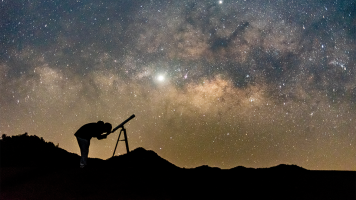
by Christopher Witt · Posted
Humans’ fascination with the stars is as old as our ability to think and ask questions. For millennia we, as a species, were limited to observing the heavens with just our eyes. Of course, back then we were able to see more because light pollution didn’t exist, but making detailed observations was impossible. The invention of the microscope led to the development of the telescope, which allowed people to finally start exploring the larger universe. As technological advances were made and telescopes got bigger and better, their reach and the

by Todd Vorenkamp · Posted
Binoculars make great gifts. Regardless of who you are shopping for, or what their hobbies are, a nice pair of binoculars can be appreciated and enjoyed by just about anyone. If you think about it, almost all of us find ourselves out in the world wishing we could have a closer view of something almost every day.
Now that I have convinced you to gift a beautiful pair of binoculars, you’ll click through to the binocular section of the B&H website

by Todd Vorenkamp · Posted
Our sun, the star at the center of our Solar System, is a fantastic subject for both viewing and photographing and humans have been viewing it since the beginning of time. A special form of solar viewing is the solar eclipse. There are few experiences in nature as awe inspiring as an eclipse—solar or lunar—when the Earth, sun, and moon align. If you want to observe and study the sun, B&H has what you need to do it safely and do it

by Jill Waterman · Posted
No matter how many lenses a photographer has, there are often added lenses we still wish for, and even more lenses after which we lust.
There are so many options that choosing your next lens can often involve a dizzying cavalcade of choices—manufacturers, focal lengths, prime or zoom functionality, auto or manual focusing, and price. Below, we offer up some thoughts on what your next lens might be based on your shooting preferences and needs.
To keep things simple, our suggestions are based on the use of a full-frame camera—those seeking a

by Cory Rice · Posted
Looking for a light stand? Seems like a simple task, until you head to the category and find that there are hundreds of options, each with its own set of features and specifications, which can make the whole experience a little overwhelming. We are here to help. Whether you are a beginner or experienced photographer, choosing the right light stand comes down to answering the same set of questions. This guide will take you through them one at a time.
How Heavy Is Your Light?
The most important job of any light stand is to provide a solid,

by Dawn Wayand · Posted
Your camera is an extension of you in your studio. What you shoot with can be just as important as how you shoot. Choosing the right gear to help you perform better during a photo shoot is worth careful consideration. In this article, I will discuss cameras, but go more into depth on lenses, light meters, and care kits for your gear to help give you a better understanding of each and what features to look for when purchasing each component.
Robert Olsen;Model: Kristin Rutty
Digital Cameras
There are a few different types of digital

by Christopher Witt · Posted
A great deal of mystery and misconception surround the topic of observing the sun and solar eclipses, and while you should absolutely not look directly at the sun without proper protection, we here at B&H have got you covered on how to enjoy viewing the sun and, later this year, the solar eclipse. Read on to see what’s available for you, if you’re interested in investing in a dedicated solar telescope.
White Light or Narrow Band?
Right out of the gate, you need to decide: White light or Narrow-band (Targeted) viewing? For specifics about

by Allan Weitz · Posted
What is a lens?
Superficially, a lens is little more than a cylinder containing optical elements that shift about as you focus by turning a ring around the cylinder. But even in its most basic form, a camera lens is far more complex than it might appear.
A lens is more than the sum of its parts. When you attach a lens to a camera, your choice of lens is very much like a painter's choice of brush. For finer details, the painter will choose a narrow, pointier brush. For cloud-free skies, a broader brush would be a wiser choice. Wide-angle lenses