Search results for: photography composition rule of thirds break
About 7 filtered results
by Mathew Malwitz · Posted
These days, everyone has a camera right in their pocket. Smartphones have long been the go-to camera for quick photos of our friends, family, pets, and of course, ourselves. With features like portrait mode, users can simulate blurry backgrounds and isolate their subject for more eye-catching images. What else could you ever need? What if I told you that with the

by Todd Vorenkamp · Posted
Thirty? Really? Thirty questions for every photo? The title of this article might make you think there’s a burdensome checklist that must be completed every time you release the camera’s shutter.
There is not.
However, if you want to take your photography to new dimensions, this list of questions—some dealing with the physical act of the photograph and some dealing with the inner thoughts behind the image—might be just what you need to get your head, feet, or camera in the right place, to help make a good photograph great or a great photograph

by Allan Weitz · Posted
I’ll never forget the first time I looked through the viewfinder of a camera fitted with a 20mm ultra-wide-angle lens. Everything looked amazing and I blew several rolls of film shooting everything I saw along the way. Prior to using this “exotic” lens, I had never shot with anything wider than the 50mm normal that came with my first 35mm camera.
The sobering part came when I developed the film and started eyeballing the results of my first outing. In a word, they were underwhelming, but I kept at it until I figured out how to use ultra-wide

by John Harris · Posted
Conversations about the rules of composition tend to annoy me. Perhaps it’s just my disposition about rules in general, but try talking to your favorite photographer about composition rules and the technical details of their greatest photo and you may be ignored, or worse. Let’s face it—nobody ever liked a photograph because it adhered to a rule. Perhaps the best you can say about any rule of composition is that it’s good to know so you’ll know how to break it, and while I feel that good composition is important and often underlies the emotion
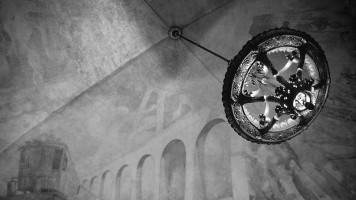
by Jill Waterman · Posted
The act of isolating our kinetic, changeable world as a two-dimensional, static rectangle (or square) is a very subjective practice. Most photographers are familiar with the technical rules—such as exposure and focus—that influence successful results. Compositional rules, however, have a less defined effect over the success of an image. In fact, when it comes to composition, there is a healthy debate over whether the term “rule” should be used at all. This adds fuel to the fire in arguments about one of the fundamental principles of

by Todd Vorenkamp · Posted
When we look at a photograph, our eyes are drawn along a visual journey through the scene before us. The route of that visual journey usually follows the path of lines throughout the image—real or implied. Lines not only dictate movement through the frame, they can also bring balance to an image.
Leading Lines
Lines are one of the fundamental elements of any photograph along with light, shadow, texture, shape, and form. Lines exist in every photograph. If they are not apparent in the image, they are omnipresent in the framing of the photograph

by John Harris · Posted
Most photographers encounter the Rule of Thirds at some point in their life, and likely recognize it as more of a theory or suggestion than a hard rule. But what are the origins of the Rule of Thirds? It turns out that its roots can be traced back to the 18th Century.
The Rule of Thirds posits that a visual composition is most pleasing to the eye when its compositional elements conform to an imaginary set of lines that divide the frame into equal thirds, both horizontally and vertically. Furthermore, the “Rule” suggests that the human eye