Search results for: photography tips solutions how use light meter app
About 8 filtered results
by Todd Vorenkamp · Posted
Every facet of photography is about controlling light, from the amount of light we allow to enter our camera via the aperture of a lens to the duration of our exposure set by the shutter speed. But how does the camera measure the brightness of the scene to set these settings automatically? How do you, the photographer, know how much to adjust your exposure settings to achieve a specific result for the final image? This is achieved with an in-camera light meter.
What Is Metering?
Metering is how a camera evaluates the available light to

by Mathew Malwitz · Posted
As you begin to experiment with exposure, you’re likely to find many creative tricks. For example, one of the most visually stunning compositions you can capture is one where moving water is blurred while the rest of the scene remains tack sharp. You know the look. It’s a much sought-after effect that is quite easy to capture, once you know how. In order to achieve this look, your exposure must go on for a

by Mathew Malwitz · Posted
If you’ve been around photography for any length of time, you’ve probably heard of ISO. ISO is one of the three settings that determine our exposure in photography. These settings are collectively referred to as the exposure triangle. ISO is unique in this equation, and in this guide, we’re going to explore why.
ISO can be referred to in two ways. It’s most commonly spoken as an abbreviation, but it is also sometimes referred to as a word pronounced as eye-so. General consensus is that you call it whichever you like. After all, it’s not what

by Luke Rollins · Posted
Subject and style may vary, but consistency is a quality shared by all successful photo studios. When working indoors, that begins with lighting. Strobes remain the bread and butter of many still photography studios. Unlike natural light, which can be finicky and unpredictable; on-camera flashes, which are not typically designed for studio use; or continuous lights, which can become costly as output increases; strobes are built to withstand the rigors of studio life while providing flexible and powerful light. But with so many options on the

by Todd Vorenkamp · Posted
Before you venture out to photograph your first lunar eclipse, you should get some practice taking photos of the moon. If lunar photography is varsity-level stuff, lunar eclipse photography is all-pro. There are some unique challenges to the art, and great ways to get creative results, but the basics of lunar photography apply. Unlike

by Todd Vorenkamp · Posted
Is it strange to sit back and think that buying a film camera is a new experience to many—even most—photographers? Just 20 years ago, almost everyone was buying and using film cameras. Today, there are legions of photographers who have never shot a single roll of film. Luckily for us, film photography still exists and there are both film and film cameras that you can buy with which
by Elizabeth Groeschen · Posted
I am not a studio photographer. Until a year ago, I had no interest in studio lighting or even on-camera flash photography. I have a Speedlight, except I couldn’t tell you where it is. I couldn’t even remember what to call said “Speedlight” and had to ask a colleague about synonyms for “external flash” to use for this article. He was disappointed in me, to say the least.
When asked, “What kind of photography do you do?” I talk about my travel and documentary work. After nearly ten years of traveling from country to country, I’ve found
by Bjorn Petersen · Posted
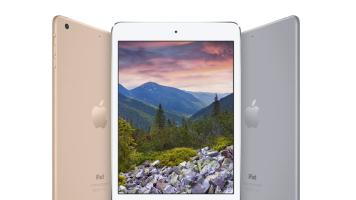
Apple’s iPad, both the iPad Air and iPad mini models, has its obvious appeal and values that make it a go-to tool for numerous situations. Its wide-ranging functionality and general all-around utility make it an ideal component of almost anyone’s daily life. Sometimes its values lie in the realms of luxury, whereas other times it is an incredibly useful asset that can boost productivity more than any other technological component can. In the hands of a photographer,