Search results for: photography tips solutions macro photography tips capturing texture
About 8 filtered results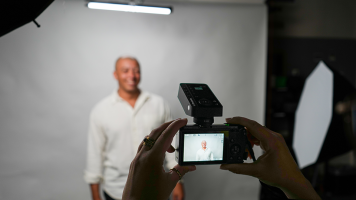
by Luke Rollins · Posted
At first glance, studio photography and the compact camera may seem strange bedfellows. The type of work associated with the studio—still life, product photography, portraiture, macro photography—usually wants cameras with larger sensors and interchangeable lenses, especially in professional applications. Compact, point-and-shoot cameras, for their part, have their natural home in everyday, travel, nightlife, and street applications, where their discretion and size become virtues.
It might seem almost cruel to introduce the compact to the

by Todd Vorenkamp · Posted
Taking a look at any modern mirrorless or DSLR camera, you’ll notice a slew of controls, buttons, and dials. Atop nearly all cameras sits a large dial labeled with many letters and icons. This is our mode dial. It is how we control the level of power we give to our camera or take for ourselves.
One of the wonderful things that modern electronic digital and film cameras give you is many high-tech options for your image making. One of the horrible things that modern electronic digital and film cameras give you is many high-tech options for your

by Todd Vorenkamp · Posted
Welcome to Part 3 of our journey into the world of Intentional Camera Movement (ICM) photography. In this final chapter of the 3-part series of articles, we voyage back into the mental aspects of creating ICM art, as well as take in some tips for some of the more common ICM subjects and finish with inspirational words from some of the masters of the craft.
Above image © Morag Paterson
Approach
Because ICM eschews many of the lessons we have tried so hard to learn in photography over the years, the approach and process are very

by Todd Vorenkamp · Posted
Welcome to the world of Intentional Camera Movement (ICM) photography—a fascinating and beautiful world where the camera and the photographer’s movements combine to become a mechanical paintbrush—transforming photographic capture into something completely unique and otherwise invisible to the naked eye. In a photographic world generally obsessed with image sharpness, there are photographic artists amongst us who give little thought to everything we’ve ever been taught about photography to create spectacular images by intentionally moving their

by Todd Vorenkamp · Posted
Specular out-of-focus highlights have appeared in photographs since the first photos were taken through lenses. In 1997, Photo Techniques magazine introduced the word “bokeh” to the photography world’s vernacular and the out-of-focus areas of photographs have been scrutinized ever since. Before the term, there was certainly discussion about the aesthetics of the out-of-focus specular highlights of a photograph, but until 1997, there wasn’t a good word in the English language to describe the phenomenon. Credit goes to Mike Johnston, article

by Todd Vorenkamp · Posted
Texture is one of those multi-sensory things that we can feel with our sense of touch and “feel” visually with our eyes. Because texture transcends the senses, we must account for it when we create photographs. Sometimes the goal is to accentuate a specific texture. Sometimes we wish to “smooth” the texture visually. How you light your subject has a lot to do with how you reveal, or hide, texture.
Photographs ©Todd Vorenkamp

by Larry Cohen and Olga Torrey · Posted
The definition of “photography,” in the Merriam-Webster dictionary, is “the art or process of producing images by the action of radiant energy and especially light on a sensitive surface (such as film or an optical sensor).” As underwater photographers, it is very important for us to consider the quantity, color, quality and direction of the light as it passes through water.
Above photograph: Combining ambient and strobe light creates breathtaking images.Photographs © Larry Cohen and Olga Torrey
Quantity and Color
Underwater light is very

by Todd Vorenkamp · Posted
I like shiny things, but I have never really had a reason to buy or own jewelry—I’d rather buy camera gear. I have, however, always wanted to photograph beautiful diamonds and rings. Unwilling to enter the jewelry business for photographic purposes, the arrival of the new Fujifilm XF 80mm f/2.8 R LM OIS WR macro lens and super-generous access from the very nice people at Ken and Dana Design in