
The weather is something we all have to adjust to accordingly with each passing day. Sometimes it’s the heat, sometimes snow, sometimes the threat of beastly supercell thunderstorms and tornadoes, especially here in the Central Plains. It’s on these days in particular that I grab my camera, hop in my car, and drive hundreds of miles to document these monstrously beautiful yet destructive wonders of nature.
For the past 14 years I have spent my springtime traversing the country, from the Texas/Mexico border to Canada, documenting severe weather. Some call me nuts, some call me adventurous, and many say I have a death wish. Me? I just like to refer to myself as passionate.
There’s nothing more incredible than standing in front of a 60,000-foot-tall thunderstorm with lightning bolts striking around you, and watching the entire beast twist and churn in the sky as it gets ready to produce a tornado. In a way, it’s incredibly humbling and really makes your place in this world seem pretty dang small. But getting to point your camera at something this incredible, something that, when it finally collapses, will never be seen again, is a moment to remember, and more importantly, a moment to share. That… is why I choose to put myself in front of some of the most dangerous storms in the world.

Getting there
I don’t consider myself a storm chaser, but a storm photographer. I don’t do this for scientific research (although I do relay reports of severe weather to the National Weather Service), nor do I do it for my ten seconds of screaming video footage on the news. I do it to capture a captivating frame showcasing Mother Nature at her finest. The one thing, though, that I do have in common with storm chasers is the word “chase.” As nice as it would be to sit on my front porch and photograph the beautiful storms, Mother Nature doesn’t quite work that way.
I will usually travel anywhere between 500-1,000 miles in a day to pursue the perfect storm. Several days in advance, I’ll look at several forecast models, analyze them, and choose an area where I believe the best storms will be initiated. Some days, you nail your target, other days, you get a suntan and a long drive home. But, what’s the saying? “You can’t win unless you play the game?” That’s part of it.

How to make something so scary look so beautiful
I often get asked, “How close do you get?” The answer is, not that close. Supercell thunderstorms have structure just like anything else that is built and working in unity. Certain areas of the storm produce certain shapes and patterns, different styles of lightning, different cloud features, etc. I prefer to stay a few miles from the base of the storm to capture the actual structure of the storm. This gives me the ability to see the storm rotating as a whole. Different atmospheric environments produce storms with significantly varying looks. Some can look like upside-down wedding cakes, some like barber poles, some that look like the bottom of a bell, and it is a jaw-dropping sight. That’s one of the pretty amazing things about photographing storms; each one is different―completely different.
For storm structure shots, I prefer to shoot with my Nikon 14-24mm f/2.8 lens on my Nikon D800 body. These storms are massive; some can be as large as a county. Even being a few miles away, you need to go super wide to fit most of the storm into your frame. Although wide is primarily my lens of choice, I quite often throw on a Nikon 24-70mm f/2.8 lens with a Lee soft-graduated neutral density filter, to help maintain a proper exposure for both the ground and the sky. All this gear is securely mounted upon my Manfrotto tripod. Even though it’s a sturdy tripod, I always keep a hand on it―you’ll often find yourself standing in 50-60 mph winds while photographing stronger storms.
I really try to find some sort of foreground to accompany storms in my frame. It’s not easy in the middle of the Great Plains. Usually it’s a barn, or an old house, or some sort of leading line like a road or rows of corn. Having some sort of foreground, though, does two things: it gives more life to the image and also gives the viewer a sense of scale. These storms are massive, and a sense of scale can really put your audience in awe. While shooting, I try to keep the ISO as low as possible to allow for the cleanest image possible. A higher aperture will allow for the detail in all parts of the storm to stay pretty sharp. Most of the time I find myself around ISO 400, F8, 1/100s, but obviously that is all very conditional. Some storms move much faster than others and 1/100s will not make a sharp image. Some storms also look their best at sunset or just after, so the ISO setting will begin to rise pretty rapidly at that time.

Lightning
The biggest threat to anyone caught out in severe weather is lightning. It can strike anywhere, and in a blink, you can be severely injured―or dead. When you’re photographing storms, you have to be extremely careful, but it’s a real reward when you come away with a stunning lightning image. Most of the time when I’m attempting a lightning shot, I’ll set the tripod up outside my car and trigger the shutter via cable release while I’m inside the car. The frame of the car will provide a safe shelter for me if a bolt does strike close. I also choose to shoot with a carbon fiber tripod, as opposed to an aluminum or metal one. For daytime lightning, I stop down my camera as much as possible. I’ll usually shoot at around 50 IS0, f/22, and by throwing on a Lee ND filter and Big/Little Stopper, I can usually get a 3-10" exposure. For nighttime photography, it’s pretty simple. An aperture of around f/8 will usually get the job done, around 200 ISO, and I shoot on Bulb.
You’re not trying to photograph the dinky lightning strikes, you’re looking to capture that extremely bright and powerful cloud-to-ground lightning strike (the one that leaves a light burn in your eyes and you still see the bolt ten minutes later… those are the good ones!), so your camera settings will be set in preparation of a bolt that bright. I’ve never been a fan of lightning triggers but, there are a few out there, if you feel that may be the route you want to pursue if you choose to try to photograph lightning. These work by “looking” for staccato lightning (bolts seem to strike multiple times with only one return stroke), and once the initial strike occurs, the trigger triggers your shutter in hopes of catching the return stroke.

So what do I pack?
When I head out to shoot severe weather, I load up my Loka F-Stop bag. I bring the trinity of Nikon lenses: Nikon 14-24mm f/2.8, Nikon 24-70mm f/2.8, and the Nikon 70-200mm f/2.8. Each one of these lenses is used on each chase. The 14-24mm 2.8 is perfect for capturing beautiful storm-structure shots or, if I choose to get really close, the lens allows for an incredible view of the tornado and all that’s above it. The 24-70mm 2.8 is great for creating panoramas and, if I want to use some of my Lee Filters, I can put them on that lens. The Nikon 70-200mm 2.8 is awesome for when I don’t feel comfortable getting too close to a tornado or an area of extreme danger. The 2.8 aperture is, in my opinion, a must for storm photography. Most of the time, the skies become so dark that day turns to night, and the additional light the 2.8 aperture allows in makes all the difference.
As for camera bodies, my backup is a Nikon D3, but my main workhorse is a Nikon D800 (both attached to Black Rapid camera straps). The dynamic range and insane 36 megapixels allow me to capture every little detail of the storms, from falling hail to edges of twisted clouds above me. Both bodies are full frame and really give me the best ability to photograph the storms. I bring a Lee Big Stopper filter, Lee Little Stopper filter, Lee Circular Polarizer filter, and a Lee .9 Grad Neutral Density filter, as well as a Nikon cable release and beyond a handful of SanDisk Extreme CF cards.

Protecting my gear
I quite often find myself out in the rain, hail, and blowing dirt, so to keep my gear from having to be cleaned every week, I use a KATA E-702 Pro Rain Cover to help protect the body and lens from the elements. I’ll always keep a blower in the car, as well, to give a quick blow inside my camera when I have a down moment.

Words of wisdom
It’s easy to be fascinated by storms and to want to go out and photograph them, but it’s also extremely easy to find yourself in the wrong place at the wrong time while out doing so. If you have a desire to give severe weather photography a whirl (no pun intended), I highly recommend taking a storm-photography tour. There are several companies out there that are lead by trained meteorologists and veteran storm chasers, and they will take you safely to the best storms of the day and try to put you in prime position to see these beautiful supercells. Storms can easily change paths, shapes, sizes, intensity and more, so unless you know exactly what you’re doing, these tours are your best bet to dip your toes in the water.

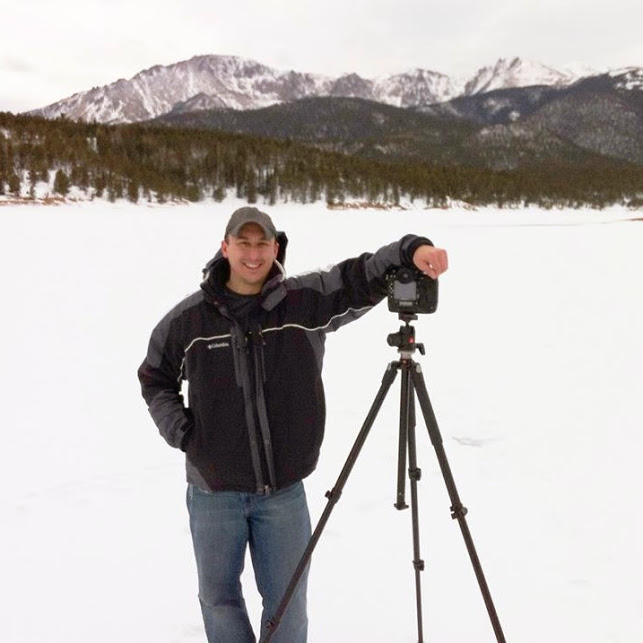 About Mike Mezeul:
A severe-weather and commercial photographer based in Dallas, Texas, Mezeul has spent the past 14 years capturing images of severe weather, in particular tornadoes and supercells, throughout the United States. The time in which he is not traveling Tornado Alley, he teaches landscape and astrophotography workshops across the United States, as well as photographing advertising and marketing campaigns, weddings, and professional sporting events. Check out his "Looking Up" page on Facebook.
