
Mixing is a polarizing issue. For some, it’s the most exciting part of the music-making process. Others lament it is a necessary evil they wish to avoid at all costs (and often do, at the cost of paying someone else to mix for them).
Regardless of how you feel about mixing, it’s inarguably an important and demanding process, one that requires you skillfully balance science and art—both of which are key components to a great-sounding mix.
In this article, we’ll be focusing more on the science side of things, specifically how to set up your room for optimal results and a mix that’s worthy of your art.
Starting Strong
While audio mixing is technically a late-stage process, the secret to a great-sounding mix starts at the beginning, with the recording. Every decision you make about compression, EQ, and even effects, will be affected by the quality of your recording. Garbage in, garbage out, as they say.
Many factors impact the quality of your mix, arguably none more so than your mixing environment—i.e., your room. How you set up your room affects everything, from creation to recording to mixing and beyond.
In setting up your room, one of the first steps is determining where your desk will go. Most rooms are rectangular, which means you have two shorter walls and two longer walls. When setting up your desk, you should always place it facing one of the shorter walls. Facing a shorter wall will result in fewer reflections than facing a longer wall, and start you off from a better place acoustically.
Keep in mind that while facing a shorter wall is important, your desk should never be placed directly against the wall itself. Doing so can cause unwanted reflections that could compromise the quality of your mix. In professional studios, for example, the mixing spot is roughly 30% the length of the room away from the wall it faces.
Obviously, not every room can accommodate that much space between your desk and the wall, but work with what you have to get as close to that 30% mark as possible. Remember that more space means fewer reflections.
A word about mixing in a square room: Don’t do it. Mixing in a square room is much more challenging than in a rectangular room, in part because there’s really no good place to set up your desk that won’t result in unwanted reflections. On top of that, square rooms are more prone to modal resonance problems, which will require some type of acoustic treatment to address. If possible, go with a rectangular room instead.

Treat Your Room Right
Few rooms sound great naturally. Most are plagued by standing waves, which cause specific frequencies to resonate louder and last longer. This is where room treatment comes into play.
The purpose of room treatment is to change how specific frequency ranges behave in your space. In doing so, you can improve your mixing environment and correct problems that could hinder your mix’s translatability (i.e., how easily you get it to sound good in multiple rooms, your car, your headphones, and so on).
Before we continue, it’s important to remember that room treatment is very different from soundproofing. The goal of soundproofing is to contain sound within a given space, making it so that sound can neither enter nor exit the soundproofed area. Some room treatment options might be able to reduce sound bleed, but they won’t be able to contain (or prevent) it the way soundproofing can.
When it comes to room treatment solutions, there are plenty of great options available, including those from reputable brands like Auralex, an industry leader in acoustical treatment products.
Auralex’s comprehensive catalog of products features a bevy of treatment options, including the ever-popular Auralex Studiofoam Wedgies, which help reduce standing waves and unwanted reflections. In addition to their efficacy, Studiofoam panels are also modular and versatile. Their pyramid-cut design allows them to be arranged in various shapes and sizes, making them a viable treatment solution for virtually any room type or feature.

Speaking of room features: Right angles, as you will come to find out, can be your worst enemy. That’s because the corners in your room naturally allow for bass buildup, making the already challenging task of getting your low end to sit right in the mix even more frustrating.
Installing bass traps in the corners helps get that buildup under control and, coupled with standing wave reduction, will get you in pretty good shape.

In addition to individual treatment solutions, Auralex and other brands like Primacoustic offer complete room treatment systems. These full-studio solutions are designed to address most common acoustic room problems, including reflections, flutters, standing waves, and more.
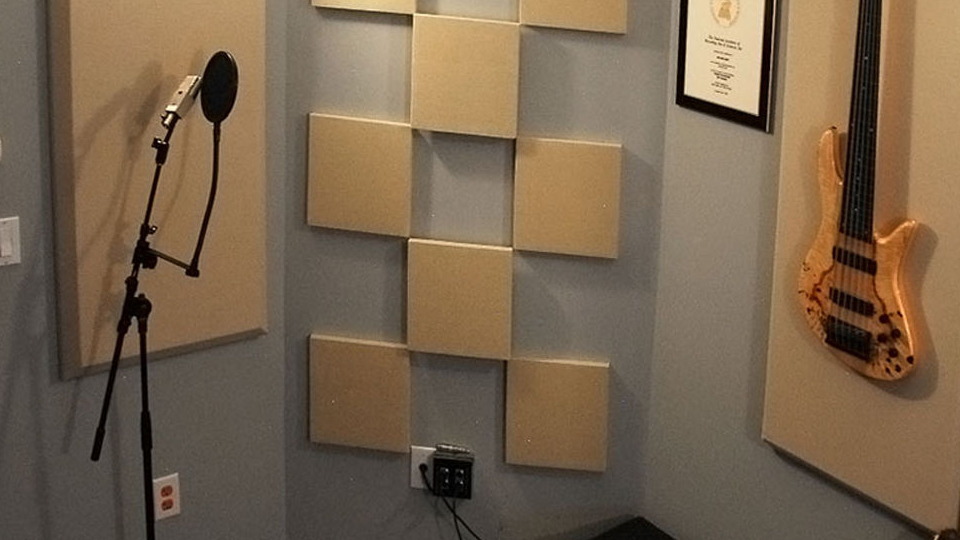
Now, if treating your room isn’t an option, there are alternative solutions available. One such solution is IK Multimedia’ ARC System 3. Featuring a calibration microphone and room analysis software, the ARC System 3 allows you to measure the acoustic response of your workspace and apply correction as needed.

Finding the Sweet Spot
Once your desk is set up and your room is treated, it’s time to place your monitors. This is a critical step as proper monitor placement and setup are key to optimizing performance and dialing in the “sweet spot.”
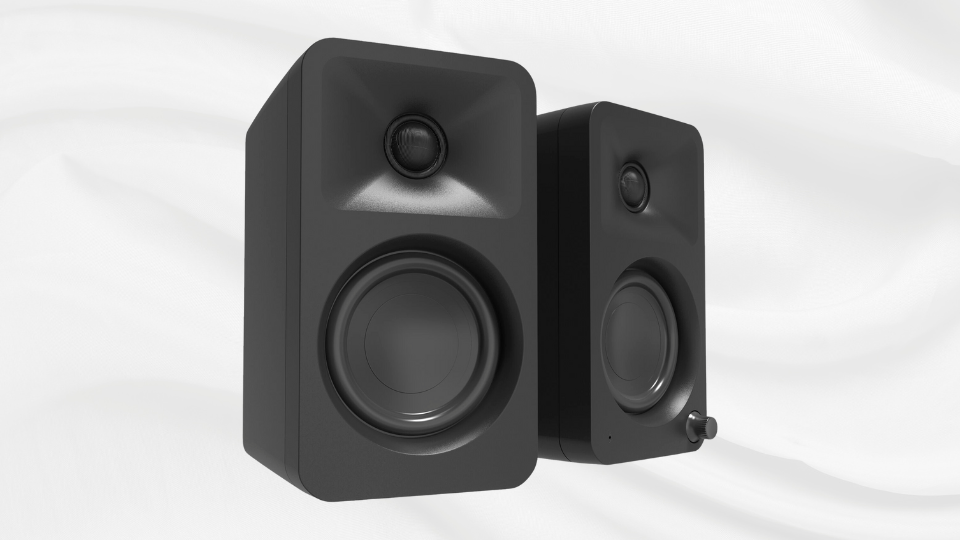
When we say sweet spot, we’re talking about that area in the room where the stereo image is the most accurate and detailed. It’s the ideal listening position, where you want to be sitting when you’re making your mix decisions.
In terms of monitor placement, the basic rule is to set them up so they form an equilateral triangle with your ears. In other words, you want the monitors to be the same distance from each other as they are from you.
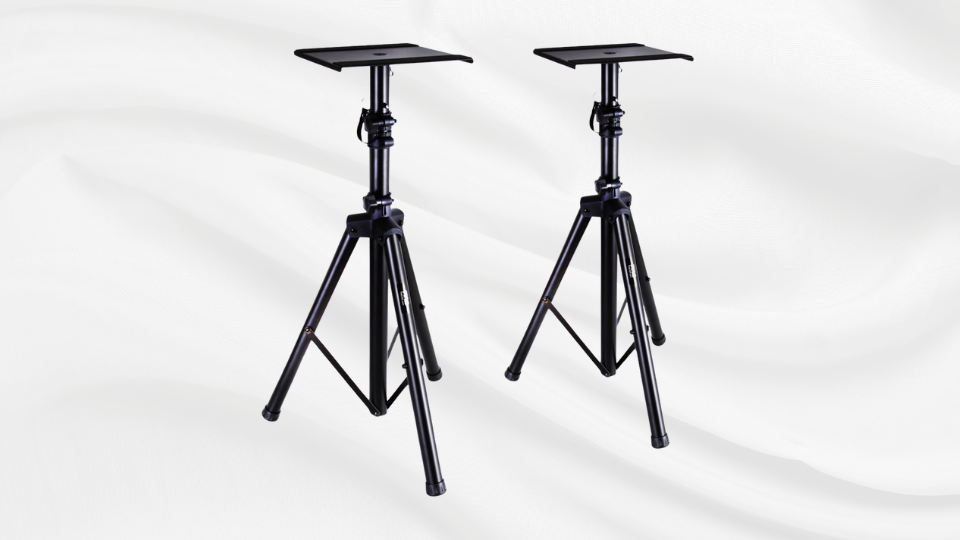
You also want them to be slightly angled toward you, and, most importantly, have the tweeters at ear level. Setting up your monitors too low or too high can create reflections from your desk and blur your sonic image, so make sure your stands are at the right height for your setup.
You might consider investing in monitor isolation pads as well. These pads will help eliminate vibrations from traveling from your monitors to the surface on which they’re sitting, which can help tighten your low-end frequency response. If you don’t want to drop the cash on a set of pads, even cutting up an old carpet or blanket will help.

Invest Wisely
While it’s true that setting up your desk and treating your room aren’t as exciting as picking up some fancy new monitors or audio interface, they are worthy endeavors and time spent wisely. After all, all the outboard gear and plug-ins in the world won’t improve your mix the same way an optimized mixing environment can. Beyond that, investing in gear or software without setting up your room will limit their benefits. A proper setup will help you get the most out of your other resources, most importantly your ears, and improve the quality of your mixes.
