Search results for: video tips solutions how to use depth of field
About 13 filtered results
by Steven Gladstone · Posted
Whether you’re a student or a seasoned veteran, selecting the right camera can make your head spin with questions. Does sensor size matter? What’s the difference between 4:2:0 and 4:2:2? Do I really need a camera that can record 8K? What about raw? We’ll explain the key components that help a camera produce cinematic images, and in doing so, hopefully help you make that all-important decision.
Evaluate Your Needs and Your Budget
Before considering certain cameras, you must know your needs and your budget. And be realistic. If you are a student

by Steven Gladstone · Posted
Day for night for color cinematography is an old shooting methodology that relies on a number of techniques regarding human perception, socially accepted convention, and technical qualities of film/sensors. There are a variety of reasons for shooting day for night, and understanding the whys and wherefores can help you create believable images.
Moonlight Is Blue
It isn’t really, any more than sunlight is blue. The reality is that moonlight is reflected sunlight, so why do people think moonlight is blue? Sunlight has a color temperature of

by Shawn C. Steiner · Posted
Whether you want a professional look for your livestreams or simply to look better during your next video chat, one of the best options is to use a dedicated camera with excellent video specs—such as your Olympus Micro Four Thirds mirrorless camera. Now that Olympus has launched the OM-D Webcam Beta you can get these advantages without much effort. A few key accessories can
by Shawn C. Steiner · Posted
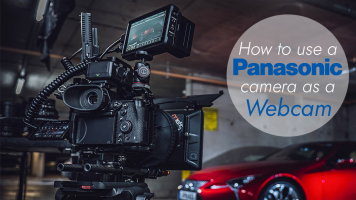
Whether you want a professional look for your livestreams or simply to look better on your next video chat, one of the best options is to use a dedicated camera with excellent video specs—such as your Panasonic mirrorless camera. To make this happen, Panasonic has introduced the Lumix Tether for Streaming (Beta) application for simpler connectivity. Since you likely already have

by John Harris · Posted
Zoom, Hangouts, BlueJeans, Slack, and Teams. These are words that have taken on a whole new significance over the past few weeks. With so many of us now relying on livestreaming, video chat, and video conferences, the quality of connection and the quality of your image is increasingly important. It may be time to upgrade from the camera in your computer or the basic webcam that has been dangling off the side of your monitor for all these years. Joking aside, appearing clear, in focus, and well-lit is crucial when impressions are being made,

by Mary Latvis · Posted
When I’d perform a camera package checkout as a camera assistant, if there was any chance that we’d be shooting outside during the day, guess which filters I would add to the order? Neutral Density filters (aka NDs)! Even if they were not part of the original order, any production office coordinator (P.O.C.) worth their salt would approve this addition by the A.C. Read on to discover why, next to a polarizer, these are the filters most essential to your video shoot.
Shallow depth of field, daylight
ND Basics
Neutral: meaning there’s no

by Mary Latvis · Posted
It’s a beautiful day and the sun is shining, with not a cloud in the sky, beaming down plenty of light for almost limitless depth-of-field for your footage. While all that sunshine can produce wonderful exposures, it may not be so great for your health or for the well-being of your equipment. Read on for some ideas on how to beat the heat during a summer shoot.
Desert film shoot: hot!
Camera Crew
Starting with the very basics, outfit yourself with a pair of
by Steven Gladstone · Posted
Since the Canon 5D MarkII (since supplanted by the Mark III and Mark IV) started shooting video and consumer camcorders started capturing 4K, the lines of differentiation between cameras, and for what purpose, have been blurred. What follows is my take on how to navigate your choices, and make the selection which will be the most appropriate for you

by Steven Gladstone · Posted
Without a doubt, your focal length choice affects the impact of your image, whether you are shooting video or stills. With the rise of digital imaging, there has been an uptick of available formats in which you can shoot. To help clarify the relationship between format and focal length, some have coined the phrase “35mm equivalent.” This term has value when you are planning a shoot, your lens package, and as an aid for anyone who began their careers using 35mm film and has transitioned to shoot in a new digital format. However, the final

by Steven Gladstone · Posted
Before the rise of the anarchy of digital video, analog video was ruled by engineers at virtually every step of production, post production, and delivery. There were rules that had to be adhered to very strictly to ensure that your footage met the technical requirements of broadcasters. Remember, NTSC was instituted in the 1940s, (PAL appeared about a decade later). So, making sure that your video would display properly on every television required a fair amount of control. Additionally, there were limitations within the capability of analog
by Justin Dise · Posted
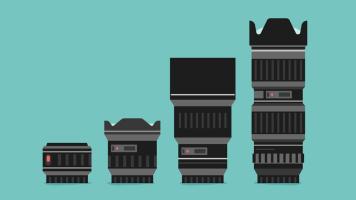
Whether you’re assembling a personal lens kit or compiling the equipment-rental list for your next film, selecting a lens package is an important decision. It can also be a daunting one, especially if you’re new to the game. So what lenses should you get? A complete set of primes? A couple of zooms? Both? The answers aren’t always clear. Ask ten DPs what their favorite lenses and focal lengths are, and you’ll likely get about as many answers.
The fact is that everyone has his or her own preferences, from focal length to build quality, to a

by Steven Gladstone · Posted
I have been using filters ever since I first shot Super 8 film with a little Kodak M-22 camera. Just press the funny-looking piece of metal into the top of the camera to drop in (or remove—I can't remember which it was) the Wratten 85 filter that allowed you to use tungsten-balanced film in daylight, and achieve the correct color balance. Over the years, my filter experience has pretty much stayed the same—I use filters to achieve a

by Mike Wilkinson · Posted
As prices continue to plummet and resolution continues to rise, it is becoming commonplace for amateur and hobbyist photographers to purchase a high-quality digital stills camera—mirrorless or DSLR. Even a photographer with a $500 camera can capture amazing clarity with just about no training whatsoever. Almost every one of these cameras now has the option to shoot video, usually in an HD resolution (or even 4K video, on some models). Lots of photographers, even the professional ones, are clueless when it comes to picking the best settings,