
Drones have exploded in popularity over the past few years. No longer a niche interest or an expensive tool, these unmanned aerial vehicles have drastically improved in both quality and accessibility. Now both hobbyists and professionals have a wide range of inexpensive, portable drones to choose from. However, this can be a bit overwhelming—especially when every option seems to boast a "high-resolution camera" and advertises as "under 250 grams." This guide will help you narrow down the best mini drones.
Sub-250 gram drones—which we'll refer to as "mini drones"—appeal to consumers for a variety of reasons. Most people favor these lightweight options for their portability, which makes them ideal for travel. The compact nature of these drones also makes it possible to operate in tight spaces and obtain hard-to-reach angles. Being under 250 grams (or 0.55 pounds) also means that it's exempt from FAA registration as long as it’s being used recreationally. Finally, their small size is often accompanied by a relatively small price tag, especially when compared to more professional drones.
DJI Mini Series
DJI has become a household name in recent years, and they continue to revolutionize the consumer drone market with their Mini series. The Mini 3 and Mini 4 had similar cameras with a 1/1.3" sensor, but the new Mini 5 succeeds in packing a 1" sensor without exceeding the 250-gram weight limit. This is the same size sensor as DJI's more prosumer model, the Air 3S. It also shares the same obstacle avoidance system as the larger Air 3S, which includes forward-facing LiDAR and an infrared sensor at the bottom of the aircraft. At the time of this writing, the Mini 5 is the only mini drone with a one-inch sensor and fourteen stops of dynamic range. It's also the only mini drone on the market with omnidirectional collision avoidance plus LiDAR.
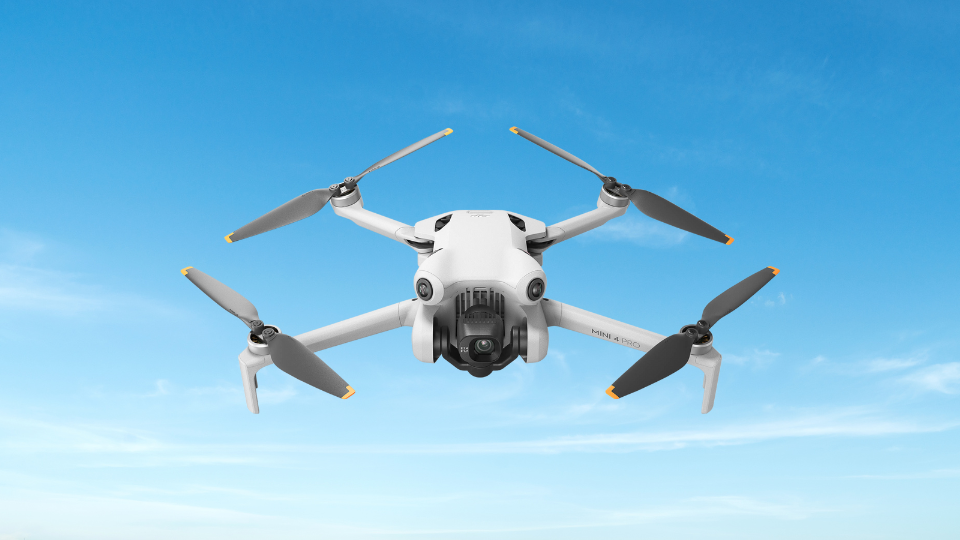
Another attractive element about DJI's Mini drones (with the exception of the Mini 2 SE) is that you can choose to have a controller with a built-in screen. Most pilots prefer the convenience of having a remote with its own display rather than having to attach a phone with the DJI Fly app.
DJI Neo
For those less concerned with the more advanced features—and more interested in a low-cost option—DJI introduced an entry-level drone called the Neo in the fall of 2024. Its allure comes from its compact size and low price point. It is almost half the weight of the Mini series, making it extremely mobile and convenient to travel with. It's also a fraction of the cost of the Mini 4 or 5, but with its 4K camera and 1/2" sensor you won't have to sacrifice image quality.
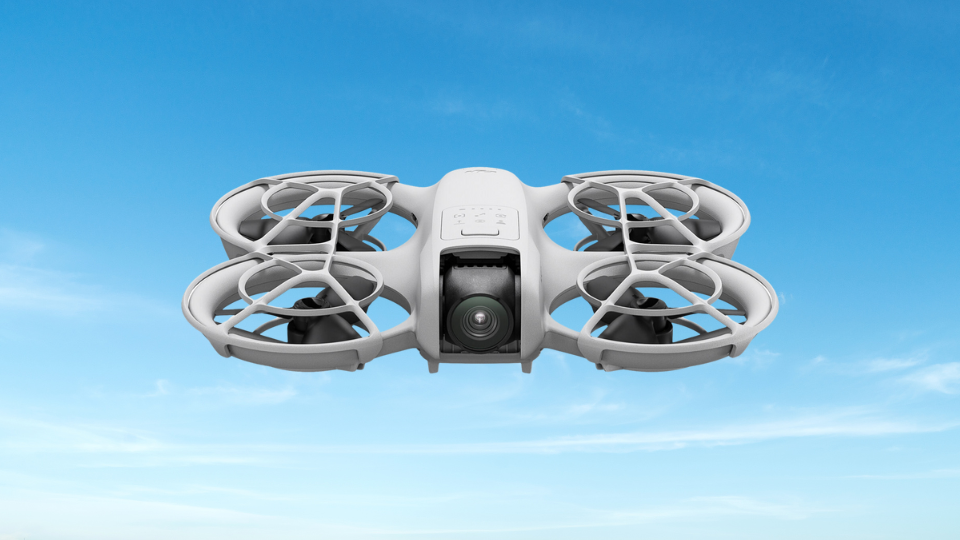
The Neo's affordability makes this a great choice for beginners, drone enthusiasts on a budget, and content creators who want aerial shots and/or a hands-free tracking shot. This addition to DJI's fleet is unique in that it can take off from your palm and use facial recognition to lock onto you (or another subject) and automatically follow.
It also has a variety of automated flight paths called "Quick Shots," which allow you to prompt the Neo to perform dynamic maneuvers with the touch of a button. The selfie feature and the Quick Shots make the Neo the only DJI drone that doesn't require a separate remote, although there are a few DJI controllers that are compatible with this aircraft, making it quite versatile.
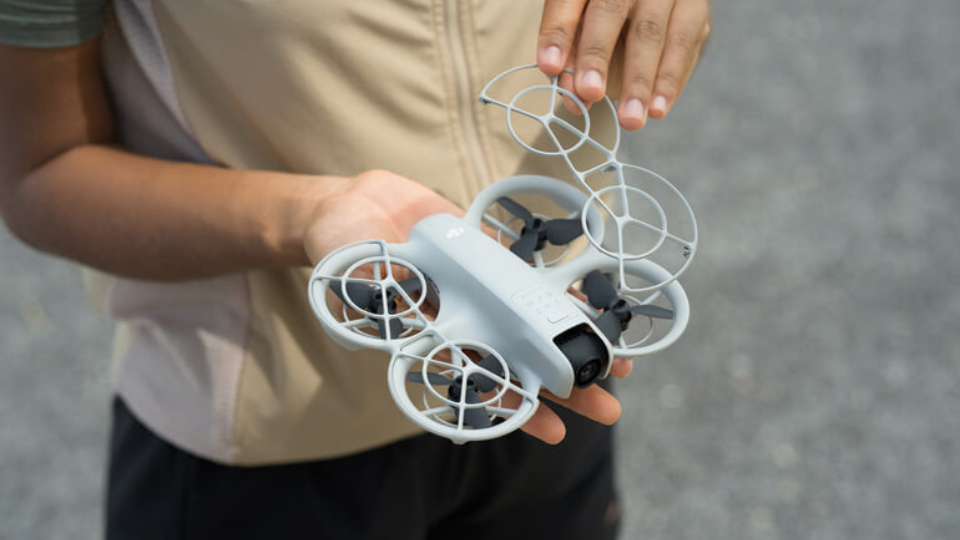
However, some of the Neo's desirable traits also have their downsides. For example, the fact that it's so lightweight means that you're limited to indoor use or windless conditions to achieve the best results. Its stability is also compounded by the fact that it only has a single-axis gimbal.
The Neo’s small frame also results in a small battery so you're only getting a little more than fifteen minutes of flight time per charge, which is approximately half the battery life of DJI's other mini drones. The lack of a controller may bring down the price quite a bit, but it reduces the operating range to about 50 meters (or 164 feet). It also lacks obstacle avoidance, so you need to exercise caution especially when deploying it with the Quick Shots.
Zero Zero Robotics HoverAir Series
DJI may be well known for their quality products that are easy to use, but they've also become notorious for their insufficient supply in the U.S. Fortunately, there's plenty of great alternatives available. If the Neo sparked your interest, you may want to consider the HoverAir series from Zero Zero Robotics, which share a similar design to the Neo and can also function independently of a controller. Unlike the Neo though, they're capable of launching much quicker and can be folded for maximum portability.
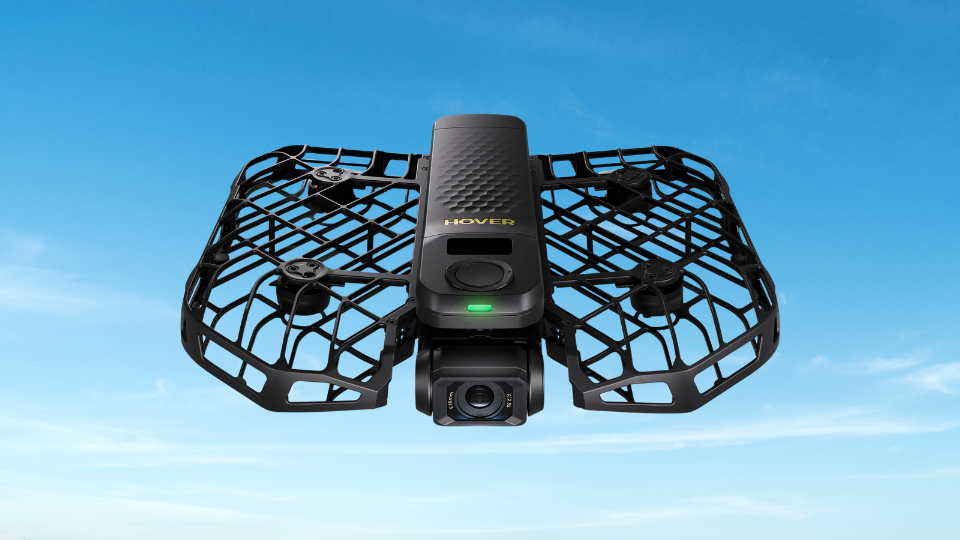
The HoverAir drones consist of a basic model called the X1 and two newer more advanced options (the PRO and the PROMAX). The X1 is most similar to the Neo, with the most notable difference being that the X1's maximum resolution is 2.7K @ 30 fps, which is a notch below the Neo's 4K @ 30 fps.
While the X1 and the Neo are selfie drones that are geared more towards beginners and influencers, the PRO and PROMAX have more sophisticated features for those wanting to capture sports and/or professional video. For outdoor flight, the PRO and PROMAX definitely have an advantage with their Level 5 wind resistance, as opposed to the Level 4 categorization of the X1 and the Neo.
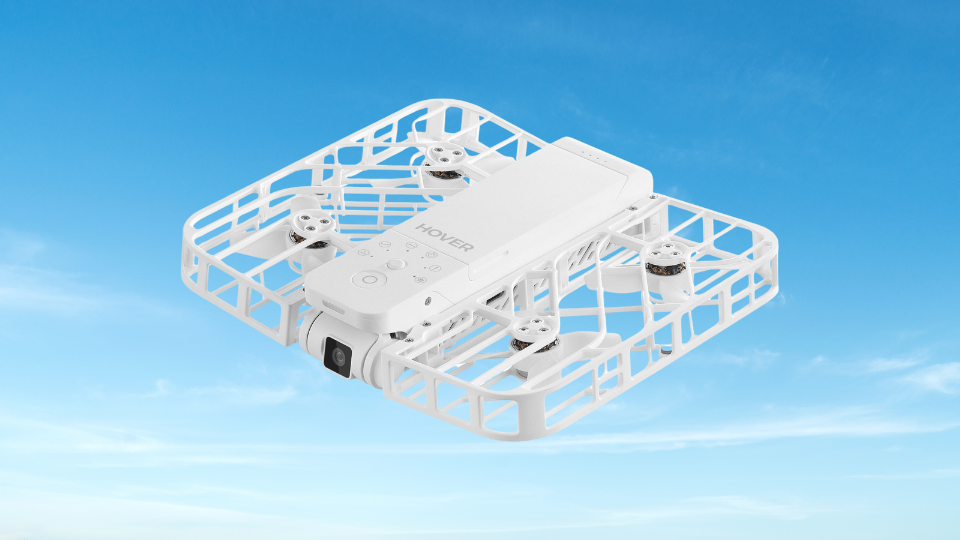
Those upgraded HoverAir drones are also capable of flying up to 500 meters (1640 feet), which is significantly more than the X1 and the Neo's limitation of 50 meters or less. The PRO and PROMAX also have a wider field of view, two-axis gimbals, vertical shooting, the inclusion of some obstacle avoidance, an optional controller bundle, and nearly double the tracking speed of the X1 and the Neo.
It's also worth noting that the PROMAX offers much better imaging than the Neo and the other HoverAir models. Even when compared to the PRO, the PROMAX has a larger sensor (1/1.3" versus 1/2"), higher resolution (8K @ 30 fps versus 4k @ 60 fps), better slow motion (4K up to 120 fps versus 1080 up to 120 fps), and more detailed color (10-bit HDR). The PROMAX is worth considering if you value higher video quality or shoot in low-light conditions and aren't on a tight budget. If you can't quite afford the PROMAX but still require better tracking capabilities (regarding speed, distance and stabilization)—especially for more active users like cyclists or skiers—then the HoverAir PRO is a viable alternative.
Potensic ATOM Series
All of the aforementioned hand-launch drones are perfect for vloggers and content creators, for casual users who want to effortlessly create cinematic footage, and those who simply want a drone that's ultra-lightweight and/or autonomous from a remote. Yet for those looking for more manual control and less restrictions—while still not breaking the bank—the mini drones in the Potensic ATOM series are an excellent choice.
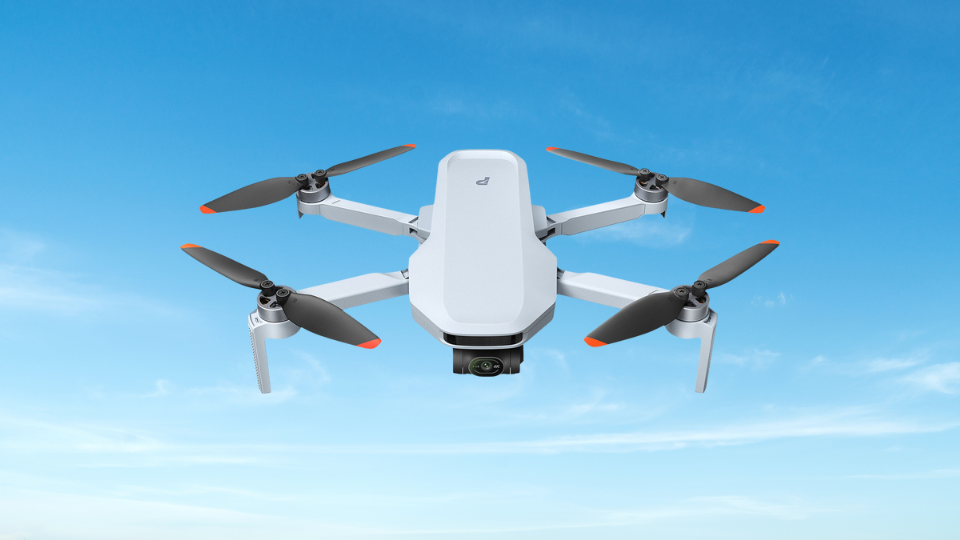
My first impression of the Potensic ATOM was that it’s very similar to DJI in terms of design, functionality, and even naming conventions. My next takeaway was how easy and quick it was to set up (just under five minutes to unbox and get it airborne). The ATOM drones deliver 4K video at more competitive prices than DJI but require extra caution because they do not have anti-collision sensors.
Potensic has three different mini drone models—the ATOM SE, the ATOM, and the ATOM 2—that all come with a controller that you connect your phone to and control via their mobile app. As the most affordable model, the ATOM SE only has a single-axis gimbal, no digital zoom, and its transmission range is limited to 2.5 miles. The ATOM and ATOM 2 are upgraded to include three-axis gimbals, 1-2x digital zoom in 4K mode, and can be flown up to 6 kilometers (3.7 miles) and 10 kilometers (6.2 miles), respectively.
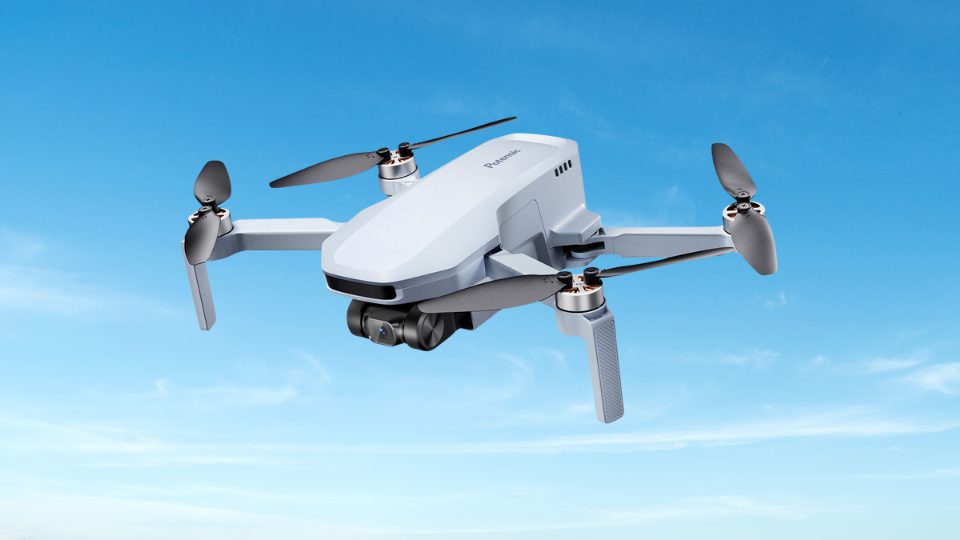
The original ATOM balances affordability with better video capabilities (more stable footage with visual tracking), while the more recent ATOM 2 improves in video functions as well as its still image quality (48 megapixels and 8K photo resolution). With the addition of cruise control plus AI-powered flight modes and tracking, the ATOM 2 is designed for creators who want a compact drone with high-quality imaging and more advanced features.
There are plenty of other mini drones on the market yet choosing the best one depends on your personal needs and priorities. Even if you want to keep looking beyond the previously discussed drones, I hope this article shed some light on which specs and features you should be seeking out.
