
Optimal imaging for virtual production (VP) requires certain camera functions that are not integral to all video cameras. A global shutter (or fast readout speeds), genlock capability, and timecode input are key factors to look for when selecting a camera for your VP video capture. Let’s review these specifications and highlight several cameras that incorporate these key specs.
Global Shutter Sensor
Most video cameras are designed with a “rolling” shutter that successively scans each row of photosites (the physical embodiments of pixels) on the image sensor. While this is accomplished at lightning-fast speeds, this process can still result in artifacts like stripes, skewing, or blurring in your image as sections of the sensor are illuminated at every-so-slightly different times, especially when capturing fast-moving subjects. A global shutter exposes all photosites on the sensor at once, resulting in a consistent level of light across the image. This enables cameras with global shutters to produce clean, consistent frames that work best within the precise requirements of virtual production.
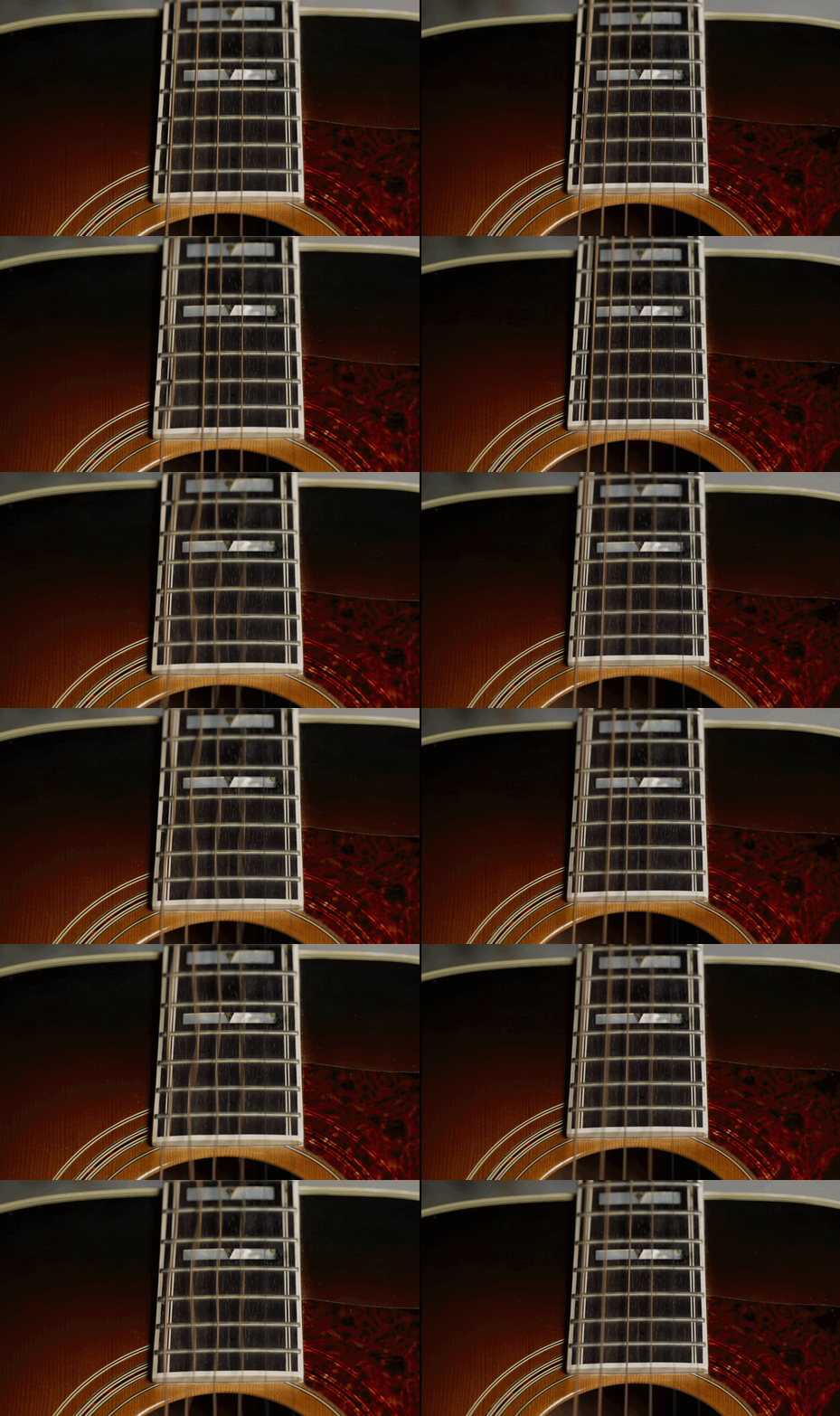
on the RED DIGITAL CINEMA V-RAPTOR XL [X] 8K VV Camera (V-Mount)
RED DIGITAL CINEMA’s Super 35-format KOMODO 6K and KOMODO-X, and full-frame/VistaVision V-RAPTOR [X], RED V-RAPTOR XL [X], and compact V-RAPTOR XE cameras all have a global shutter sensor for crisp imaging with distortion-free fames.
Fast Sensor Readout Speed
An image sensor’s readout speed is the time it takes for each horizontal line of pixels to be read by the processor. Higher-resolution sensors have correspondingly more lines (3840 in UHD 4K vs. 1920 in HD), so the readout speed is key. The slower the readout speed, the greater the chance of artifacts like a skew effect occurring. A common specification for virtual production is a readout speed of ˜18 ms.

Camera manufacturers can be somewhat reluctant to release all the exact specs for their models but per the list of cameras approved for Netflix distribution, these cine-style cameras all have speeds of less than 18ms: ARRI ALEXA LF, ALEXA Mini LF, ARRI ALEXA 35 XTREME, Blackmagic Design PYXIS 12K, Blackmagic Design URSA Cine LF 12K, Canon EOS C400 6K FF, Panavision DXL2 (rental only), Sony BURANO 8K, Sony VENICE 2 8K and VENICE 2 6K.
Genlock
Each of the cameras above supports a genlock signal that enables you to synchronize multiple cameras, recorders, or similar devices using a blackburst or trilevel reference signal. Compared to timecode, which is read and aligned from your media in post-production, a genlock signal physically syncs the cameras to each other and your VP system while they are recording, which prevents imaging issues such as image tearing and black frames. Genlock is critical when doing any electronic production or postproduction work involving more than one device that must work together.

Timecode
Also common to the cameras listed earlier is a timecode input that enables it to be aligned with audio recordings in the field and in post-production. Timecode is usually displayed on set via a digital slate and can also be “burned in” on a working copy for an easy visual reference while viewing footage in post. Select cameras have timecode out ports that enable them to act as a timecode source as well. Selectable options include real-time (time of day) timecode and continuous timecode that counts up from the start of your shoot. SMPTE timecode is widely used and can be recorded in a video signal as VITC (vertical interval TC) or audio signal as LTC (linear TC).

Additional Factors
Some additional specs common to cameras used for virtual production include video resolutions of UHD 4K or higher, a workflow using at least a 10-bit color, and frame rates of 30 FPS, 60 FPS, or higher for smooth motion reproduction—which, again, are all found in the models cited above.
If you’d like to learn more about the best cameras for virtual production use, check out our other guides and articles on the B&H Explora page!

