Search results for: video tips solutions available light cinematography
About 8 filtered results
by Steven Gladstone · Posted
Whether you’re a student or a seasoned veteran, selecting the right camera can make your head spin with questions. Does sensor size matter? What’s the difference between 4:2:0 and 4:2:2? Do I really need a camera that can record 8K? What about raw? We’ll explain the key components that help a camera produce cinematic images, and in doing so, hopefully help you make that all-important decision.
Evaluate Your Needs and Your Budget
Before considering certain cameras, you must know your needs and your budget. And be realistic. If you are a student

by Stepan Andranikian · Posted
So you just finished watching a great white shark feeding video and thought, “Wouldn’t it be awesome to be in the water with a camera to film this feast?” I'm right there with you, which is why today we’ll be diving into the world of underwater video creation, from the gear you’d need, to tips for getting the perfect action shot.
Before we get into it, I’d like to leave a little disclaimer: while venturing out into the vast and expansive deep blue is a riveting adventure, please practice caution and, if you’re not experienced in underwater

by Jennifer Hahn · Posted
I can picture the eyerolls after reading that headline, and I totally understand. Will the cinematography departments of digital films now utilize autofocus in their carefully planned, meticulously lit, and choreographed productions? No, and for many reasons other than to keep focus pullers employed. But, using AF technology in smaller films, documentaries, reality shows, sporting events, and streaming productions can benefit greatly by the use of autofocus for their shots, so the camera won’t lose focus when a compact crew is busy juggling
by Jennifer Hahn · Posted
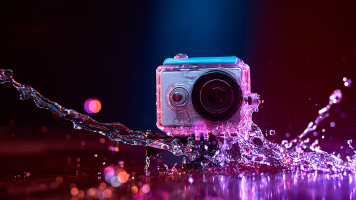
When I was shooting video as a one-person crew, to get some of the motion shots of cars or other moving vehicles, I needed a camera that I didn’t have to worry about operating but which also had high enough quality to match my main camera as closely as possible. I settled on different action camera setups since they have a few qualities that are indispensable to a filmmaker or videographer who needs to add motion shots or angles that aren’t possible with their main camera. Below are five reasons every filmmaker needs an
by Chase Guttman · Posted
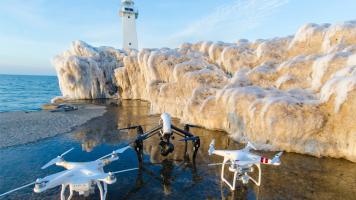
Just out of reach of the longest selfie stick and the lowest-hovering helicopter, drones can capture what no other technology is typically allowed or capable of capturing. That's particularly liberating in a world where 350 million photographs are uploaded to Facebook daily. Here are seven tips to help make your drone photography stand out rather than drone on.
Fly smart
If you're just getting started in

by Justin Dise · Posted
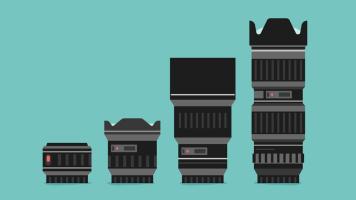
Whether you’re assembling a personal lens kit or compiling the equipment-rental list for your next film, selecting a lens package is an important decision. It can also be a daunting one, especially if you’re new to the game. So what lenses should you get? A complete set of primes? A couple of zooms? Both? The answers aren’t always clear. Ask ten DPs what their favorite lenses and focal lengths are, and you’ll likely get about as many answers.
The fact is that everyone has his or her own preferences, from focal length to build quality, to a

by Steven Gladstone · Posted
I have been using filters ever since I first shot Super 8 film with a little Kodak M-22 camera. Just press the funny-looking piece of metal into the top of the camera to drop in (or remove—I can't remember which it was) the Wratten 85 filter that allowed you to use tungsten-balanced film in daylight, and achieve the correct color balance. Over the years, my filter experience has pretty much stayed the same—I use filters to achieve a
by Steven Gladstone · Posted
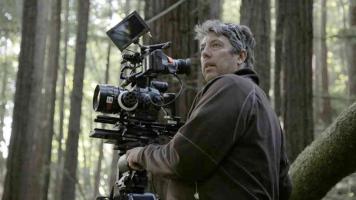
Shane Hurlbut, A.S.C., is a Director of Photography who views the world differently than most cinematographers. After 16 years of shooting feature films traditionally, using cinema cameras and film stock, he was one of the first filmmakers to break ground and use the DSLR to make movies. The "inciting incident"—to borrow a screenwriting term—in his digital-filmmaking career was the introduction of the Canon 5D Mark II, which he took to immediately. According to Hurlbut, after many people insisted that you couldn’t put images from a still