Studio Monitor Controllers

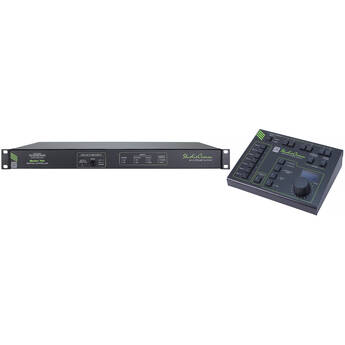
Studio Technologies Central Controller And Model 795 Control Console for 5.1 Stereo - Dante/Balanced AES3
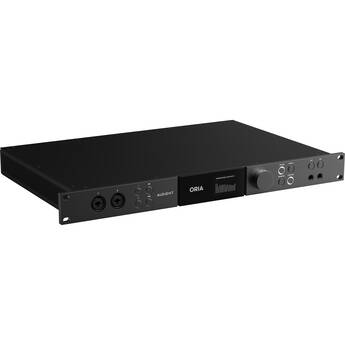
Audient ORIA Immersive Audio Interface and Monitor Controller with Dante Card
- For Music, Film, TV, and Game Production
- Up to 9.1.6 Atmos Multichannel Support
- Preinstalled Dante Card
- Onboard Room Calibration DSP
Trinnov NOVA Loudspeaker and Room Optimization Processor with 3D Microphone
- For Accurate Studio Monitoring
- Includes Trinnov Optimizer Tech
- 3D Mic with Auto Calibration
- Upgradeable from 2 to 6 Channels
SPL MC16 Mastering Grade Monitor Controller (All Black)
- Accommodates Atmos & Auro 3D Formats
- 16 XLR Speaker Outputs
- XLR & DB25 Connections
- Ganged Potentiometer for Even Control
SPL MC16 Mastering Grade Monitor Controller (Red)
- Accommodates Atmos & Auro 3D Formats
- 16 XLR Speaker Outputs
- XLR & DB25 Connections
- Ganged Potentiometer for Even Control
SPL MC16 Mastering Grade Monitor Controller (Black)
- Accommodates Atmos & Auro 3D Formats
- 16 XLR Speaker Outputs
- XLR & DB25 Connections
- Ganged Potentiometer for Even Control
Trinnov Nova Room Correction Audio Interface with 3D Measurement Microphone (Four Channels)
- For Professional Studios
- Room Correction Interface
- Comprehensive Monitor Controller
- Dante and AoIP
Trinnov Nova Room Correction Audio Interface with 3D Measurement Microphone (Six Channels)
- For Professional Studios
- Room Correction Interface
- Comprehensive Monitor Controller
- Dante and AoIP
Grace Design m908 2.1 to 22.2 Multichannel Reference Monitor Controller with Remote Control (Black)
- Monitor Control for 2.1 to 22.2 Systems
- Full Bass Management Capability
- Channel Level & Delay Calibration
- Comprehensive Downmix Control
Grace Design M908 Controller with DigiLink Card Installed
Grace Design M908 Controller with 8 Channels of Analog Inputs
Grace Design M908 Controller with 8 Channels of Analog Inputs and DigiLink Card For Avid Pro Tools Hd Systems
Grace Design M908 Controller with 8 Channels of Analog Inputs and Dante Network Card
Grace Design M908 Controller with 16 Channels of Analog Inputs
Grace Design M908 Controller with 8 Channels of Analog Inputs and Ravenna Network Card
Dangerous Music 14-Channel Analog Atmos System
- Surround Sound System
- Three Sets of Switchable Speaker Outputs
- Speaker Offsets for Level Matching
- Independent Subwoofer Control and Filter
Grace Design M908 Controller with 16 Channels of Analog Inputs and DigiLink Card
Grace Design M908 Controller with 16 Channels of Analog Inputs and Dante Network Card
Grace Design M908 Controller with 16 Channels of Analog Inputs and Ravenna Network Card
Learning About Studio Monitor Controllers
Studio monitor controllers are an essential part of any professional studio. They manage various inputs, such as speakers and subwoofers, cue mixes, headphone amps, talkback mics, and much more.
How Does a Studio Monitor Controller Work?
A studio monitor controller allows you to manage the levels of your monitors. You can also switch from mono to 5.1 surround sound, enable surround sound, control your sub-bass sound, and individually select specific speakers. Instead of rerouting the signal manually by reconnecting wires or pushing switches, you can control everything from one central and convenient system.
Passive Controllers vs. Active Controllers
Passive studio monitor controllers have no active electronic components, they have a transparent sound while allowing you to use passive volume controls and select speaker inputs. As long as your stereo speakers have power, you can use the stereo volume controls to adjust levels without "coloring" the sound. While passive controllers aren't feature-heavy devices, many audiophiles favor them for their precise sound accuracy.
Active monitor controllers use electronic circuits and active amplifiers to control the signal, offering more features. If you need to use mic talkback functions to communicate with talent in the studio, an active studio controller can provide you with the necessary power. An active controller can also accept connections via Bluetooth. Many of the more complex features of a monitor controller are only available with active units.
Features of Studio Controllers
Dim Switch
A dim switch can reduce volume without stopping the playback, and communicate with the artist in the recording booth for "on-the-fly" instructions. You can also lower the volume to check if there's any overlay between instruments on the same track.
Talkback
If a monitor controller has talkback functionality, you can connect talkback mics to communicate with the artist in the recording studio. This helps you deliver instructions and feedback with the switch of a button.
Metering
A studio monitor controller with metering displays the output of your speakers with a graphic output meter. Metering displayed directly from your controller is often more accurate because there is zero latency.
If you're searching for the perfect studio monitor controllers for pro audio recording use, check out the selection offered by B&H Photo and Video.