Immersive Audio & Dolby Atmos
Dolby Atmos Creation

Dolby Atmos Listening
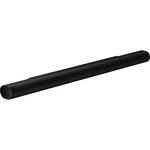
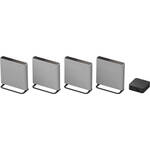
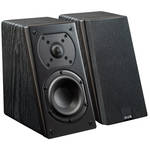
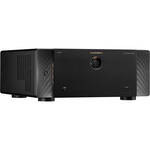
Dolby Atmos is the most established immersive audio format, having become commonly adopted for movies while also quickly growing in popularity in the music world. Unlike traditional Dolby Surround, Dolby Atmos introduces height channels into the mix to make the film or music more enveloping than was once possible. Music is now not only in front, to the sides and behind you but also above you. Dolby Atmos has also introduced the idea of object-based surround, where sound elements can move independently from one another across the entire 3D soundstage. And while mixing tracks for Dolby Atmos can prove to be incredibly challenging, listening to Dolby Atmos has become easier than ever.
Dolby Atmos is already available on all major TV/movie streaming platforms and most music streaming platforms. While it’s not impossible to set up a true-blue Atmos speaker system with a receiver in your home, all you need to do is get a Dolby Atmos soundbar system to experience an approximation of the full Atmos surround effect. In fact, you don’t even need speakers; you can appreciate impressive spatial effects on regular headphones thanks to simple psychoacoustic principles. And if you invest in Apple’s headphones or earbuds, which feature digital signal processing to optimize the spatial experience, you can enjoy an even more colorful and multidimensional soundstage when listening to Spatial Audio tracks from Apple Music.
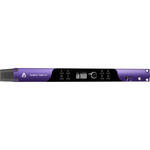
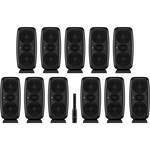
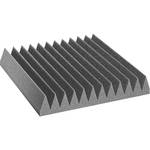
While listening to Dolby is easy, mixing Dolby Atmos tracks or films is quite another story. There’s a steep learning curve for all engineers who transition to Atmos from stereo. Dolby Atmos mixing and mastering professionals need a number of speaker channels. Many mix on a 7.1.2 setup, which is 9 speakers and a subwoofer. For this reason, engineers require at least a 10-output audio interface, a multi-channel monitor and a calibration tool for the speakers. And let’s not forget the studio space itself, as acoustic treatment is required to ensure that the speakers deliver an accurate picture of the mix. It’s not only a time-consuming project, but also an expensive one. That said, artists and streaming services are willing to pay extra for the service. And as long as Dolby Atmos continues to sound more spacious and spellbinding than stereo, it will continue to grow in presence.