Internal Hard Drives

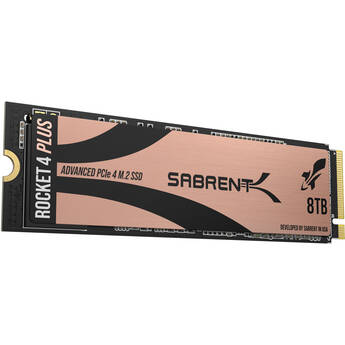
Sabrent 8TB Rocket 4 PLUS NVMe PCIe 4.0 M.2 2280 Internal SSD
- 8TB Capacity
- M.2 2280 PCIe 4.0 x4 Form Factor
- Up to 7000 MB/s Read Speed
- Up to 6000 MB/s Write Speed
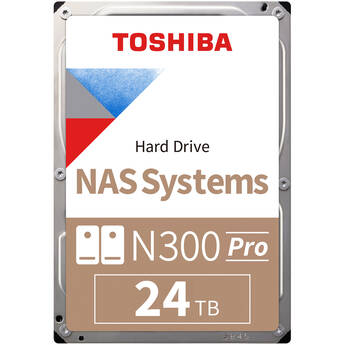
4
Pieces
Toshiba 24TB N300 PRO 7200 rpm SATA III 3.5" Internal NAS HDD (4-Pack)
- 24TB Storage Capacity
- 3.5" Form Factor
- SATA III 6 Gb/s Interface
- 1GB Cache
ACTi 12TB UltraStar DC HC520 7200 rpm SATA III 3.5" Internal HDD
- 12TB Storage Capacity
- 3.5" Form Factor
- SATA III 6 Gb/s Interface
- 256MB Cache
HighPoint 16TB RocketAIC 7505HM PCIe 4.0 x16 NVMe SSD (4 x 4TB)
- For the Mac Pro (2019 & 2023 Models)
- 16TB Storage Capacity
- 4 x 4TB Samsung 990 PRO PCIe M.2 SSDs
- Sequential Reads up to 27,210 MB/s
OWC 8TB Accelsior 8M2 PCIe 4.0 Storage Card
- 8TB Capacity
- PCIe 4.0 x16 Interface
- Includes Preinstalled M.2 SSDs
- Internal Cooling Fan
HighPoint 16TB RocketAIC 7540HM PCIe 4.0 x16 NVMe SSD (8 x 2TB)
- For the Mac Pro (2019 & 2023 Models)
- 16TB Storage Capacity
- 8 x 2TB Samsung 990 PRO PCIe M.2 SSDs
- Sequential Reads up to 27,570 MB/s
OWC 16TB Accelsior 8M2 PCIe 4.0 Storage Card
- 16TB Capacity
- PCIe 4.0 x16 Interface
- Includes Preinstalled M.2 SSDs
- Internal Cooling Fan
Synology 7TB SAT5210 SATA III 2.5" Internal SSD
- Built for Synology Systems
- 7TB Storage Capacity
- 2.5" / 7 mm Form Factor
- SATA III 6 Gb/s Interface
HighPoint 32TB RocketAIC 7540HM PCIe 4.0 x16 NVMe SSD (8 x 4TB)
- For the Mac Pro (2019 & 2023 Models)
- 32TB Storage Capacity
- 8 x 4TB Samsung 990 PRO PCIe M.2 SSDs
- Sequential Reads up to 27,570 MB/s
OWC 32TB Accelsior 8M2 PCIe 4.0 Storage Card
- 32TB Capacity
- PCIe 4.0 x16 Interface
- Includes Preinstalled M.2 SSDs
- Internal Cooling Fan
Micron 15.36TB 7450 PRO NVMe U.3 Internal SSD
- 15.36TB Storage Capacity
- 2.5" / 15mm Form Factor
- NVMe PCIe 4.0 / U.3 Interface
- Sequential Read Speeds of 6800 MB/s
OWC 64TB Accelsior 8M2 PCIe 4.0 Storage Card
- 64TB Capacity
- PCIe 4.0 x16 Interface
- Includes Preinstalled M.2 SSDs
- Internal Cooling Fan
Learning About Internal Hard Drives
Every computer needs an internal hard drive to run, whether it's a desktop at the office or a laptop used for gaming. The one you need and how it works both depend on the type of computer, as well as your intended usage. Choosing a new hard drive, or adding the right one to your custom-built machine, can be a significant upgrade.
What's the Difference Between an Internal and an External Hard Disk?
Essential computer components, internal hard disks feature the boot files needed for the operating system to load. They also require more steps to install than an external hard drive, which usually connects simply via USB. An internal hard drive stores data just like an external one does, but it can also be configured in various ways to create separate spaces for different files. External hard drives can also be placed in enclosures when running back-ups.
What's an Internal Hard Drive Cache?
One feature you may see listed on an internal hard disk is the disk cache. This piece of dedicated RAM boosts the disk's performance and allows data to load quicker.
What's an Internal Solid State Drive?
Most hard drives that store data on physical discs have several moving components such as disc platters and read/write heads. By contrast, internal solid state drives have no moving parts and operate using electrical signals that move across circuits. This causes less vibration and wear on the drive, making it last longer, and keeps your data with greater integrity.
What's a SATA Internal Hard Drive?
SATA, or serial ATA, is a common interface type that many hard drives use. It allows for rapid file transfer, and is the new standard for most computers.
How Do You Install an Internal Hard Drive (HDD)?
Many internal hard drives are relatively simple to install by simply sliding them into place in the drive bay. It's always possible to upgrade or repair a computer by removing its existing or factory-installed drive, replacing it with a new one. PC towers usually need to have the side removed to access the drive, while laptops will often have a bottom panel held in place with screws. Make sure the bay is large enough to accommodate the drive, which will be either a 2.5-inch or a 3.5-inch internal hard drive. Also, remember to take care when handling a hard drive, as static electricity and magnets can potentially harm data. For a hard drive enclosure, simply insert the drive into the slot.
Choosing an Internal Hard Drive
Hard drives often have hundreds of gigabytes or even terabytes of storage space. Choose one with sufficient storage for your needs, as movie and other media files take up quite a lot of space. In addition, look at the read/write speed to know how efficient you can expect performance to be.
B&H Photo and Video has a wide selection of hard drives so you can get the performance you desire.