STEM

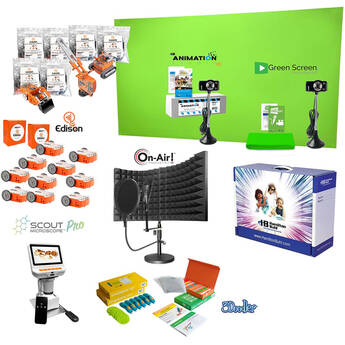
HamiltonBuhl Intermediate Level Deluxe STEAM / STEM Kit
- STEAM / STEM Classroom Kit
- 10 x Edison Educational Robots
- 6 x Edison Robot Expansion Kits
- OnAir! Podcast Kit
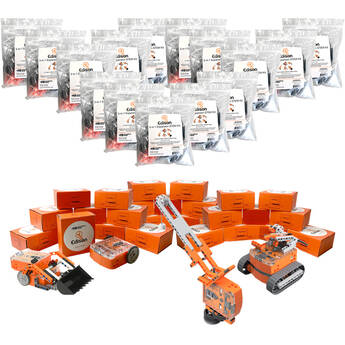
HamiltonBuhl Edison Educational Robot Kit
- STEAM Education Classroom Kit
- 30 x Edison Educational Robot
- 15 x Edibot-C Expansion Construction Kit
A school can be any institution where instruction is given and gained and, for many students, that means at home. Whether it’s part-time, full-time, or just temporarily, home schooling can be a great way for students to learn about a wide range of subjects and disciplines. Of those subjects, perhaps none is more important, and more beneficial, than those included included in the STEM curriculum.
What is STEM?
STEM is an acronym that’s derived from the four disciplines in its core curriculum: Science, Technology, Engineering, and Math. In practice, STEM education is taught in a hands-on manner, with an interdisciplinary approach, so that students can see how each discipline works together and how they have real-world use and application.
For example, many STEM-based curricula feature tasks and projects that mirror the work of a real-word occupation. Look at computer programming, for instance. Instead of simply reading or listening to a lecture about the fundamentals of coding, STEM learners participate in exercises where they get to write and implement code—programming their very own STEM robot, as an example.
Why is STEM Important?
The STEM disciplines play a vital role in maintaining and improving America’s technological innovation and its manufacturing sectors. Contrast that importance with the small and dwindling numbers of STEM proficiency and interest in STEM-oriented careers among American high school students, and the need becomes obvious. Without a push to improve STEM education, as well as a renewed interest in STEM careers, America’s technological and manufacturing standing is at risk.
How to Implement STEM Learning?
The best approach for implementing a STEM education program is to start when the student is very young and continue all the way through high school. The reasoning behind this approach is that it’s best to focus on introductory and beginner-level STEM concepts while the student is young, to build a strong foundation. As students progress through their STEM curriculum, they’ll take on tasks and projects that not only make use of their learning but, as mentioned earlier, demonstrate a clear correlation to the real world.
Where to Get STEM Education Tools?
Since the Obama administration announced its STEM-oriented “Educate to Innovate” campaign, in 2009, B&H has invested heavily in STEM teaching tools and resources. We have a large inventory of STEM-approved projects, crafts, toys, and teaching equipment. We also carry a full catalogue of support equipment and materials, including computers, laptops, monitors, networking equipment, and more.