Thunderbolt Audio Interfaces

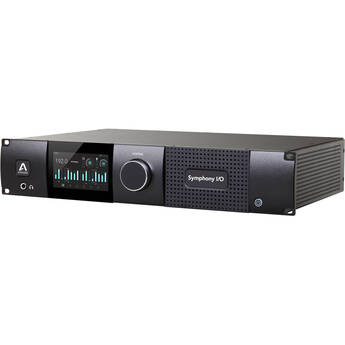
Apogee Electronics Symphony Mk II Thunderbolt Interface with 16x16 SE and 2x6 SE Modules
- Symphony Mk II Chassis
- 16x16 SE Module
- 2x6 SE Module
- Thunderbolt Connectivity
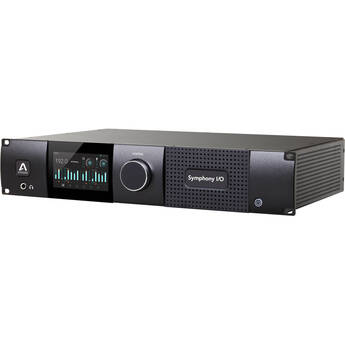
Apogee Electronics Symphony I/O MkII Thunderbolt 3 Interface with 16x16 SE and 2x6 SE Modules
- Symphony I/O MkII Chassis
- Thunderbolt 3/4 Connectivity
- 16x16 SE Module
- 2x6 SE Module
Antelope Galaxy 64 Synergy Core 64-Channel AD/DA Dante/HDX/Thunderbolt Audio Interface
- Studio/Live/Broadcast Engineers
- Dante, HDX & Thunderbolt 3 Connectivity
- 64 Channels of AD/DA Conversion
- Stereo Headphone and Monitor Outputs
Apogee Electronics Symphony I/O Mk II Thunderbolt Audio Interface with Two Connect 8x8 MP Modules
- Pro Recording, Mixing, Mastering
- Symphony I/O Mk II Chassis
- Thunderbolt Interface Card
- Two Connect 8x8 MP Modules
Apogee Electronics Thunderbolt + Pro Tools HD Plus Interface with 16x16 SE and 2x6 SE Modules
- Symphony Mk II Chassis
- 16x16 SE Module and 2x6 SE Module
- Thunderbolt Connectivity
- Pro Tools HD Plus Connectivity
Apogee Electronics Symphony Mk II with Thunderbolt 3 + Pro Tools HD with 16x16 SE and 2x6 SE Modules
- Symphony Mk II Chassis
- Thunderbolt 3/4 Connectivity
- 16x16 SE Module and 2x6 SE Module
- Pro Tools HD Plus Connectivity
Apogee Electronics Symphony I/O Mk II Thunderbolt 3 Audio Interface with Two Connect 8x8 MP Modules
- Pro Recording, Mixing, Mastering
- Symphony I/O Mk II Chassis
- Thunderbolt 3/4 USB-C Connectivity
- Two Connect 8x8 MP Modules
Apogee Electronics Symphony I/O MkII Thunderbolt + Pro Tools HD/Dante Audio Interface with Connect 8x8 MP and 2x6 SE Modules
- Pro Recording, Mixing, Mastering
- Symphony I/O Mk II Chassis
- Thunderbolt + Pro Tools HD/Dante Cards
- Connect 8x8 MP and 2x6 SE Modules
Apogee Electronics Symphony Mk II with Thunderbolt 3 + Pro Tools HD Plus / Dante Interface with Connect 8x8 MP and 2x6 SE Modules
- Pro Recording, Mixing, Mastering
- Symphony I/O Mk II Chassis
- Thunderbolt 3/4 Connectivity
- Pro Tools HD/Dante Card
Apogee Electronics Symphony I/O MkII Thunderbolt and Pro Tools HD Audio Interface with Two Connect 8x8 MP Modules
- Pro Recording, Mixing, Mastering
- Symphony I/O Mk II Chassis
- Thunderbolt + Pro Tools HD Cards
- Two Connect 8x8 MP Modules
Apogee Electronics Symphony I/O MkII with Thunderbolt 3 and Pro Tools HD Audio Interface with Two Connect 8x8 MP Modules
- Pro Recording, Mixing, Mastering
- Symphony I/O Mk II Chassis
- Thunderbolt 3/4, Pro Tools HD Plus Card
- Two Connect 8x8 MP Modules
Apogee Electronics Symphony I/O Mk II Thunderbolt Audio Interface with Connect 8x8 MP and 16x16 SE Modules
- Pro Recording, Mixing, Mastering
- Symphony I/O Mk II Chassis
- Thunderbolt Card
- Connect 8x8 MP and 16x16 SE Modules
Apogee Electronics Symphony I/O Mk II Thunderbolt 3 Audio Interface with Connect 8x8 MP and 16x16 SE Modules
- Pro Recording, Mixing, Mastering
- Symphony I/O Mk II Chassis
- Thunderbolt 3/4 Connectivity
- Connect 8x8 MP and 16x16 SE Modules
Apogee Electronics Symphony Mk II Thunderbolt + Pro Tools HD Plus / Dante Interface with 16x16 SE and 2x6 SE Modules
- Symphony Mk II Chassis
- 16x16 SE Module and 2x6 SE Module
- Thunderbolt Connectivity
- Pro Tools HD and Dante Connectivity
Apogee Electronics Symphony Mk II with Thunderbolt 3 + Pro Tools HD / Dante Interface with 16x16 SE and 2x6 SE Modules
- Symphony Mk II Chassis
- 16x16 SE Module and 2x6 SE Module
- Thunderbolt 3/4 Connectivity
- Pro Tools HD Plus and Dante Connectivity
Apogee Electronics Symphony I/O MkII Thunderbolt + Pro Tools HD Audio Interface with Connect 8x8 MP and 16x16 SE Modules
- Pro Recording, Mixing, Mastering
- Symphony I/O Mk II Chassis
- Thunderbolt and Pro Tools HD Cards
- Connect 8x8 MP and 16x16 SE Modules
Apogee Electronics Symphony I/O MkII with Thunderbolt 3 + Pro Tools HD Audio Interface with Connect 8x8 MP and 16x16 SE Modules
- Pro Recording, Mixing, Mastering
- Symphony I/O Mk II Chassis
- Thunderbolt 3/4, Pro Tools HD Plus Card
- Connect 8x8 MP and 16x16 SE Modules
Apogee Electronics Symphony I/O Mk II 32x32 Special Edition Thunderbolt Audio Interface
- High-Performance 192 kHz Conversion
- Ultralow Noise and Distortion
- Two Updated 16x16 AD/DA Converter Cards
- 32 Analog Inputs and 32 Analog Outputs
Apogee Electronics Symphony Mk II Thunderbolt 3 Audio Interface with Two 16x16 SE Modules
- Symphony Mk II Chassis
- Two 16x16 SE Modules
- Thunderbolt 3/4 Connectivity
- 32 Analog In / 32 Analog Out
Apogee Electronics Symphony I/O Mk II Thunderbolt + Pro Tools HD/Dante Audio Interface with Two Connect 8x8 MP Modules
- Pro Recording, Mixing, Mastering
- Symphony I/O Mk II Chassis
- Thunderbolt + Pro Tools HD/Dante Cards
- 2 Connect 8x8 MP Modules
Apogee Electronics Symphony I/O Mk II Thunderbolt 3 + Pro Tools HD/Dante Interface with Two Connect 8x8 MP Modules
- Pro Recording, Mixing, Mastering
- Symphony I/O Mk II Chassis
- Thunderbolt 3, Pro Tools HD/Dante Card
- 2 Connect 8x8 MP Modules
Apogee Electronics Symphony Mk II Thunderbolt + Pro Tools HD Plus Interface with Two 16x16 SE Modules
- Symphony Mk II Chassis
- Two 16x16 SE Modules
- Thunderbolt Connectivity
- Pro Tools HD Connectivity
Apogee Electronics Symphony Mk II with Thunderbolt 3 + Pro Tools HD Interface with Two 16x16 SE Modules
- Symphony Mk II Chassis
- Thunderbolt 3/4 Connectivity
- Pro Tools HD Plus Connectivity
- Two 16x16 SE Modules
Apogee Electronics Symphony I/O MkII Thunderbolt + Pro Tools HD/Dante Audio Interface with Connect 8x8 MP and 16x16 SE Modules
- Pro Recording, Mixing, Mastering
- Symphony I/O Mk II Chassis
- Thunderbolt + Pro Tools HD/Dante Cards
- Connect 8x8 MP and 16x16 SE Modules
Apogee Electronics Symphony I/O Mk II Thunderbolt 3 + Pro Tools HD / Dante Interface with Connect 8x8 MP and 16x16 SE Modules
- Pro Recording, Mixing, Mastering
- Symphony I/O Mk II Chassis
- Thunderbolt 3, Pro Tools HD/Dante Card
- Connect 8x8 MP and 16x16 SE Modules
Apogee Electronics Symphony I/O MkII 32x32SE Thunderbolt 3 Audio Interface (40th Anniversary Edition)
- Pro Recording, Mixing, Mastering
- Purple Face Plate, Commemorative Badge
- 2 Thunderbolt 3 Ports
- 32-Channel Line-Level Analog I/O
Apogee Electronics Symphony Mk II Thunderbolt + Pro Tools HD Plus / Dante Interface with Two 16x16 SE Modules
- Symphony Mk II Chassis
- Two 16x16 SE Modules
- Thunderbolt Connectivity
- Pro Tools HD and Dante Connectivity
Apogee Electronics Symphony Mk II with Thunderbolt 3 + Pro Tools HD Plus / Dante Interface with Two 16x16 SE Modules
- Symphony Mk II Chassis
- Thunderbolt 3/4 Connectivity
- Two 16x16 SE Modules
- Pro Tools HD Plus and Dante Connectivity
What Is a Thunderbolt Audio Interface?
A Thunderbolt audio interface is a type of audio interface that uses Intel’s high-speed Thunderbolt technology to connect compatible devices and peripherals to your computer via a USB-C plug.
What Are the Benefits of Thunderbolt Audio Interfaces?
Thunderbolt audio interfaces offer several benefits over non-Thunderbolt USB audio interfaces, including:
Faster Data Transfer (Higher Bandwidth)
Thunderbolt provides much faster data transfer rates compared to USB or FireWire, typically ranging from 10 Gbps (Thunderbolt 1) up to 40 Gbps (Thunderbolt 3/4). Faster data transfer rates allow for the simultaneous transmission of multiple audio tracks with minimal latency, which is critical in professional audio work.
Lower Latency & Digital Signal Processing (DSP)
Latency is the delay between the time an audio signal enters the interface and when you hear it through your speakers or headphones. Thunderbolt's high-speed connection helps achieve very low latency, which is crucial for real-time audio monitoring and live performance settings.
Speaking of lower latency: One of the main benefits of a Thunderbolt audio interface is that
its high-speed connectivity enables onboard digital signal processing (DSP), which helps facilitate near-zero latency monitoring and tracking. DSP allows artists to hear themselves with effects (reverb, delay, etc.) in real time, which is crucial for performance timing.
Higher Channel Count
Thunderbolt interfaces can often handle more input and output channels compared to USB interfaces. This means you can connect multiple pieces of and audio gear (microphones, instruments, etc.) without compromising on performance.
Who Are Thunderbolt Audio Interfaces For?
Thunderbolt audio interfaces are typically used by professionals in recording studios, live sound environments, and anyone who needs to capture or process multiple high-quality audio signals with minimal delay.
Thunderbolt 3 vs. Thunderbolt 4 Audio Interfaces
While there are some notable improvements between the Thunderbolt 3 and Thunderbolt 4 standards, in terms of audio interfaces and applications, those improvements are arguably minimal.
Both Thunderbolt 3 and Thunderbolt 4 support up to 40 Gbps data transfer, so there’s no speed benefit—although Thunderbolt 4 does have stricter minimum spec requirements, which you could argue makes its performance more consistent and reliable.
Thunderbolt 4 also allows you to daisy-chain more downstream devices than Thunderbolt 3, which is helpful if managing a large catalog of devices is your main concern. However, that has no impact on audio quality.
Bottom line: There is no difference in sound quality between Thunderbolt 3 and Thunderbolt 4 and virtually zero difference for audio applications.