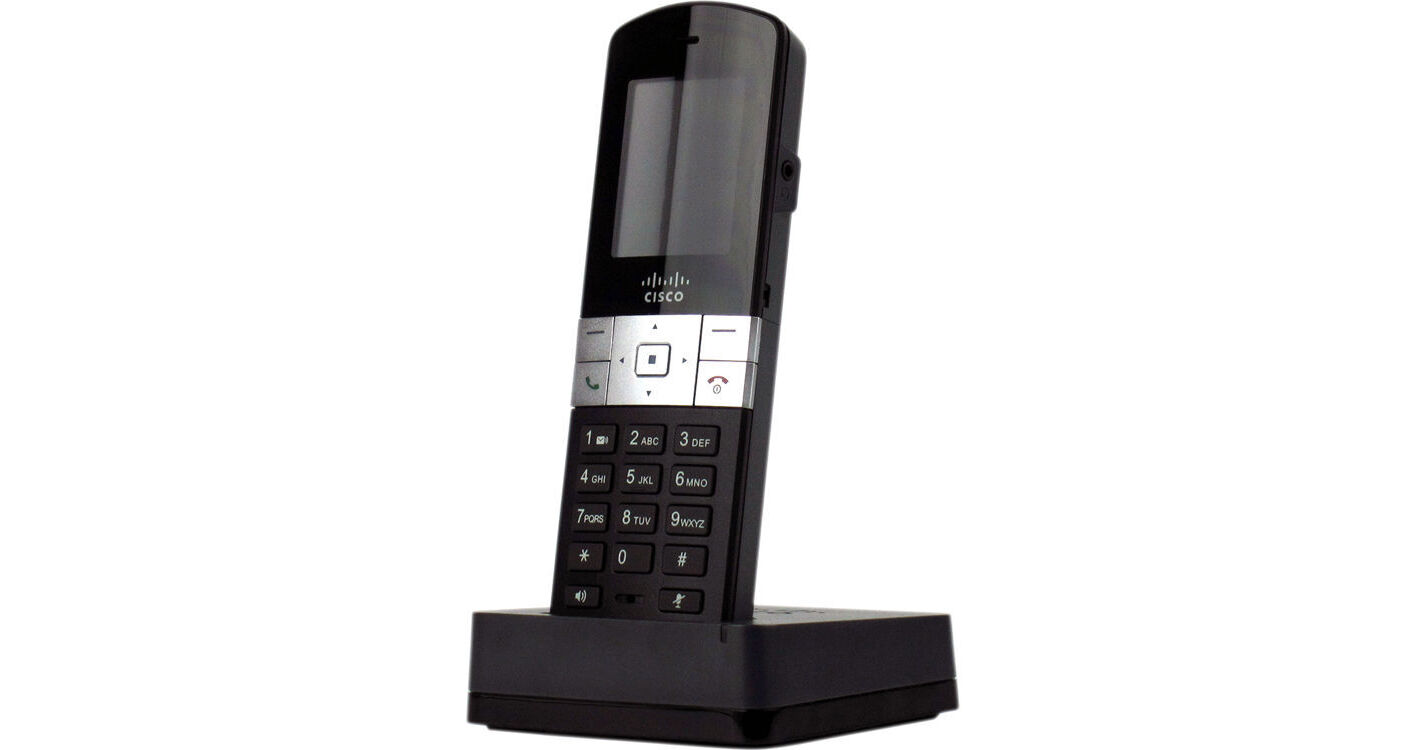
Designed to be used exclusively with the Cisco SPA232D Multi-Line DECT ATA base station, the SPA302D Multi-Line DECT Handset from Cisco is a cordless solution to VoIP calling that is capable of handling multiple numbers or lines. This handset features DECT (Digital Enhanced Cordless Telecommunications Technology) which uses the power of TDMA cellular technology to transmit a stronger signal to a larger number of users. Along with DECT technology, you benefit from wideband audio support for high-definition voice quality.
With a variety of calling features including multi-call operation, call transfer, conferencing, hold, new call, mute, speakerphone, voicemail, intercom, one touch dial, and one touch dial out from call-history logs you can manage your calls with ease. Additionally, the 176 x 220 pixel, 2-inch display located above the keypad allows you to utilize the various functions such as date and time, speed dials, call history, phone book entries, and more. Whether using just one SPA302D or managing of multiple handsets, the software for each unit can be upgraded over-the-air saving both time and money.
• Software upgradable over the air (SUOTA)
• Outgoing default line (when configured with multiple lines)
• Line status
• White illuminated keypad backlight
• Status icons (do not disturb [DND], call forward, mute, off-hook, speakerphone, signal status, and battery strength)
• Date and time display
• Handset name display
• Dial key lock
• Speed dial: Eight programmable
• Private phone book (50 records)
• Shared phone book (50 records)
• Call history (50 records filtered by Outgoing, Incoming, and Missed)
• One-touch dial from call history
• Missed call(s)
• Message-Waiting Indicator (MWI) tones
• Visual MWI (VMWI)
• Five ringtones
• Keypad and handset parking tones
• Distinctive ring support
• Administrative personal identification number (PIN) code support
• Factory reset
• Hearing Aid Compatibility (HAC)
• Call mute
• Call hold/resume
• New call (support for two active call segments)
• Call forward (conditional, unconditional, busy, or no answer)
• Call transfer (attended or blind)
• Call waiting and indication (CWI)
• Call blocking
• Redial
• DND
• Three-way conferencing with local mixing
• Call parking and unparking
• Secure calls (Secure Real-Time Transport Protocol [SRTP])
• Intercom (handset to handset)
Please note some features may require support by the call-control server