Ask Our Experts800-606-6969
Hello, Log InAccount & Orders
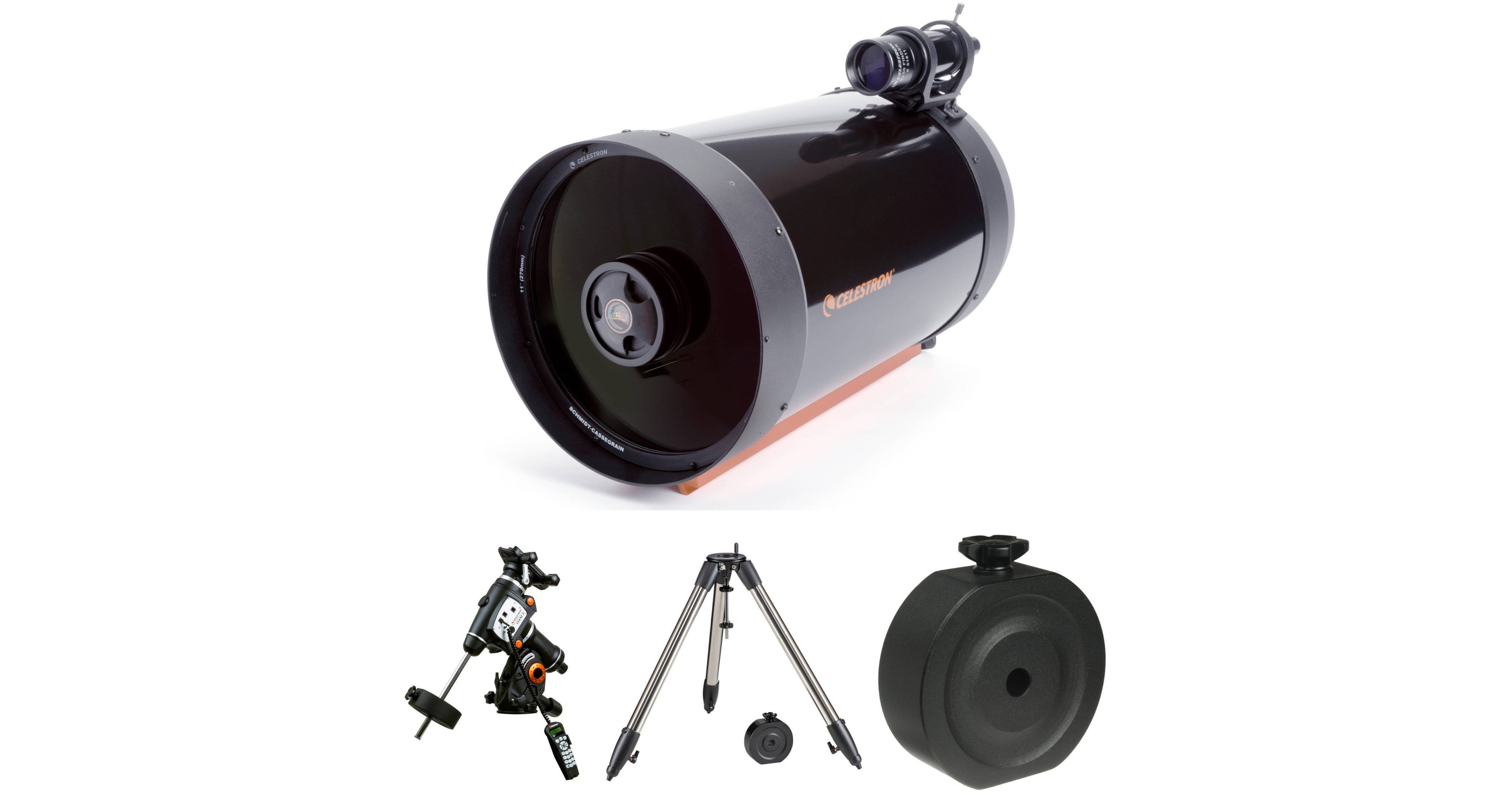
Key Features
- 11" Catadioptric Telescope
- f/10 Focal Ratio
- 2800mm Focal Length
- StarBright XLT Optical Coating System
In Stock
Shipping Restrictions: Sales and export of this item to South Korea are prohibited.
Business Financing Options
See any errors on this page?
Can the Skywatcher AZ-EQ5 carry this OTA?
Can the Skywatcher AZ-EQ5 carry this OTA?
The C11 OTA weighs 27.5 lbs (12.4 kg), so it falls within the load capacity range of the Sky-Watcher AZ-EQ5 mount.
Date published: 2022-01-24
is it posible to use 2" eyepieces with this ...
is it posible to use 2" eyepieces with this telescope ..?
Using the C11-A XLT OTA with a Dielectric Star Diagonal, 2” with Twist-Lock #93573, or Mirror Diagonal with XLT Coatings - 2" #93527, it is possible to use 2" eyepieces.
Date published: 2023-02-22
Can I attach a DSLR to this for ...
Can I attach a DSLR to this for astrophotographery?
Yes, you can. You will need the Celestron T-Adapter for SCT telescopes #93633-A, which attaches an SLR or DSLR camera to a Schmidt-Cassegrain telescope for prime focus photography. You will also need a camera specific T-Ring (Canon or Nikon). Inquire with B&H for availability. An optional Focal Reducer #94175 is also available if you so choose.
Date published: 2022-01-10
What is the difference between Celestron C11-A ...
What is the difference between Celestron C11-A and Celestron C11. Does Celestron C11-A have any improvements?
Celestron only offers the C11-A XLT 11" f/10 Schmidt-Cassegrain Telescope (CGE Dovetail)
#91036-XLT. This optical tube features a black, aluminum optical tube with StarBright XLT Optical Coatings.
Date published: 2022-11-14
Can you see planets close up with this telescope ...
Can you see planets close up with this telescope or are they far away?
The C11 optical tube will show surface features of Mars during favorable oppositions, Jupiter's cloud bands and it's Great Red Spot. Saturn's Cassini ring division is easily viewable. Mercury is too small and too close the sun to see much detail. Venus is covered in clouds, so it appears featureless, but you can observe its phases. Uranus and Neptune are too far away and will resemble bluish dots.
Date published: 2022-08-15