Video Chat with a Pro Audio Expert - Live

Drawmer 1976 Stereo 3-Band Saturation and Width Processor

BH #DR1976 • MFR #1976
Print
Drawmer 1976 Stereo 3-Band Saturation and Width Processor
Key Features
  • For Mixing and Mastering
  • 3-Bands of Analog Stereo Processing
  • Injects Warmth into Digital Signals
  • Independent Width & Saturation per Band
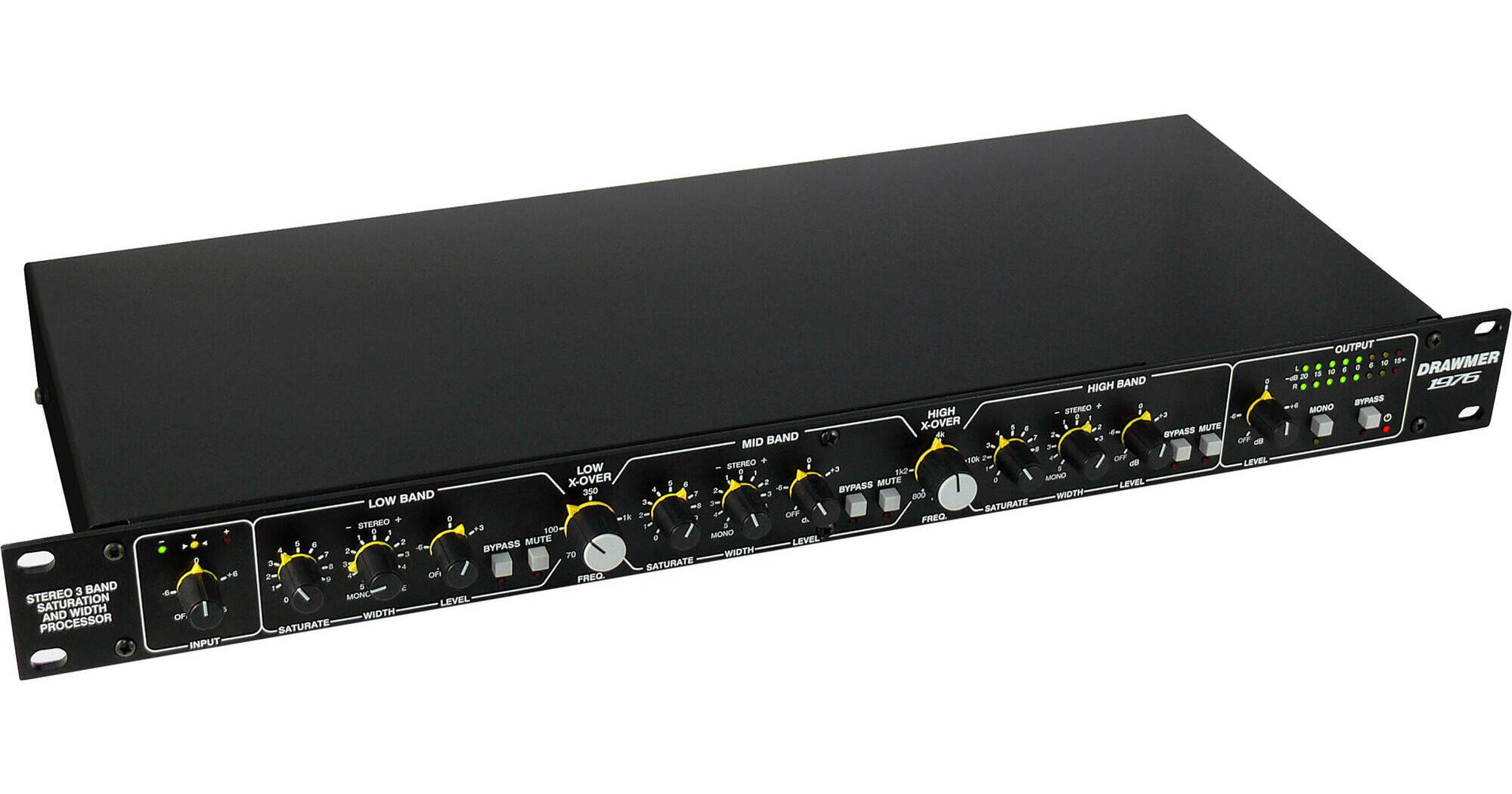
Inject the familiar warmth and color of 1970's audio gear into your sterile digital signals with the 1976 from Drawmer, a 3-band saturation and width processor with genuine stereo or mono operation that produces warmth and fullness that plug-ins can only dream of emulating. With independent saturation, width, and volume controls for each band, it is incredibly easy to fine tune your signals for optimal depth and presence, and variable crossover control lets you dial in different amounts of independent saturation across the full frequency range.
More Details
Special Order
Expected availability: 7-14 Business Days
No Store Display
Free Standard Shipping
Protect Your Gear
Add a protection plan from $199.99
Ask an Expert
800-606-6969

Drawmer 1976 Overview

Add Life to Your Recordings
Inject the familiar warmth and color of 1970's audio gear into your sterile digital signals with the 1976 from Drawmer, a 3-band saturation and width processor with genuine stereo or mono operation that produces warmth and fullness that plug-ins can only dream of emulating. With independent saturation, width, and volume controls for each band, it is incredibly easy to fine tune your signals for optimal depth and presence, and variable crossover control lets you dial in different amounts of independent saturation across the full frequency range.

Each band, as well as the final output, has dedicated bypass and mute buttons, and both the input and output have variable level controls. The 1976 sports balanced stereo XLR I/O as well as a clear, stereo LED VU meter for keeping an eye on your channel levels. This unit includes an AC power cord and a linear, toroidal, internal power supply with user-selectable voltage for global compatibility.

What Is Saturation?
Saturation in music production is something that can really enrich the sound in your mix by adding a subtle form of distortion through pleasant-sounding harmonics. It originates from the analog days when audio recordings ran through various pieces of hardware, each one adding their own character to the music, giving the audio an appealing quality that was much sought after.

Today in the digital age, these characteristics no longer occur naturally, giving an overly clean, sterile quality to the audio, and requiring saturation plug-ins to be used to emulate those harmonics which are not present. The 1976 allows you to add this character in a completely analog, natural way, and it's use is not only limited to digital recordings, as it'll add presence, warmth, and life to any audio regardless of how it's recorded, whether its drums, vocals, synths, and more, in digital or analog.

The Importance of Width
Without stereo widening, the mix won't jump out of the speaker and grab your listener, and this is where the 3 bands of the 1976 can be used to add an extra dimension, taking the mix from a flat wall of sound, to a 3D immersive experience. It's likely your mix will have a stereo element already; however, the 1976 makes it super easy to control this, widening and narrowing where necessary to get the desired effect. One major benefit of having independent width control for each of the bands is to allow the high frequencies to be spread across a wider soundstage without affecting the low-frequency end.
Intuitive Layout
The layout of the 1976 has been designed to be as simple, familiar, and intuitive as possible, while still giving complete control over the audio. The front panel consists of an input control that allows you to optimize the input level should it be to low, or hot.

This is followed by three identical Low, Mid, and High saturation and width bands, flowing left to right, with the variable crossover frequency knobs separating them. To the right, are the Output controls to optimize the output level.

Where to Make the Most of Saturation
Saturation can be used to add warmth on pretty much any piece of audio; however, it can be applied to some sounds far more effectively than others:

  • Percussion: drums are one of the best sounds in which to use saturation. It can be used to glue the whole drum bus together, injecting some punch and excitement, giving them depth and life, and adding harmonics that are pleasing to the ear, while taming rogue transients and high end harshness using natural compression. 
  • Basslines: if your bassline sounds a little flat and lifeless, it will really benefit from adding some saturation. This will bring out the grit, dirty the sound, and fatten it out.
  • Synths: synths tend to sound too digital and clinical. Saturation will bring them to life, making them sound warmer, more natural, and closer to the analog sound that they emulate. It'll inject harmonics and grit, and make the synths stand out more in the mix.
  • Vocals: saturation is one of the secrets to great sounding vocals. Your vocal recordings may sound good, but saturation will make them sing (pun intended). It will make any vocal sound fuller, especially thin and dull voices, and will warm and tame harsh sounding vocals by subtly softening sibilance.
  • Mix: for all of it's pros, digital recording has a major drawback, and that's its overly harsh, overly clean natural sound. Saturation can be the key here. It will add harmonic distortion to inject life and warmth into the mix, and help your digital mixes sound more like those from the analog recording era.

Drawmer 1976 Specs

General
Frequency Response
20 Hz to 20 kHz (±0.2 dB)
Input Impedance
20 Kilohms
Output Impedance
<100 Ohms
Maximum Input Level
+18 dBu
Maximum Output Level
+21 dBu
THD + N
0.006 % (at 1 kHz)
Inputs/Outputs
Audio I/O
2x XLR 3-Pin Line Input (1 Stereo Pair)
2x XLR 3-Pin Line Output (1 Stereo Pair)
Power
Power Source
AC Input (Built-In)
Power Consumption
15 VA
AC Input Power
115 / 230 VAC, 50/60 Hz (User Selectable)
Physical
Mounting
Front: 4x Standard Rackmount Screw
Color
Black
Material of Construction
Steel, Aluminum
Certifications
CE, WEEE
Dimensions
19 x 8 x 1.7" / 48.2 x 20.2 x 4.4 cm
Weight
5.7 lb / 2.6 kg
Packaging Info
Package Weight
6.87 lb
Box Dimensions (LxWxH)
22.5 x 15.2 x 4.6"

Drawmer 1976 Reviews

See any errors on this page?
Whatever You Need, We've Got It