From Manufacturer
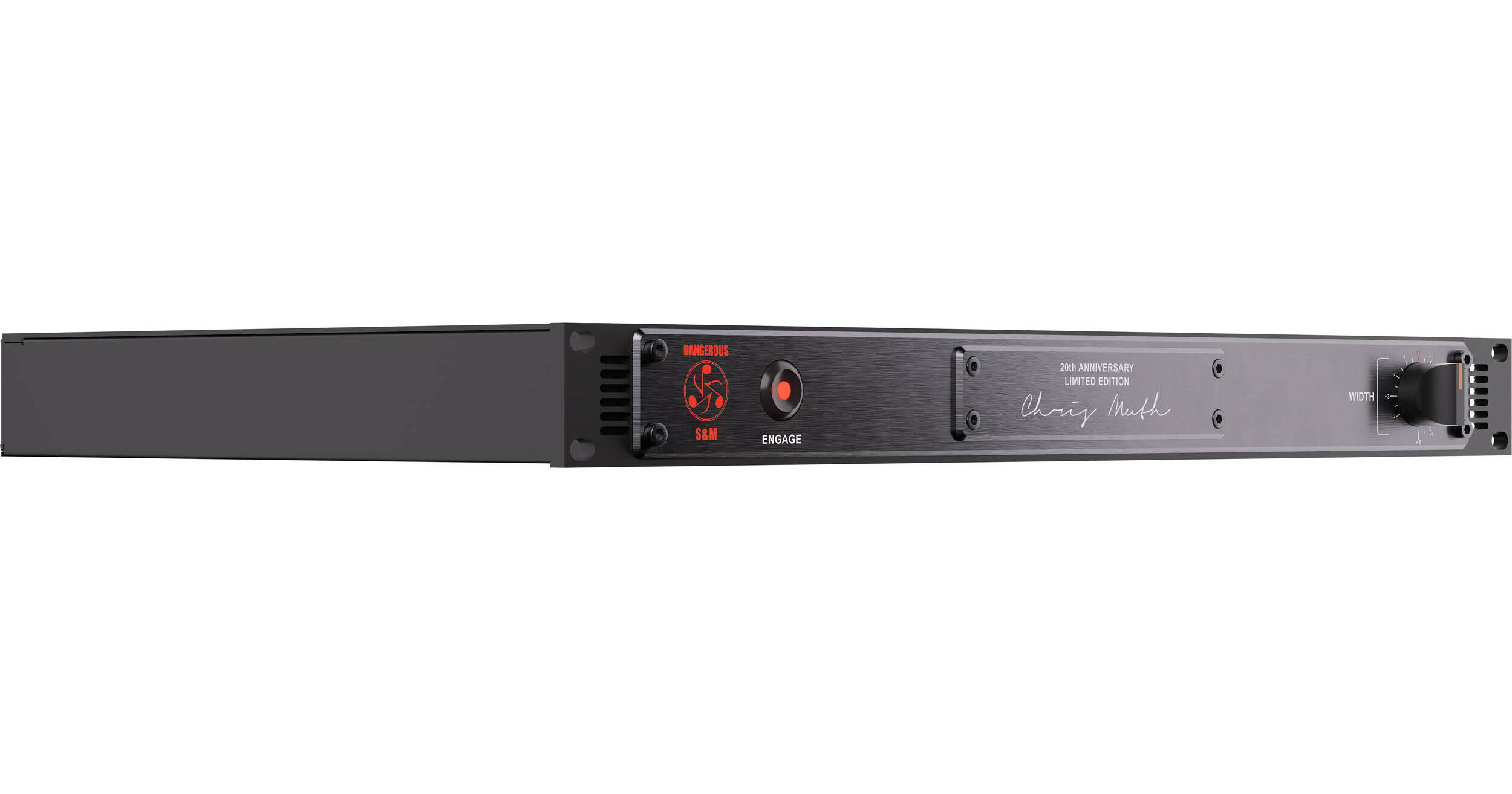
Separate any stereo track into a center and side matrix with the Dangerous Music Sum & Minus, an analog sum and difference (mid-side) processor designed to allow engineers unprecedented control over their stereo information. Add your favorite output gear such as compression, limiting, EQ, and de-essing to craft your sound for the best possible mix. You are only limited by your outboard gear and your imagination, as all types of processing are virtually endless.
Benefits
- Unprecedented control of your mixes
- Separately process the center and the sides of stereo signals
- Powerful stereo image width control
- Insert loop for analog outboard processing
- 100% analog signal path
- Incredibly clean and quiet
- Repeatable controls
Analog Sum and Difference Control for Your Mixing or Mastering Rig
The Dangerous Music S&M mid-side processing matrix is revered in the mixing and mastering community. Insert your favorite outboard, split your stereo into mid and sides, and get to work. Juice up the overall top end, then de-ess that vocal without destroying the ethereal shimmer on the sides. Take your perfect drum sound from a stereo pair of overheads, where the snare is too loud, and resolve it in seconds with a limiter on the Sum channel. Peel back the mung from the bass, so it punches hard without choking the guitars or synths. Deploy it classically or experimentally as a most potent creation tool.
Mastering Engineers
Mastering engineers will enjoy the fact that S&M allows them to save seemingly unsalvageable tracks by altering vocal levels without remixing, by fixing an overly wide or narrow stereo field or by de-essing aggressive cymbals while leaving the center of the mix untouched.
Mix Engineers
The mixing engineer can use the Dangerous Music S&M to extract the snare drum from a washy overhead pair, enhance the width of anemic stereo synths, or custom design the stereo image of the mix without altering the tonal content.
Other Uses
Other fun and useful things to do in the mix room include aggressively limiting the center of a drum overhead pair while leaving the sides open and sparkling without collapsing the width of the image, or how about running some reverb and effect returns through S&M and opening up the width control? In surround, widening the rear channels creates impressive soundstage and depth, all done with cutting edge analog circuitry and without trickery.