
Video Chat with a Photography Expert - Live

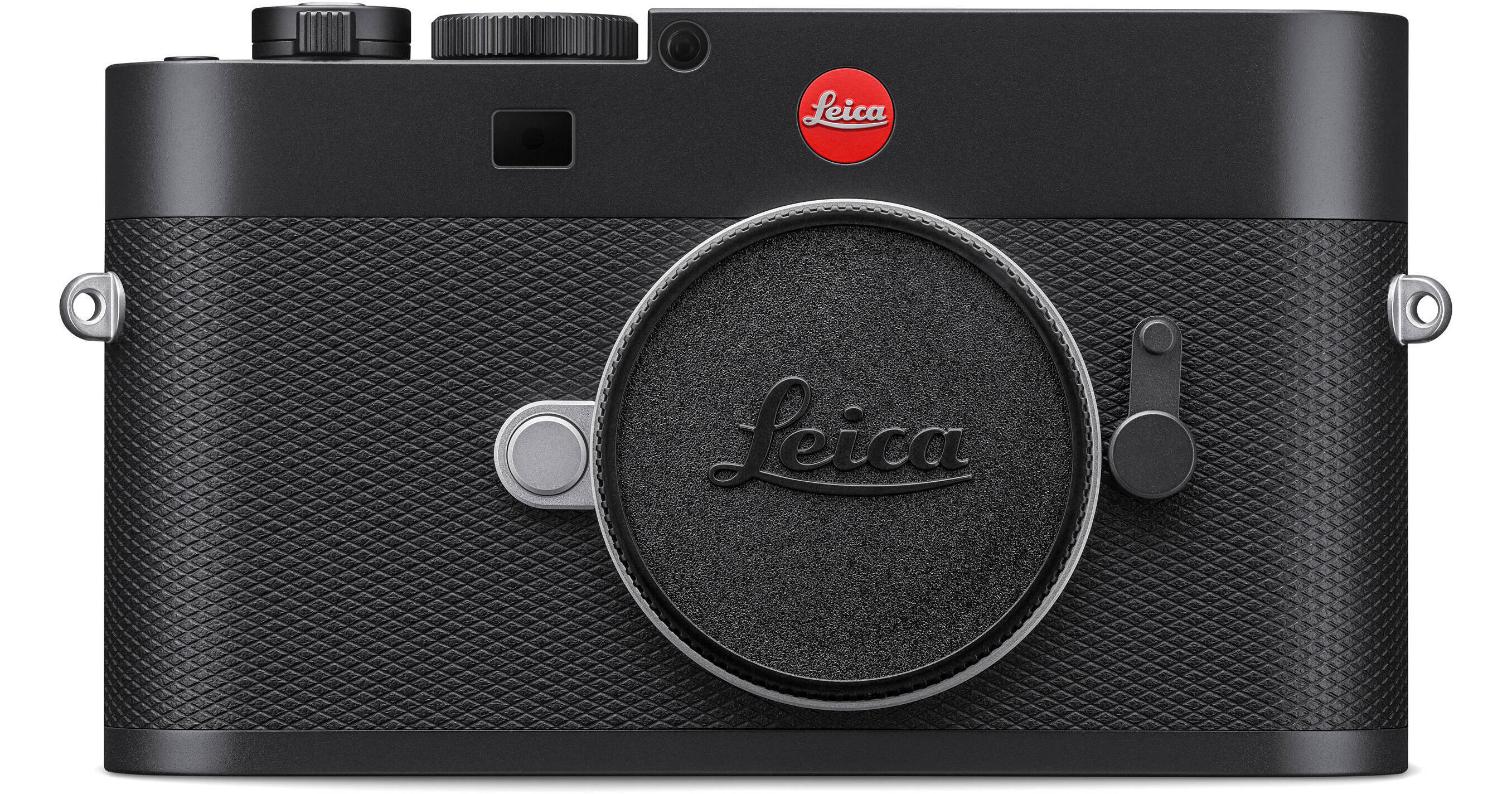
Leica M EV1 Mirrorless Camera

BH #LEMEV1 • MFR #20229
Print
Leica M EV1 Mirrorless Camera
90-Second Intro
Key Features
  • First M Camera with Integrated EVF
  • 60MP Full-Frame BSI CMOS Sensor
  • Leica Content Credentials Technology
  • FN Button & Focus Assist Settings
A new milestone for Leica, the M EV1 is the first M-system camera to feature an integrated electronic viewfinder rather than a traditional optical rangefinder. This simple-but-significant difference makes the EV1 particularly well-suited to working with ultra-wide and long focal lengths, as well as faster lenses, while still maintaining the classic slim body design, same M lens mount, and proven imaging capabilities from the M11-series of rangefinder cameras.
More Details
In Stock
Free 2-Day Shipping
Protect Your Gear
Add a protection plan from $215.99

Business Financing Options

Savings Available:
Save Up to $0.05
Ask an Expert
800-606-6969

Leica M EV1 Overview

The First M with a Built-In EVF
A new milestone for Leica, the M EV1 is the first M-system camera to feature an integrated electronic viewfinder rather than a traditional optical rangefinder. This simple-but-significant difference makes the EV1 particularly well-suited to working with ultra-wide and long focal lengths, as well as faster lenses, while still maintaining the classic slim body design, same M lens mount, and proven imaging capabilities from the M11-series of rangefinder cameras.
Unique Viewing and Focusing Experience
5.76m-Dot OLED Electronic Viewfinder
Taking the place of the optical viewfinder, the M EV1 features the first-ever integrated electronic viewfinder in an M-system camera body.
  • The OLED panel has a sharp 5.76m-dot resolution and the viewfinder has a large 0.76x magnification, integrated diopter adjustment, and covers 100% of the image frame.
  • The EVF displays exactly what the sensor is recording, allowing for critical framing and more reliable focusing, especially with faster Summilux and Noctilux lenses and when working at shallow depths of field.
  • Another key benefit of the EVF is the ability to work with focal lengths not typically supported by the M rangefinder cameras' viewfinders, including ultra-wide and telephoto lenses.
  • The typical restrictions of the rangefinder focusing system are also no longer applicable, enabling the accurate use of macro lenses, adapted lenses, and lenses with shorter minimum focusing distances.
  • The Digital Zoom function can now be previewed in the viewfinder with 1.3x or 1.8x frame crops visible within the area of the full image frame.
Focus Assistants and FN Button
The EVF also facilitates working with different focusing tools to help in acquiring sharp focus with various lenses:
  • Focus Peaking highlights sharp, in-focus areas and edges in bright colors to make it easier to recognize when a subject is in focus.
  • Focus Aid/Magnification offers two magnification steps to zoom into the frame and better recognize when details are in focus. This setting can be manually activated via the FN button or set to automatically activate when turning the focus ring of the lens.
  • With the optical viewfinder being replaced by an EVF, the former frame selector lever now has a new purpose as an FN button for toggling the focusing aids or digital zoom; a long push on the lever is used to assign a function and short pushes toggle the chosen function on or off.
  • Real-time exposure preview allows seeing the effects of exposure and depth of field changes prior to making an exposure.
  • Shooting data and exposure information is visible from within the EVF; this information is still relegated to the bottom of the frame, leaving an unencumbered and full-frame image for better composition and focusing accuracy.
  • Composition aids, including a grid and a horizon level, can also be seen within the viewfinder.
Advanced Imaging Technology
60MP Full-Frame BSI CMOS Sensor
Featuring the high-resolution imaging capabilities of the M11 series, the M EV1 sports the same 60MP full-frame CMOS sensor with a back-illuminated (BSI) design that offers impressive noise performance and fast readout speeds.

The higher resolution suits more detail-oriented applications, like landscape and architectural subjects, and the noise-reduction benefits of the BSI design improve clarity and color accuracy when working in low-light conditions with higher ISOs.

The sensor's physical design also includes an updated ultra-thin dual-layer filter glass, which absorbs UV and IR wavelengths for greater clarity and more accurate rendering from the M lenses.
Triple Resolution Technology
This unique pixel binning process allows photographers to select 60MP, 36MP, or 18MP output, with each resolution making use of the full sensor area and providing rich 14-bit color. By pixel binning, rather than cropping, the lower resolutions have improved dynamic range and noise levels:
  • 60MP: 14 stops of dynamic range, highest resolution
  • 36MP: 15 stops of dynamic range, best balance of resolution and noise
  • 18MP: 15 stops of dynamic range, lowest noise levels
Maestro III Image Processor
The Maestro III processor contributes to the faster processing and Triple Resolution Technology, as well as helps achieve a wider sensitivity range than in previous generation M cameras. An ISO 64-50000 range is now available for greater detail, quality, and natural color rendering at lower ISO settings. The Maestro III also enables continuous shooting at up to 4.5 fps and facilitates fast file saving for an intuitive shooting experience.
Additional Imaging Features
  • An electronic shutter function permits shooting at shutter speeds up to 1/16,000 sec, which is useful for working with faster f/0.95 lenses without the need for ND filters. A mechanical shutter still offers shutter speed support up to 1/4000 sec and flash sync at 1/180 sec.
  • Multi-field exposure metering is available in addition to spot and center-weighted average, which helps reduce the need to meter and then re-compose before shooting.
  • Two digital zoom steps can simulate working with longer focal length lenses by cropping into the image slightly, at 1.3x (39MP) and 1.8x (18MP) levels. These are reversible crops when recording a DNG or permanent crops if shooting straight to JPG.
  • Long Exposure Noise Reduction helps to reduce the appearance of noise but can also be disabled for faster saving times.
Leica Content Credentials with Content Authenticity Initiative Technology
The Content Authenticity Initiative (CAI) is a collaborative effort initiated by Adobe in partnership with various other organizations, including The New York Times and Leica. Its primary goal is to develop a standard for digital content attribution.
In the M EV1, this technology shows up as Leica Content Credentials. By using a secure processing chip, the camera will encrypt image metadata at the point of capture. This information can then be independently verified and even appended to when using compatible applications, such as Adobe Photoshop. Viewers can then verify the provenance of the image and confirm the veracity of the image. The aim is to give viewers more confidence in the images they are looking at and provide creators with another way to maintain credits.
Clean, Revised M Camera Design
Rear LCD and Body Details
  • Rear 2.95" 2.3m-dot touchscreen LCD features an updated design that is brighter for improved visibility in sunny conditions.
  • Without the optical viewfinder, the M EV1 features a clean, streamlined design on the front of the camera and the body also has a new diamond pattern leatherette.
  • Revised menu layout matches the Q and SL systems for more intuitive navigation and faster settings changes right from the first menu page.
  • Live view stabilization helps reduce the appearance of camera shake; this electronic stabilization makes it easier to manually focus longer focal length lenses with greater accuracy.
  • By replacing the optical viewfinder with an electronic viewfinder, the M EV1 sheds some weight compared to the rangefinder camera—it weighs 1.1 lb, which is 1.6 oz lighter than the M11-P.
  • Like the M11, Q, and SL-series cameras, this camera does not have a removable baseplate; instead, the M EV1 uses the BP-SCL7 battery that is inserted directly into the base of the camera body.
  • BP-SCL7 lithium-ion battery is CIPA-rated for 237 shots per charge when working predominantly with the EVF, or 244 shots per charge if primarily using the LCD.
  • Design also incorporates a single UHS-II SD memory card slot within the battery compartment.
  • Built-in 64GB memory means you can forgo using a memory card altogether, or use the internal memory in conjunction with an SD card to simulate having dual card slots for splitting file types or for overflow storage. Image files can also be transferred from the internal memory to the SD card for easy backup.
  • USB-C port on the base permits in-camera battery charging and file transferring.
Wired and Wireless Connectivity
  • The USB-C port can be used in conjunction with the included FOTOS Cable, which allows direct attachment to an Apple iPhone via the Leica FOTOS app for easy file management and sharing.
  • Wi-Fi and Bluetooth can also be used for wireless connecting the camera to an iOS device using the FOTOS app.
  • In-app geotagging is possible along with the ability to select favorites and apply ratings to images via your mobile device.

Leica M EV1 Specs

Key Specs
Lens Mount
Leica M
Effective Sensor Resolution
60.3 Megapixel (9528 x 6328)
Image Sensor
Full-Frame
Image Stabilization
No
ISO/Gain Sensitivity
Native: 64 to 50,000
Max Recording Modes
No
Max Video Output
No
Media/Memory Card Slot
Single Slot: SD/SDHC/SDXC (UHS-II) [2 TB Maximum]
Video I/O
No
Audio I/O
No
Power I/O
1x USB-C Input
Other I/O
1x USB-C 3.0 / 3.1/3.2 Gen 1 (Data) Output (Shared with Power Input)
Wireless
Wi-Fi 5 (802.11ac) / Bluetooth 5.0
Display Type
Fixed 3" Touchscreen LCD
Battery
1x BP-SCL7 Rechargeable Lithium-Ion Polymer, 7.4 VDC, 1800 mAh (Included)
 • Approx. 237 Shots
Imaging
Lens Mount
Leica M
Effective Sensor Resolution
60.3 Megapixel (9528 x 6328)
Image Sensor
35.8 x 23.9 mm (Full-Frame) BSI CMOS
Sensor Crop (35mm Equivalent)
Crop Factor: 1x
Image Stabilization
No
Built-In ND Filter
No
Capture Type
Still Only
Exposure Control
Shutter Type
Mechanical Focal Plane Shutter and Electronic Rolling Shutter
Shutter Speed
Electronic Shutter
1/16000 to 60 Seconds

Mechanical Shutter
1/4000 to 60 Seconds
Bulb/Time Mode
No
ISO/Gain Sensitivity
Native: 64 to 50,000
Metering Method
Center-Weighted Average, Highlight Weighted, Multi, Spot
Exposure Modes
Aperture Priority, Manual
Exposure Compensation
-3 to +3 EV (1/3 EV Steps)
White Balance
2000 to 11,500K
Presets: Auto, Cloudy, Color Temperature, Daylight, Flash, Fluorescent (Cool White), Fluorescent (Warm White), Manual, Shade, Tungsten
Continuous Shooting
Up to 4.5 fps at Maximum Resolution for up to 15 Frames (Raw) / 100 Frames (JPEG)
Interval Recording
Yes
Self-Timer
2/12-Second Delay
Still Image Capture
Aspect Ratio
3:2
Image File Format
DNG, JPEG
Bit Depth
14-Bit
Video Capture
Internal Recording
No
Video Output
No
Recording Limit
No
IP Streaming
No
Interface
Media/Memory Card Slot
Single Slot: SD/SDHC/SDXC (UHS-II) [2 TB Maximum]
Internal Storage
64 GB
Video I/O
No
Audio I/O
No
Power I/O
1x USB-C Input
Other I/O
1x USB-C 3.0 / 3.1/3.2 Gen 1 (Data) Output (Shared with Power Input)
Wireless
Wi-Fi 5 (802.11ac) / Bluetooth 5.0
Mobile App Compatible
Yes: Android & iOS
App Name: Leica FOTOS
Functionality: Access Stored Files, Adjust Settings, Firmware Update, Remote Control, Setup, View Live Feed
Global Positioning (GPS, GLONASS, etc.)
GPS
*Via Connected Smartphone
Monitor
Display Type
Fixed 3" Touchscreen LCD
Resolution
2,332,800 Dot
Viewfinder
Type
Electronic (OLED)
Resolution
5,760,000 Dot
Eye Point
20.75 mm
Coverage
100%
Magnification
Approx. 0.76x
Diopter Adjustment
-4 to +2
Focus
Focus Type
Manual Focus Only
Flash
Built-In Flash/Light
No
Maximum Sync Speed
1/180 Second
Flash Compensation
-3 to +3 EV (1/3 EV Steps)
Dedicated Flash System
TTL
Non-Shoe Flash Connection
No
General
Battery
1x BP-SCL7 Rechargeable Lithium-Ion Polymer, 7.4 VDC, 1800 mAh (Included)
 • Approx. 237 Shots
Shoe Mount
1x Hot Shoe
Tripod Mount
1x 1/4"-20 Female (Bottom)
Materials
Magnesium Alloy
Operating Conditions
32 to 104°F / 0 to 40°C
Dimensions (W x H x D)
5.5 x 3.2 x 1.51" / 138.8 x 80.3 x 38.45 mm (Without Protrusions)
Weight
14.6 oz / 413 g (Body Only)
1.1 lb / 495 g (With Battery)
Packaging Info
Package Weight
3.415 lb
Box Dimensions (LxWxH)
8.1 x 8 x 6.6"

Leica M EV1 Reviews

Love It!!!

By Peter
Rated 5 out of 5
Date: 2026-05-21

I’ve been a photographer for decades. Early on pro, but mostly fine art as a hobby. Landscape with medium format high res and street with assorted cameras. Last few years my street photography camera has been an M11 Monochrom. I like B&W for street and due to my medium format landscape work I lean towards the higher resolution of the Monochrom camera. I use both the rangefinder and the Visoflex 2 on the M11 M. But I wanted color too and with my Leica lenses. the M11 EV 1 has been wonderful. I don’t miss the rangefinder at all and find the 5 mill EVF a delight to use. For tack sharp focus one has to get use to focusing wide open and then stopping down as needed for DOF and exposure. But this provides more precise focus than the rangefinder on high resolution sensors. The EV1 is much better than with the Visoflex 2. There is something quite magical about manual focusing and seeing the image snap into focus. I personally find that having what you see is what you get to be more intentional as well I use a couple of Leica APO lenses so F2 actually gives edge to edge sharpness. I hope Leica releases a Monochom EV as well

Everything I wanted, so far

By Gary D
Rated 5 out of 5
Date: 2026-01-02

Having the new M EV is thus far everything I wanted from an M camera. I'll preface this by saying I am now in the process of selling my M11 and Viso 2. No need for these two items. My eyesight began to grow poor as I started in my 70s. This accelerated due to a medication. I had not used my M11 for a couple of years and had all but given up ever using an M camera. I could have used my two M lenses on alternate cameras and I did try. However those adaptations were not as smooth as one might expect. I tried an M EV at a Leica Store over the Thanksgiving weekend. I was hooked. My wife ordered the M EV for me. When it arrived at first I was conflicted. Was this really better than the rangefinder? After having cataract surgery this past summer I could see within the rangefinder much better however the small patch was still too small. Once I got the hang of the magnification in the new M EV I was on my way. How someone else might use this camera could be different than my setup. I've turned off the magnification when focusing the lens. I've found this has a lag that's annoying. I have set the little button to the right of the shutter button to magnification. A quick press and presto, a big clear image. Focus. Shoot. I have mixed feelings about the focus peaking. It's maybe useful however it's also distracting. I'll try both more to make my decision. A couple of other pluses. The camera feels very sold despite the fact it's a couple of ounces lighter than the M11. The handgrip is still necessary as is the thumb grip. Nearly free money for Leica. Finally one other plus that might not get much mention elsewhere… the rangefinder window tends to get very smudgy which affects viewing until you clean – again – the window. Without that window this first world problem is gone. If you want the M and M lenses and are old like me, this camera will extend your M life for some time to come. Otherwise save your money and get a Panasonic S1RII or Canon R5. I recommend either one of those excellent cameras with autofocus lenses (not with adapted M lenses).

See any errors on this page?

Will this camera work with older Leica M lenses ...

Will this camera work with older Leica M lenses that are not coded?
Asked by: Walter
Yes, the Leica M EV1 Mirrorless Camera will work with older, uncoded Leica M lenses.
Answered by: Marvin C
Date published: 2025-10-24

Can a 50mm f2.8 collapsible Elmar-M lens be used ...

Can a 50mm f2.8 collapsible Elmar-M lens be used with the M EV1?
Asked by: Jerome
It is not recommended to use the 50mm f/2.8 collapsible Elmar-M lens on the Leica M EV1 Mirrorless Camera as well as on most Leica M models. Using the collapsed lens can damage the sensor on the camera, and the aperture scale may appear misaligned.
Answered by: Elliot A
Date published: 2025-11-03

Can the FN button be used to set the ISO?

Can the FN button be used to set the ISO?
Asked by: Donna
Yes, a long hold on the FN button will bring up the short cut menu for you to assign this button to your liking.
Answered by: Richard
Date published: 2026-01-15

Will the Voigtlander Nokton Classic 35mm f/1.4 II ...

Will the Voigtlander Nokton Classic 35mm f/1.4 II SC Lens work on this camera?
Asked by: brian
Yes, the Voigtlander Nokton Classic 35mm f/1.4 II SC Lens will work on the Leica M EV1 Mirrorless Camera.
Answered by: Samik G
Date published: 2025-11-20

Does the M EV1 have image stabilization? If so, ...

Does the M EV1 have image stabilization? If so, how many stops?
Asked by: Gary
The Leica M EV1 Mirrorless Camera does not have image stabilization. However, it does have electronic viewfinder stabilization which helps stabilize the view in the LCD or EVF to help aid in focusing and framing. But the final image is not actually stabilized.
Answered by: Dan W
Date published: 2025-11-03

Does the rear screen show images ?

Does the rear screen show images ?
Asked by: Robert
Yes, the LCD on the back of the Leica M EV1 Mirrorless Camera can be used for previewing and reviewing photos.
Answered by: Dan W
Date published: 2026-03-19

What cable release is suitable for the MEV1?

What cable release is suitable for the MEV1?
Asked by: Howard
The M EV1 does not have the ability to use a cable release. The threaded hole on the shutter release button is to use one of Leica's many soft shutter release buttons, like the Leica cat # 14010, BH # LESRBL12R. You would use the Leica FOTOS app with your smartphone to remotely activate the shutter as you would with a cable release.
Answered by: Richard
Date published: 2026-01-15

What are the compromises when using uncoded, i.e. ...

What are the compromises when using uncoded, i.e. Voigtländer lenses?
Asked by: Walter
A little more detail. If you have an uncoded lens you can still enter a lens profile from the Leica lens lineup. So if you use a Voigtlander 50 APO you can (I have) enter the Leica APO 50 profile. As long as your uncoded lens has a similar design to what you enter, it works fine. The advantage of the EV1 over any other M is you can use ANY focal length and still focus. That means even lenses (there are very few) beyond 135mm or shorter than 28mm can be used and focused because there is no rangefinder baseline to worry about.
Answered by: Charles
Date published: 2025-11-30
  • y_2026, m_5, d_29, h_13CST
  • bvseo_bulk, prod_bvqa, vn_bulk_3.0.46
  • cp_1, bvpage1
  • co_hasquestionsanswers, tq_8
  • loc_en_US, sid_1925685, prod, sort_[SortEntry(order=HAS_STAFF_ANSWERS, direction=DESCENDING)]
  • clientName_bhphotovideo
Whatever You Need, We've Got It