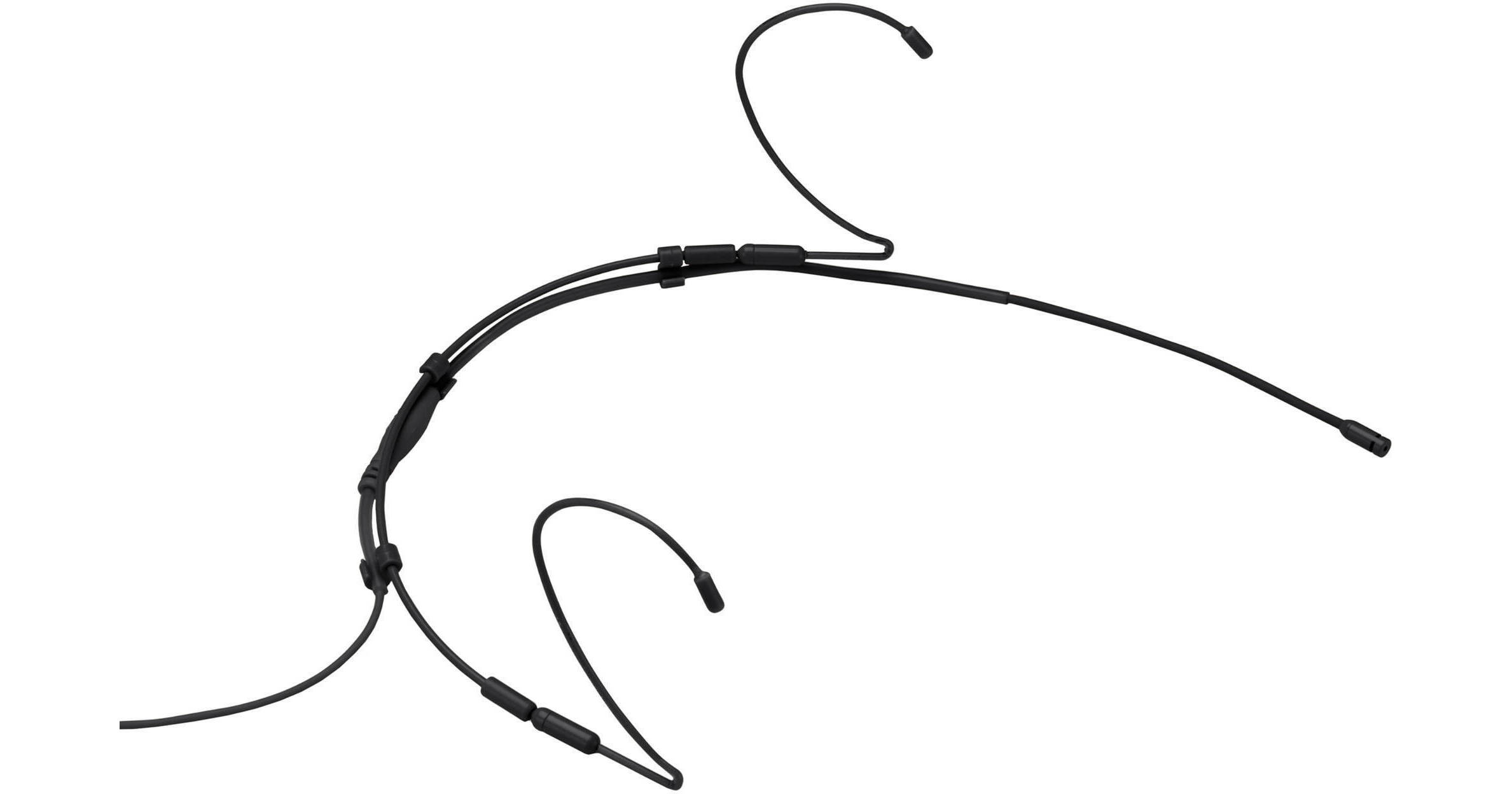
The CR-8L Cardioid Lavalier Microphone from Point Source Audio is designed for applications such as the theatre or TV. The cardioid pattern of the microphone allows it to be focused on the sounds of the person wearing the microphone. The unit features a 4mm diameter microphone element that can be clipped to the subject's clothing or hair.
The microphone offers optimal gain amplification before feedback and can handle sounds with a maximum SPL of 135 dB. The microphone can connect to a wide range of wireless transmitters using its interchangeable X-Connector system. This particular unit comes with an interchangeable Hirose 4-pin cH-style connector for Audio-Technica cH-style transmitters. The microphone also comes with a foam windscreen, a body clip, and a storage box.
- 3000 Series (4th generation)
- 5000 Series (3rd generation)
- 6000 Series
- High-feedback environments: in venues with challenging acoustics or poor speaker placement—like reverberant halls or small stages with loud foldback monitors—cardioids can help mitigate feedback by rejecting off-axis sound.
- Extreme on-stage instrument bleed: if a performer is positioned very close to loud instruments (e.g., brass, drums, guitar amps), a cardioid can help isolate the voice from nearby sources.
- Film or broadcast scenarios: in controlled environments like film sets or TV studios, when wardrobe allows for precise mic placement and the talent is relatively stationary, a cardioid may be used to reduce ambient room noise or other on-set interference.
- Environmental control for audio capture: for certain documentary or ENG (electronic news gathering) purposes, where ambient noise must be minimized and the talent is speaking softly, cardioids can offer more focused pickup. For example: outdoor shoot where wind and background noise are significant and mic placement is optimized.
- Live performance with limited mic channels: in cases where multiple body-worn mics may interfere with each other due to proximity (e.g., group singing with tight blocking), using cardioids with precise placement can reduce bleed and cross-talk between mics.