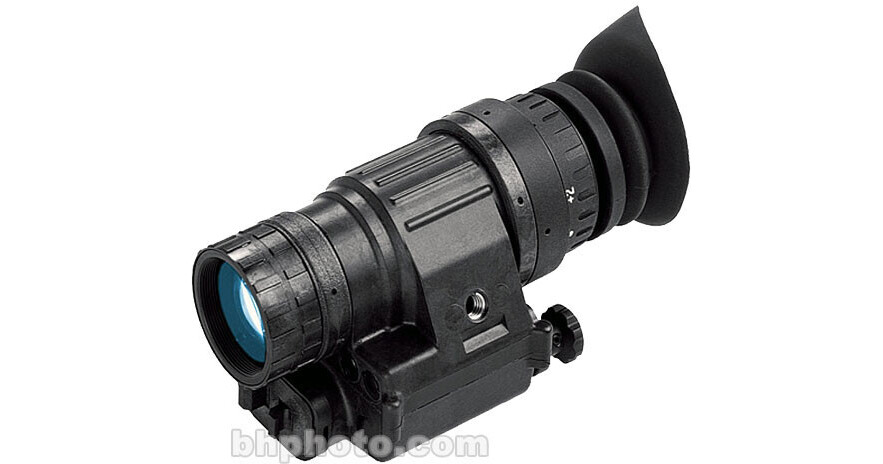
ATN, a long time leader in the world of night vision and tactical optical designs, offer many options for the professional, military, law enforcement and discerning user of night vision devices. Their products are designed with diligence and technological advancements that have made them a world leader in providing sporting and tactical optics. Their high quality optical designs are loaded with user friendly features, and offer value and functionality that deserve recognition and merit.
This ATN PVS-14-3B is a third generation night vision monocular goggle which is designed for the most demanding of night time applications and the most discerning of users. One of its most differentiating features is the variable gain control. This control provides the highest quality image at all times, regardless of the lighting conditions. This extremely lightweight and versatile night vision monocular can be head-mounted, handheld or camera adapted. The heart of this PVS-14 is its premium select third generation intensifier rated at 64 lp/mm. Third generation intensifiers feature longer life spans & higher resolution and low levels of bright light blooming. You can be sure that you will have a bright, clear and detailed sight picture, even under harsh lighting conditions, with your ATN PVS-14. This NVD has been configured to operate on one 1.5V "AA" type battery.
There are many different variables that affect the distance that one can see with a night vision device, among them the object's size, the level of details being sought from the object and the conditions of observation. Night vision devices detect much further under a full moon and clear skies than they will under a new moon and cloudy skies. Many different formulas are used to determine the statistic of maximum viewing range and this varies by manufacturer, so ultimately the generation of the intensifier tube is much more relevant than any quoted statistic when determining the maximum viewing range.
All night vision devices sold by B&H have mechanisms in place to protect the intensifier tube from a sudden burst of bright light, but this does not mean that bright light doesn't damage the device. No matter what, bright light in any form is not good for the longevity and performance of image intensifier tubes.