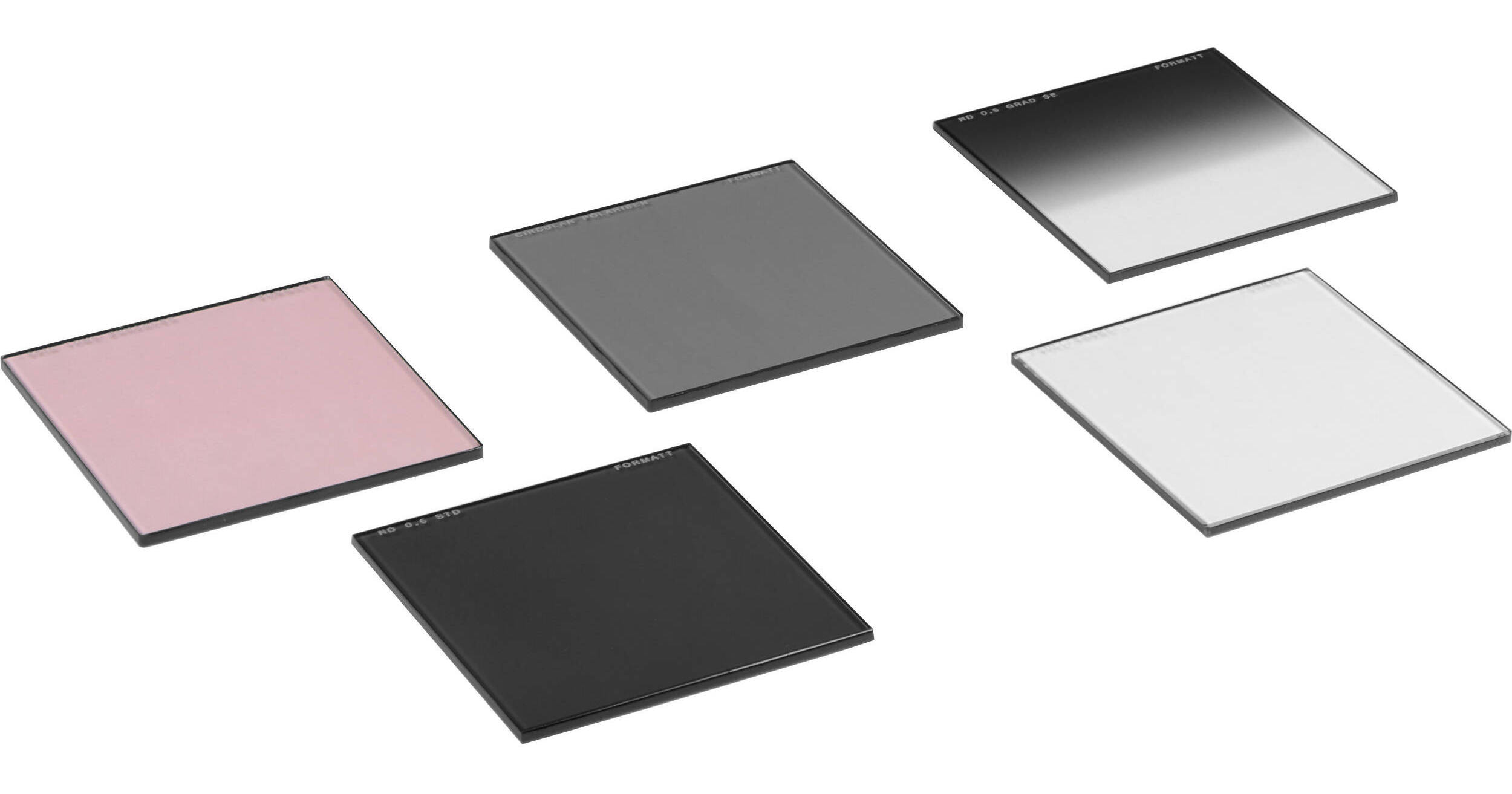
- Designed for HD Technology
- High Quality Schott Glass
- Optically Pure
- Made to Highest Technical Standards
Neutral Density Filter
Neutral Density filters have several uses and offer the possibility to achieve otherwise unachievable results. They enable the shooter to adjust exposure without affecting color balance. ND filters appear gray and reduce the amount of light reaching the film.
Graduated Neutral Density Filter
Graduated Neutral Density filters enable the shooter to adjust exposure without affecting color balance. Exposure can be increased by 1, 2, 3 or 4 stops to suit individual situations. This filter has been specifically designed for today's High Definition cameras which tend to be ultra sharp and somewhat unforgiving when it comes to skin tones.
Often it is necessary or desirable to balance the light intensity in one part of a scene with another. This is especially true in situations where you don't have total light control, as in bright contrasty landscapes. Exposing for the foreground will produce a washed-out, over-exposed sky while exposing for the sky will leave the foreground dark and under-exposed. This filter enables cloud detail to be kept correctly exposed in the picture.
Determining which graduated neutral density filter yields ideal results for any given lighting situation takes knowledge, experience and a collection of such filters. Choose the filter strength which adjusts the lighting to stay within the exposure latitude (greatest difference between bright/dark values) which still shows details in both of the digital or film medium in use.
Speaking generally, the 2-stop value (ND 0.6 - the filter's clear portion allows 4x more light to pass vs. darkest portion) effectively compensates average bright sky-to-foreground situations, and the soft transition is applicable more often to a scene than the hard transition.
Determining which neutral density filter yields ideal results for any given lighting situation takes knowledge, experience and a collection of such filters. Speaking generally, the 2-stop value (ND 0.6) effectively compensates average situations.
The Soft or Hard label indicates the degree of color graduation. Horizontal/Vertical indicates the direction of the graduation.
Circular Polarizer