Video Chat with a Pro Video Expert - Live

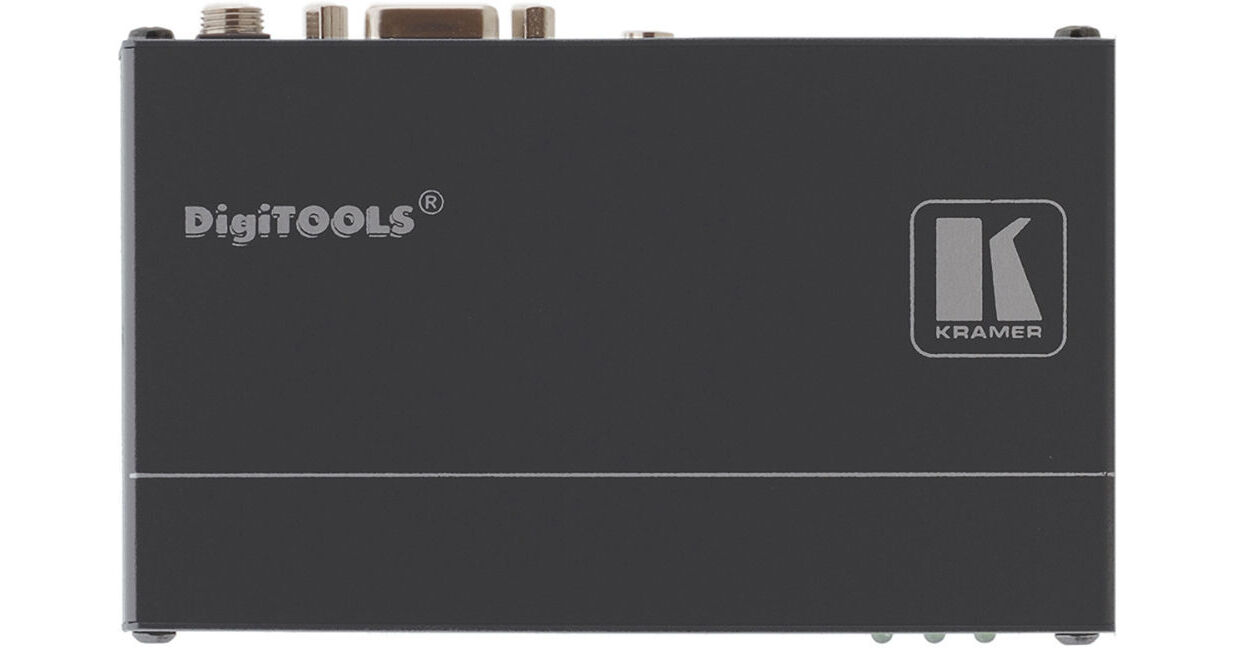
Kramer TP-573 HDMI, Bi-Directional RS-232 & IR over Twisted Pair Transmitter

BH #KRTP573 • MFR #TP-573
Print
Kramer TP-573 HDMI, Bi-Directional RS-232 & IR over Twisted Pair Transmitter
Key Features
  • Works w/ Kramer TP-574 Receiver
  • Works w/ Shielded Twisted Pair Cables
  • Inputs HDMI, RS-232, and IR Signals
  • Outputs via RJ-45 (e.g. CAT-5)
The Kramer TP-573 HDMI, Bi-Directional RS-232 & IR over Twisted Pair Transmitter is a device for converting and sending an HDMI signal (up to version 1.4) plus control commands and data over twisted pair (e.g. CAT-5) cables. Used with a Kramer TP-574 receiver (not included), the TP-573 transmitter extends the range of an HDMI source so that it can feed a display across a facility, for instance. While HDMI cables have an approximate range of 50', CAT-5 cables can carry pristine HDTV video and associated audio signals over distances in the hundreds of feet.

The range of the device's transmission varies based on the signal resolution, graphics card, display, and cables used. Kramer has tested the device with their own cables. The device transmits up to 295' at 1080i, or up to 98' at 1080p on shielded BC-DGKat524 cable. Using shielded BC-DGKat623 cable, the range extends to 295' at 1080i or up to 230' at 1080p. With shielded BC-DGKat723 cable the range is up to 330' at 1080i or up to 295' at 1080p.

The TP-573 supports bi-directional RS-232 and infrared signals, which means that a computer source, for example, can be used to control a display device hundreds of feet away, and receive data from that device. Control signals are sent with converted video and audio signals over the twisted pair cable. By supporting HDMI, the transmitter passes through video and multi-channel audio from an HDMI source such as a set-top box, DVD player, camera, or AV receiver.

More Details
In Stock
No Store Display
Free 2-Day Shipping
Protect Your Gear
Add a protection plan from $22.00
Ask an Expert
866-842-7675
See any errors on this page?

question

is the extender IP based? is it able to be fed through a switch in its own VLAN? or does it have to be a direct connection on both ends?
Asked by: Shahed E.
My assumption is that it would need to be a direct connection. I have not tried it on a vlan. Based on the information on their site, it would need to be directly connected, as it seems to encode the signal and send it over the copper to be decoded at the other end by the receiver.
Answered by: Neil T.
Date published: 2018-08-28
  • y_2026, m_6, d_5, h_14CST
  • bvseo_bulk, prod_bvqa, vn_bulk_3.0.46
  • cp_1, bvpage1
  • co_hasquestionsanswers, tq_1
  • loc_en_US, sid_752307, prod, sort_[SortEntry(order=HAS_STAFF_ANSWERS, direction=DESCENDING)]
  • clientName_bhphotovideo
Whatever You Need, We've Got It