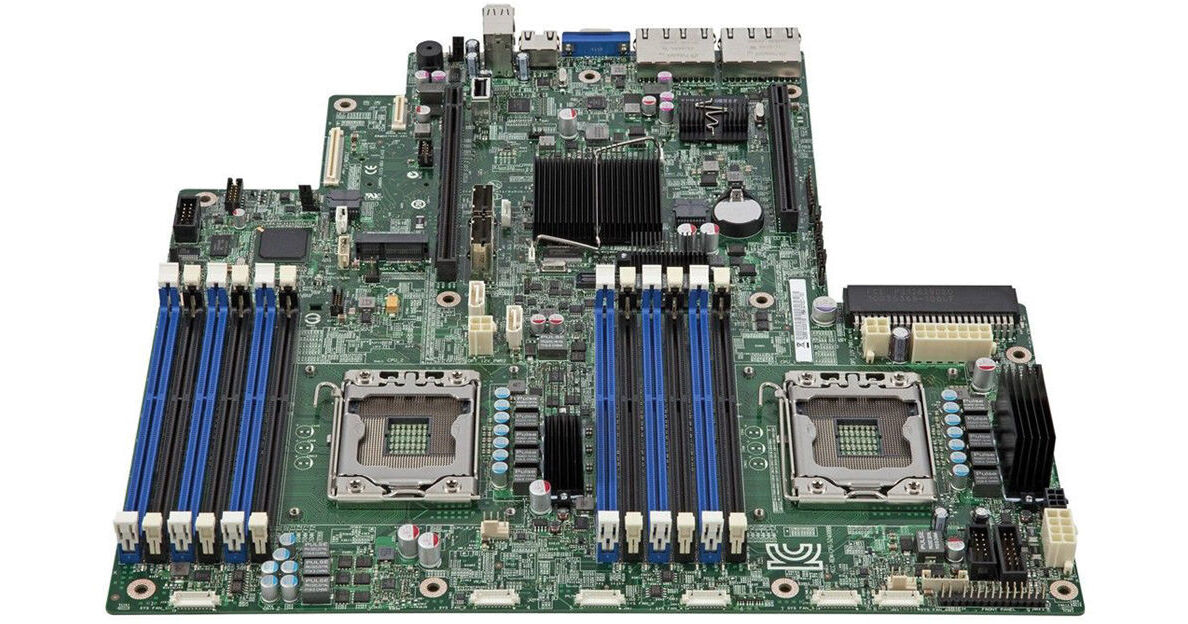
The R1304BB4DC Server System from Intel is a rack server system designed to support the Intel Server Board S2400BB4. The server system features a 460W redundant power supply and comes with Intel Server Management software to build, deploy and manage servers with ease. It provides both expansion and flexibility to meet the needs of a majority of data center, cloud and hosting applications. Furthermore, the server system features advanced technologies such as Intel Advance Management technology, Intel Server Customization technology, Intel Build Assurance technology, Intel Efficient Power technology, Intel Quiet Thermal technology and more.
Memory Support
The server system provides up to 384GB of memory capacity.
Hard Drive Support
It supports up to 4 hot-swappable 2.5" or 3.5" hard drives.
Intel Server Management Software
The server system comes with Intel Server Management software to build, deploy and manage servers with ease.
Intel Remote Management Module Support
The Intel Remote Management Module (Intel RMM) allows you to securely gain access and control servers and other devices from any machine on the network. Remote access includes remote management capabilities, including power control, KVM and media redirection, with a dedicated management network interface card (NIC).
Intel Node Manager
Intel Intelligent Power Node Manager is a platform resident technology that enforces power and thermal policies for the platform. It enables data center power and thermal management by exposing an external interface to management software through which platform policies can be specified. Intel Node Manager also enables specific data center power management usage models such as power limiting.
Intel Advanced Management Technology
Intel Advanced Management technology features an isolated, independent, secure and highly reliable network connection with an Integrated Baseboard Management Controller configuration from within BIOS. It also includes an embedded web user interface that launches key platform diagnostic capabilities over the network, an out-of-band platform inventory, failsafe firmware updates and an automatic Integrated BMC stall detection and reset.
Intel Server Customization Technology
Intel Server Customization technology enables resellers and system builders to offer end customers a customized branded experience, SKU configuration flexibility, flexible boot options and maximum I/O options.
Intel Build Assurance Technology
Intel Build Assurance technology provides advanced diagnostic features to ensure the most comprehensively tested, thoroughly debugged and stable systems are available to customers.
Intel Efficient Power Technology
Intel Efficient Power technology is a series of improvements within Intel power supplies and voltage regulators to increase power delivery efficiency and reliability. The technology is included in all common redundant power supplies (CRPS). CRPS includes the following technologies; 80PLUS Platinum (92% efficient at 50% load) efficiency, cold redundancy, closed loop system protection, smart ride through, dynamic redundancy detection, black box recorder, compatibility bus and auto firmware updates to provide more efficient power delivery to the system.
Intel Quiet Thermal Technology
Intel Quiet Thermal technology is a series of thermal and acoustic management innovations that reduce unnecessary acoustic noise and provide cooling flexibility while maximizing efficiency. The technology includes capabilities such as advanced thermal sensory arrays, advanced cooling algorithms and built-in failsafe shutdown protection.
Integrated BMC with IPMI 2.0
IPMI (Intelligent Platform Management Interface) is a standardized interface used for out-of-band management of computer systems. The integrated BMC (Baseboard Management Controller) is a specialized microcontroller that enables IPMI.
TPM Version 1.2
TPM (Trusted Platform Module) is a component that provides hardware-level security upon system boot-up via stored security keys, passwords, encryption and hash functions.
Target Applications
The server system provides both expansion and flexibility to meet the needs of a majority of data center, cloud and hosting applications.