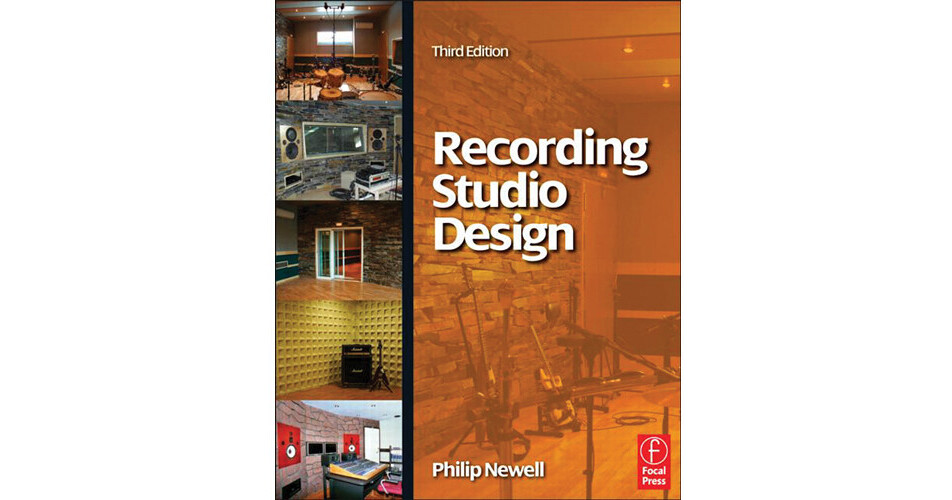
Recording Studio Design, 3rd ed. from Focal Press and written by Philip Newell covers the key principles of making a successful studio construction. In this third edition of Recording Studio Design, he gives you the skills you need to avoid disaster and create an efficient and effective acoustical environment to record and produce the finest audio. Learn from Newell's years of experience as he provides great detail on the practical recording application in various acoustic environments, and explores complex issues, providing real-world solutions.
This new edition expands and develops on the topics from the previous editions, updating it for the digital age, so you have all the current information you need to build, adapt or update your recording studio.
Contents:
General requirements and common errors
Sound, decibels and hearing
Sound isolation
Room acoustics and means of control
Designing neutral rooms
Rooms with characteristic acoustics
Variable acoustics
Room combinations and operational considerations
The studio environment
Limitations to design predictions
Loudspeakers in rooms
Flattening the room response
Control rooms
The behavior of multiple loudspeakers in rooms
Studio monitoring: the principal objectives
The non-environment control room
The live-end, dead-end approach
Response disturbances due to mixing consoles and studio furniture
Objective measurement and subjective evaluations
Studio monitoring systems
Surround sound and control rooms
Human factors
A mobile control room
Appendices
Glossary of terms
About the Author: Philip Newell is an international consultant on acoustic design, former technical director of Virgin Records. Has over 30 years experience in the recording industry and has been involved in the design of over 200 studios, including the famous Manor and Townhouse Studios. He is also author of Project Studios, Recording Spaces and Studio Monitoring Design, all published by Focal Press.