
Sony Global
Solo Podcaster
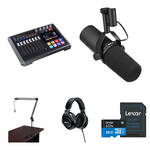
Video Essentials
Accessories
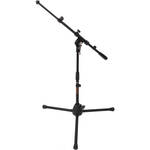
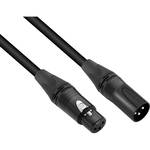
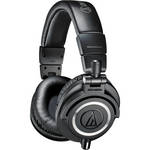
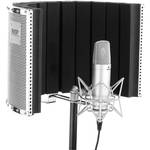
As a solo podcaster, how your show is going to look and sound is all up to you. And while there’s great freedom in being able to share your ideas with an audience, the production side of things can become a drag if you’re not properly prepared. Afterall, there’s a lot to think about with respect to podcasting equipment, from finding the right recording gear to mastering the lighting for your video and editing the footage.
What is Solo Podcasting?
Solo podcasting refers to a single podcaster who plays the role of podcast host and producer without depending on any other podcast members, such as co-hosts or guest speakers. Most often, a solo podcaster will also be the one recording, editing and publishing the podcast.
Microphones for Solo Podcasting
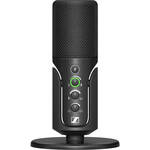
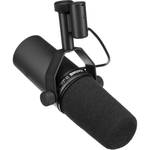
Starting with audio equipment, a solo podcaster needs a decent microphone. Since you’re a single podcaster using only one microphone, consider a USB mic, which can plug directly
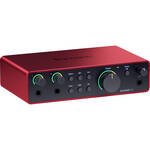
into your computer without an interface. It’s the simplest and most affordable way to professionally record your voice. However, if you want to expand your podcast down the line to feature a second host, think about buying a USB mic with an XLR output that you can eventually connect to an interface; a typical audio interface will accommodate two or more mics and accept XLR mic connections.
How to Add Video to a Solo Podcasts
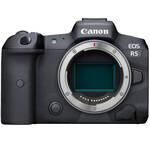
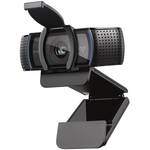
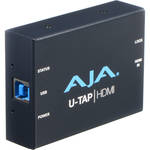
If you’re adding video to your podcast, you’ll need a webcam or camera, some lighting, and any essential accessories, such as capture cards. If you’ve decided to invest in a webcam over a camera, which is the simpler and more cost-effective option, make sure that it records 4K video. Recording in 4K will capture more detail than shooting in 1080p and will produce a sharper, more vivid looking image overall. Shooting 4K also makes a difference in post-production, as 4K images can be cropped, zoomed in, and reframed with negligible loss in quality. AI webcams can be incredibly useful as well, offering features like auto-tracking, gesture control, and lighting algorithms that enhance image quality. Auto-tracking is handy for scenarios in which you are moving around the frame, since the camera will follow you, adjusting the angle and focus according to your position.
LED Lights for Solo Podcasts
Once you have your audio and video worked out, it’s time to think about lighting. Good lighting can elevate your video podcast to professional levels by not only enhancing clarity and warmth but also by introducing depth and mood to your shot.
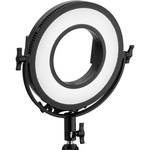
In fact, even the most straightforward LED lighting can already improve the performance of your camera. While you can benefit from doing a deep dive on video lighting principles, you can also start with a basic ring light to produce fresh-looking, uniform, and circular lighting on the face. Or you can introduce a softbox light for broader and more natural illumination. Many also like to add a small LED panel as an accent light, often choosing a neon color to create a dynamic contrast in the frame.
Whatever the goals are for your show, as a solo host, you have the power to set the tone of your podcast. It might take a little practice to get a look and sound you’re happy with. But once you get your feet wet, you’ll see that producing your own podcast is a fun and rewarding process.
For information about the types of podcasting equipment available from brands such as RODE, Shure, Sony, Canon, Logitech, Elgato, SmallRig and more, be sure to check out our detailed product pages or drop us a line, and we’ll do our best to answer your questions.