Pro Audio
- Recently Added
- Popularity
- Name
About 198 filtered results

by Gabby Bloch · Posted
Whether you’re in the market for your first podcast microphone or looking to upgrade the one you have, we’ve put together a list of our favorite models to help you on your way. Read on to learn about some of the classic and iconic picks we have in store at B&H!
Best Budget Podcasting Mics
RODE PodMic
Let’s start with the best seller in this category, the Rode PodMic. Designed specifically for

by Gabby Bloch · Posted
As a podcaster, life becomes a lot easier when you have the right equipment. If you’re currently stuck with a simple audio interface or portable recorder, you’ll probably benefit from upgrading your setup to a multitasking mixer that can serve every function you may need as your podcast grows and your creative ideas expand. Since content creation has become such a big thing, it’s challenging to sort through all the available products to find which

by Freddy Gerngross · Posted
If you’re looking to get into home recording, you’ll need an audio interface. They all do essentially the same thing, so what matters is the number and types of input/output (I/O) they have. In the current market, every manufacturer is looking to set themselves apart from the competition and in this guide, we’ll go over some popular and affordable series of audio interfaces we have in stock at B&H and what to look for depending on what you’re trying to accomplish. Our picks clock in under $500 for the most part so you won’t have to sweat

by Freddy Gerngross · Posted
In yet another entry to our 500-series guides, we’ll be discussing some of the many amazing equalizer modules for sale at B&H. In recent years, 500-series gear has exploded in popularity, and in turn, companies have been driven to offer more and more impressive and advanced modules—and with recent advancements in audio technology, the choices even include miniature recreations of legendary rack gear. So, whether you’re trying to add a standard or a superpowered 500-series EQ to your Lunchbox, read on to learn what we have in store!
Single

by Freddy Gerngross · Posted
In the postmodern era of music production, most musicians, producers, and engineers rely on a computer running a robust Digital Audio Workstation (DAW) like Pro Tools or Ableton to be the studio centerpiece. But despite their power and convenience, sometimes creating in this environment can turn into a series of mouse clicks that eat away at the joy and magic of music production. There are times when ditching the DAW and going old school with a physical piece of hardware can unlock new potential, forcing you to develop alternative techniques

by Freddy Gerngross · Posted
Whether you record demo tracks on the road, produce podcasts at home, or collaborate with other artists in random locations, having a travel-friendly audio interface is key to staying versatile in your work. An ideal interface would be small enough to fit in a backpack, laptop bag, or satchel while supporting multiple types of I/O and USB powering. Seriously, the last thing you need is to have your ideas vanish whilst frantically searching for a free AC power outlet. Thankfully, your options are plentiful in number, and I’d like to bring your

by Freddy Gerngross · Posted
Let’s face it—microphones are expensive. We all want a stocked mic locker with the greatest vintage microphones the world has to offer, but unfortunately, that’s a privilege few can afford. But fear not! There are plenty of amazing and affordable microphones in production that rival or even exceed the sound of the classic studio legends. So whether you’re micing up a guitar, your voice, or a whole drum kit, check out five of my favorite mics that we have in stock at B&H.
Large Diaphragm Condenser: Rode NT1 5th Gen ($214-$228)
As a mic I

by Freddy Gerngross · Posted
For this installment in the 500-series guide, we’ll be looking at the available offerings of effects modules in the 500-Series format. I’m also including more utility modules that aren’t necessarily an “effect,” but don’t fall under the Preamp, EQ, or Compressor categories and are quite useful, nonetheless. Some more recently released 500-series effects modules have a combination of preamps and dynamics processors or can be used as such, so if you’re looking to get started on a budget, these could be good places to start your 500-series
by Trevor Collins · Posted
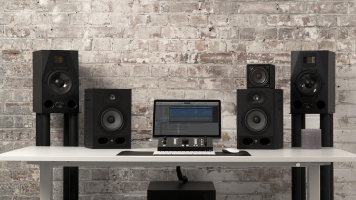
No matter what area of audio production you work in, you're constantly listening. Loud and proud or whisper quiet, through headphones or speakers, in your studio or on the road, you're constantly listening. And naturally, you need to hear your productions through various transducers to accurately assess how they translate.
What you don't want is to be relegated to a life of vibe-killing, time-wasting repatching—you know, power-down those speakers, unplug them, plug in the other speakers, power them on, etc.—or adjust your DAW's master fader to

by Freddy Gerngross · Posted
Mixing in headphones is a somewhat controversial topic in the pro audio world. Some producers and engineers mix primarily in headphones (often out of necessity) and others denounce the practice as entirely useless, preferring to work only on studio monitors. But I think that everyone can agree that a sound mix, whether it’s a song, podcast, video, or other, needs to sound good on headphones and on larger speakers. For me, and many other engineers, that

by Trevor Collins · Posted
Looking at the computer market these days, you might think it’s a bad time to buy a music production laptop. AI-induced RAM shortages have caused computer costs to skyrocket. But with AI going nowhere fast and no sign of this trend slowing down, now may actually be the best time to get in while the getting is good. After all, prices may only go up from here! And with great advances in software and hardware over the last few years, you have some impressive choices available to bring your music production setup into the 2020s. So, let’s go over

by Freddy Gerngross · Posted
Whether you’re a musician who’s building a studio or rehearsal space, setting up an audio system at a venue or house of worship, an aspiring streamer/podcaster, or a production house, the audio mixer may be the most important (and expensive) purchase you make—but with multitudes of options, you’ll want to know exactly what you need before pulling the trigger.
This guide will help you sort through the factors to consider when searching for the perfect mixer for the job. If you’ve got a case of choice paralysis when it comes to mixers, or if
by Freddy Gerngross · Posted
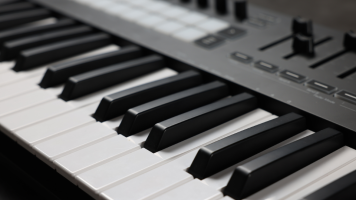
The Musical Instrument Digital Interface, or MIDI for short, is the technical standard protocol that allows electronic musical instruments to interact with music hardware and software like synthesizers, soft-synths, and DAWs.
MIDI is not audio, but rather a set of instructions sent to a piece of hardware or software using keys, knobs, sliders, or other methods of input to define the pitch, timing, volume, and velocity of the sound module’s output. The MIDI controller has become essential in modern music production and can be found in just

by Freddy Gerngross · Posted
The 500 series form factor, first innovated by API in the 1960s, has established itself as one of the most popular and convenient form factors for outboard gear—get yourself an API Lunchbox or an equivalent and you can mix and match modules, swap gear in and out, and customize the chain of your outboard gear in whichever way you please, all in a portable form factor that you can carry from studio to
by Freddy Gerngross · Posted
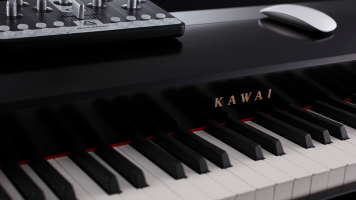
Whether you're a hobbyist making beats for fun or a seasoned professional producing music for your adoring fans, you'll want to have a MIDI keyboard to control your software synthesizers, drum machines, and maybe your whole DAW. In this shopping guide, we'll go over some of the best and most popular MIDI keyboard controllers we have in stock at B&H, their important features, and what kind of musicians they're best suited for.
If you need to know more about MIDI controllers and their affinity with DAWs, synths, and other hardware, check out