Search results for: pro audio home recording
About 281 filtered results
by Gabby Bloch · Posted
As a podcaster, life becomes a lot easier when you have the right equipment. If you’re currently stuck with a simple audio interface or portable recorder, you’ll probably benefit from upgrading your setup to a multitasking mixer that can serve every function you may need as your podcast grows and your creative ideas expand. Since content creation has become such a big thing, it’s challenging to sort through all the available products to find which

Posted
Recording horns doesn't have to be hard or expensive. Join Andrew in his living room as he demonstrates the basics of recording solo horns and a 3-piece horn section at home. Starting with the humble Shure SM57 all the way up to top-shelf condenser microphones, you'll hear how all these mic types sound on a selection of woodwind and brass instruments.
0:00 - Intro
0:28 - What makes live horns so special?
1:07 - Mic Placement & Gain Levels
2:37 - Shure SM57
3:44 - Other Dynamic Mics
5:26 - Ribbon Mics
7:14 - Condenser Mics
8:44 - Tube

by Freddy Gerngross · Posted
If you’re looking to get into home recording, you’ll need an audio interface. They all do essentially the same thing, so what matters is the number and types of input/output (I/O) they have. In the current market, every manufacturer is looking to set themselves apart from the competition and in this guide, we’ll go over some popular and affordable series of audio interfaces we have in stock at B&H and what to look for depending on what you’re trying to accomplish. Our picks clock in under $500 for the most part so you won’t have to sweat
Posted
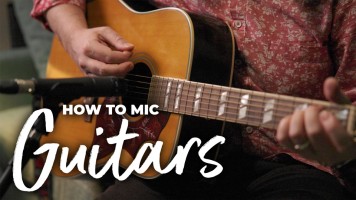
Take the guesswork out of at-home recording. Musician and B&H Social Media Video team member Andrew Swift walks you through the essential techniques for micing both acoustic and electric guitars live.
0:00 - Intro
1:03 - Recording acoustic guitar sound
12:20 - Recording with a dynamic mic
23:32 - Recording with a condenser mic
31:23 - Recording with both a large and small condenser mic
51:52 - Recording electric guitar sound
1:07:06 - Recording with a ribbon mic
1:15:21 - Recording with large condenser & ribbon mic
1:28:48 - Plugins
1

Posted
Andrew takes us through ways to record both electric and acoustic upright bass at home. You'll hear how different DI boxes can subtly change the sound of the electric bass and how to mic a bass amp. For Upright bass, Andrew will share some considerations when using a DI box as well as a nifty trick to mic an upright with a Shure SM57. You'll also hear how both ribbon and condenser mics can make the upright bass sound full.
0:00 - What We're Covering Today
0:29 - How Electric Basses Work
1:03 - Using the Hi-Z/Intrument Input
2:03 - DI Boxes

by Freddy Gerngross · Posted
Whether you record demo tracks on the road, produce podcasts at home, or collaborate with other artists in random locations, having a travel-friendly audio interface is key to staying versatile in your work. An ideal interface would be small enough to fit in a backpack, laptop bag, or satchel while supporting multiple types of I/O and USB powering. Seriously, the last thing you need is to have your ideas vanish whilst frantically searching for a free AC power outlet. Thankfully, your options are plentiful in number, and I’d like to bring your

by Freddy Gerngross · Posted
Let’s face it—microphones are expensive. We all want a stocked mic locker with the greatest vintage microphones the world has to offer, but unfortunately, that’s a privilege few can afford. But fear not! There are plenty of amazing and affordable microphones in production that rival or even exceed the sound of the classic studio legends. So whether you’re micing up a guitar, your voice, or a whole drum kit, check out five of my favorite mics that we have in stock at B&H.
Large Diaphragm Condenser: Rode NT1 5th Gen ($214-$228)
As a mic I

by Freddy Gerngross · Posted
Perhaps more than in any other creative field, the line between professional and prosumer is the blurriest in pro audio. Just within the last 15 years, the quality of gear that has become financially obtainable by hobbyists and enthusiasts has increased exponentially, from interfaces to
by Freddy Gerngross · Posted
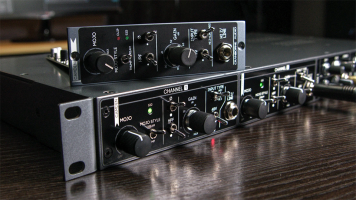
If you're new to the world of audio and are wondering what a mic preamp does and whether you need one for your home studio, you're in luck. We've put this guide together to answer all of your questions.
What Is a Mic Preamp?
The mic preamplifier, or preamp, is a device that increases the voltage of a mic’s outgoing signal so it can be strong enough to be processed by other audio equipment—it takes signal from mic level to line level (often boosting between 30-70 dB). It can also add a user-specified amount of gain to the signal which in turn
by Trevor Collins · Posted
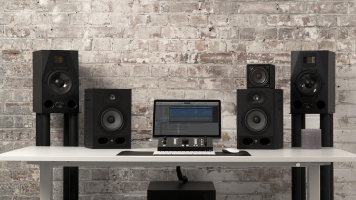
No matter what area of audio production you work in, you're constantly listening. Loud and proud or whisper quiet, through headphones or speakers, in your studio or on the road, you're constantly listening. And naturally, you need to hear your productions through various transducers to accurately assess how they translate.
What you don't want is to be relegated to a life of vibe-killing, time-wasting repatching—you know, power-down those speakers, unplug them, plug in the other speakers, power them on, etc.—or adjust your DAW's master fader to
by Freddy Gerngross · Posted
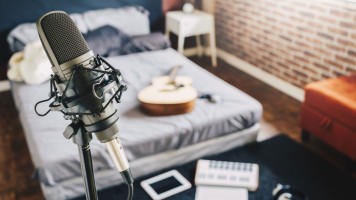
As the democratization of music production continues to propagate, many people have been innovating new production techniques, creating entirely new genres of music, and recording literal chart-topping hits—all from the comfort of their bedrooms. But if you’re just getting started, you might soon realize that the vocal recordings you capture in your bedroom are … less than ideal.
Getting a tight and professional sound from a small bedroom is possible—but it takes planning, preparation, constant rearrangements, and maybe a few bucks here and

by Zach Kornhauser · Posted
Creating music doesn’t have to be tied down to a large studio, or even a humble desk setup at home. While those settings are excellent choices for coming up with new ideas, you must be prepared when creativity strikes, regardless of where you are. Whether you are in band practice with your friends or trying to make hard-hitting beats on your laptop, you should have everything you need to capture your ideas.
It’s also important to consider the size and weight of portable recording tools; the last thing you want to worry about is how to carry

by Freddy Gerngross · Posted
Whether you’re a musician who’s building a studio or rehearsal space, setting up an audio system at a venue or house of worship, an aspiring streamer/podcaster, or a production house, the audio mixer may be the most important (and expensive) purchase you make—but with multitudes of options, you’ll want to know exactly what you need before pulling the trigger.
This guide will help you sort through the factors to consider when searching for the perfect mixer for the job. If you’ve got a case of choice paralysis when it comes to mixers, or if

by Freddy Gerngross · Posted
Recording drums is an esoteric practice; even with consistent techniques, it can be difficult to get consistent results, and with so many microphones on the market, it's tough to know what gear will bring out the most life from your performance. Luckily, you don't need expensive mics to achieve a brilliant recording (but it doesn't hurt)—if you're someone who wants to know more about recording drums and which mics are best suited for the job, this article is for you!
How Do I Record a Drum Kit? Basics Before Micing
While this article is a
by Freddy Gerngross · Posted
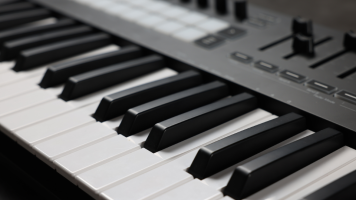
The Musical Instrument Digital Interface, or MIDI for short, is the technical standard protocol that allows electronic musical instruments to interact with music hardware and software like synthesizers, soft-synths, and DAWs.
MIDI is not audio, but rather a set of instructions sent to a piece of hardware or software using keys, knobs, sliders, or other methods of input to define the pitch, timing, volume, and velocity of the sound module’s output. The MIDI controller has become essential in modern music production and can be found in just