The original Sony Cyber-shot DSC-RX100, introduced in June 2012, featured a fresh, inviting design, a fast 28-100mm (equivalent) Zeiss Vario-Sonnar zoom lens, and something unheard of for such a compact camera: a 20.2MP 1"-format backlight-illuminated CMOS sensor. Measuring 13.2 x 8.8mm (2.7x crop factor), the 1"-type sensor was smaller than full frame, APS-C, and Four Thirds-format imaging sensors and larger than the itty-bitty sensors found in other point-and-shoot cameras and smartphones. For many, it proved to be the "sweet spot" in terms of picture quality, size, performance, and form factor.
The most current version of this 20.1MP 1" CMOS sensor, complete with stacked architecture and back-illuminated design, can be found in the Sony Cyber-shot RX100 VA and VI. Many other manufacturers, including Canon, Panasonic, and Leica, have their own 1" sensor cameras available. The following is a roundup of the cameras that share this imaging format.
Sony
Sony's offerings include its iconic RX100 VA pocket camera and the DSLR-like RX10 IV superzoom camera.
Sony Cyber-shot DSC-RX100 VA and VI
The Sony Cyber-shot DSC-RX100 VA and VI are the latest versions of the original Sony RX100, which along with all previous Sony RX100-series cameras, are available new at B&H. Visually, the Sony RX100 VA looks like its predecessors. Features include a 24-70mm equivalent Zeiss Vario-Sonnar T* f/1.8-2.8 zoom, ISO sensitivity up to 12800, Internal UHD 4K video, and S-Log2 Gamma. A BIONZ X image processor and front-end LSI enable up to 24-fps continuous shooting. The camera's fast hybrid AF system features 315 AF points. For viewing, there's a 0.39" 2.36m-dot OLED pop-up EVF and a 3" 1.23m-dot tilting LCD. Built-in Wi-Fi and Bluetooth connectivity complete the package. Similar to the VA, the VI takes a different approach to lens design, opting for a longer 24-200mm equivalent f/2.8-4.5 lens while maintaining the series' legendary form factor and adding a one-touch pop-up EVF and a few nice upgrades for video shooters.

Sony Cyber-shot DSC-RX10 IV
The Sony Cyber-shot DSC-RX10 IV is the 4th-generation progeny of the Cyber-shot DSC-RX10. DSLR-like in size and profile, it sports an image-stabilized 24-600mm (equivalent) f/2.4-f4 Zeiss Vario-Sonnar T* zoom, which is about as wide a range as you should ever need.

The Sony RX10 IV has a 2.36m-dot OLED Tru-Finder EVF and a 3" 1.44m-dot tilting touchscreen LCD. Other features include UHD 4K30 Video, Full HD 1080p at 960 fps, a fast, 315-point hybrid AF system, ISO 12800 sensitivity, and 24-fps continuous shooting. Depending on your optical and size preferences, any of these Sony cameras make for excellent travel and day-tripping companions.
Canon
Canon has four cameras in our 1" sensor roundup. All of them are quite compact, with the differences being in zoom range, maximum apertures, and whether you can live without an electronic viewfinder.
Canon PowerShot G3 X
Like the Sony RX10 IV, the Canon PowerShot G3 X features an image-stabilized 24-600mm Canon optical zoom, albeit a slightly slower f/2.8-5.6. For viewing, the Canon G3 X has a 3.2" 1.62m-dot tilting touchscreen. A shoe-mounted EVF is available optionally for reflex-style viewing. The G3 X can capture up to 5.9 fps and features a DIGIC 6 image processor, ISO 12800 sensitivity, and a 31-point AF system. Stills can be captured as JPEG or RAW. Video is captured at Full HD video at 60 fps, and as with other cameras in this category, there's built-in Wi-Fi and NFC.

Canon PowerShot G5 X
The differences between the Canon PowerShot G5 X and the G3 X are limited to the lens and viewing systems. The G5 X's 24-100mm f/1.8-2.8 zooms equally wide but notably shorter on the telephoto end of the focal range. It's also about a stop faster across the focal range than the G3 X. For viewing, you have a choice of a 3.0" 2.36m-dot Multi-Angle touchscreen or a built-in 2.36m-dot EVF. A DIGIC 6 image processor keeps the workflow flowing. Also included is Intelligent IS Image Stabilization and a DIGIC 6 image for, among other things, up to 5.9 fps in Continuous mode.

Canon PowerShot G7 X Mark II
The Canon G7 X Mark II is an upgrade with changes and improvements, including a (faster) DIGIC 7 image processor, Time-Lapse movie mode, up to 8-fps shooting, and a 3" 1.04m-dot tilting touchscreen LCD. If there's a downside it would be the disappearance of the G5 X's EVF, which is somewhat buffered by the G7 X's lower selling price.

Canon PowerShot G9 X Mark II
The Canon PowerShot G9 X Mark II is a less expensive alternative to the Canon G7 X Mark II. While it retains most the G7 X's attributes, the G9 X has a slower lens (f/2-4.9 versus f/1.8-2.8) with a narrower zoom range (28-85mm versus 24-100mm) than the G7 X. It does offer in-camera RAW conversion, which is notable for a camera in this category.

Panasonic
Panasonic offers four cameras containing 1" CMOS imaging sensors: two compacts and two superzooms featuring choices of zoom ranges and lens speed.
Panasonic Lumix DMC-ZS100
Compact, with a clean, uncluttered design, the Panasonic Lumix DMC-ZS100 is well matched to its picture-taking abilities. Starting with a Leica 25-250mm f/2.8-5.9 DC Vario-Elmarit lens (35mm equivalent), Panasonic's DMC-ZS100 offers a choice of either a 1,166k-dot Live View Finder or 3" 1.04m-dot touchscreen LCD as viewing options.

A Venus Engine image processor enables sensitivity up to ISO 25600 and continuous still shooting at up to 50 fps. 4K video with Photo Modes (8MP stills extraction from 4K video), post-focusing, and 5-Axis Hybrid O.I.S. for smoother camera movements in video and sharper stills when shooting in low light.
Panasonic Lumix DC-ZS200
If you like the DC-ZS100 but you wish it had a slightly longer zoom, check out the Panasonic Lumix DC-ZS200, which has a 24-360mm f/3.3-f6.4 (equivalent) zoom, compared to the ZS100's slightly shorter (and slightly faster) 25-250mm f/2.8-5.9 zoom. Other differences include a higher-resolution Live View EVF (0.21" 2330k-Dot) and touchscreen LCD (3" 1240k-Dot).

Like the ZS100, the ZS200 features a Venus Engine image processor, ISO sensitivity up to 25600, continuous stills at up to 50 fps, 4K video with Photo Modes, post-focusing, and 5-Axis Hybrid O.I.S.
Panasonic Lumix DMC-FZ1000
The Panasonic Lumix DMC-FZ1000 is a superzoom camera with a fast (f/2.8-f/4) 25-400mm equivalent zoom. The Lumix DMC-FZ1000 captures stills (JPEG & RAW) at up to 50-fps continuous shooting. Video capture is UHD 4K video at 30 fps. For viewing, the Lumix DMC-FZ1000 offers a choice of a 0.39" 2359k-Dot OLED Live View EVF or 3" 921k-Dot Free-Angle LCD. Other features include Wi-Fi connectivity with NFC, Light Speed AF with Lumix DFD Focus, and HYBRID O.I.S. 5-axis image stabilization.

Panasonic Lumix DMC-FZ2500
The Panasonic Lumix DMC-FZ2500 has a slightly longer (24-480mm), slightly slower (f/2.8-4.5) zoom than the Lumix DMC-FZ1000. The viewing options are the same as they are on the DMC-FZ1000, as are most of its other attributes. JPEG and RAW stills can be captured at up to 12 fps in continuous mode, while video is DCI 4K @ 24 fps and 100Mbps. CINELIKE Profiles, a manual control ring, and a built-in ND filter are also incorporated into the FZ2500.

Leica
Leica offers two point-and-shoot cameras containing 1" CMOS sensors, both manufactured in conjunction with Panasonic.
Leica C-Lux
The Leica C-Lux shares its lens and all of its internal components with the Panasonic Lumix DC-ZS200. What differentiates the Leica C-Lux from the Lumix DC-ZS200, aside from its body housing and that sexy red logo, is color rendition. Compared to image files captured with the C-Lux's Panasonic counterpart, image files captured with the Leica C-Lux have a more neutral color palette, which has been the basis of Leica imaging sensibilities since the company's inception.

The Leica C-Lux features a Leica DC Vario-Elmar 24-360mm f/3.3-f6.4 (equivalent) zoom, a Live View EVF (0.21" 2330k-Dot), a touchscreen LCD (3" 1240k-Dot), a Venus Engine image processor, ISO sensitivity up to 25600, continuous still shooting at up to 50 fps, 4K video with Photo Modes, post-focusing, and 5-Axis Hybrid O.I.S.
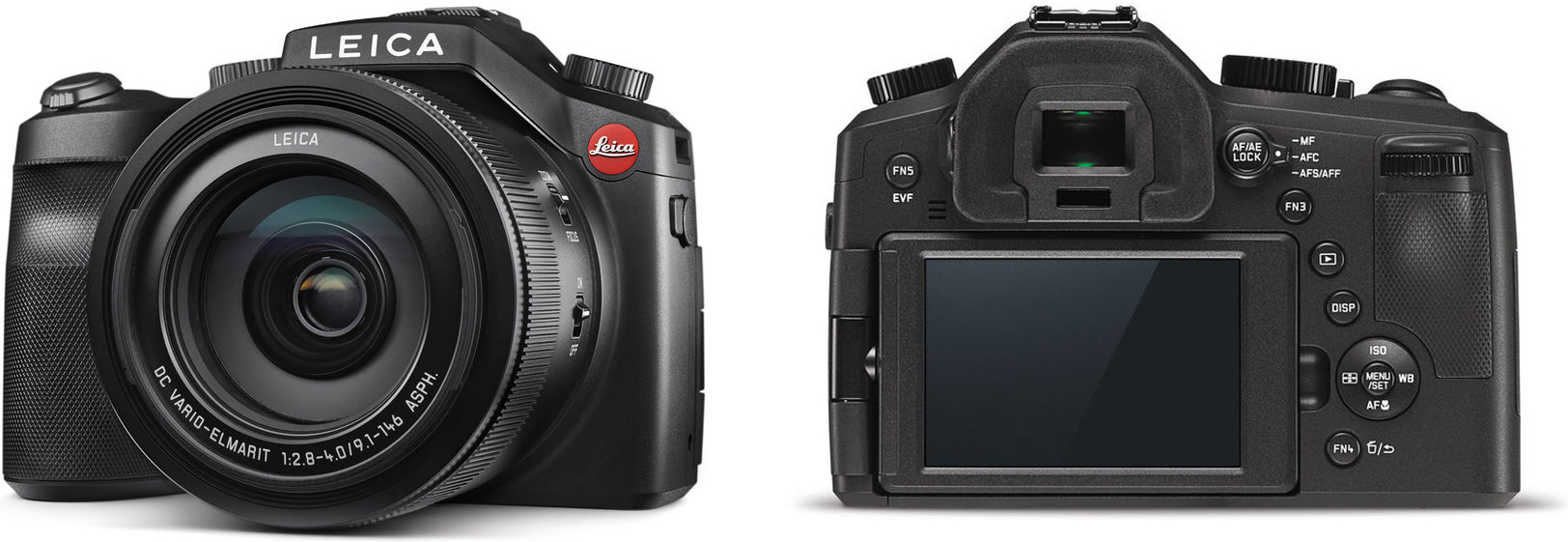
Leica V-Lux
The Leica V-Lux is a posher-looking version of the Panasonic Lumix DMC-FZ1000. Included among its features are a Leica DC Vario-Elmarit 25-400mm zoom, up to 50-fps continuous shooting, 4K QFHD video at 30 fps, a choice of a 0.39" 2359k-Dot OLED Live View EVF or 3" 921k-Dot Free-Angle LCD, Wi-Fi connectivity with NFC, Light Speed AF with Lumix DFD Focus, and HYBRID O.I.S. 5-axis image stabilization. As with the Leica C-Lux, the V-Lux is known for neutral color rendition.
Do you take photographs with a camera containing a 1" sensor? What do you think about it? Share your thoughts in the space below.