Search results for: photography buying guide choosing rugged cameras
About 14 filtered results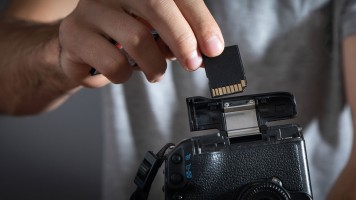
by Steven Esposito · Posted
When it comes to preserving and protecting your digital photographs, choosing the right storage solution is critical. In this guide, we’ll walk you through some of the important factors to consider when shopping for a storage solution, including which specs to focus on and the different storage category types. We’ll also include some of our favorite storage options and explain what makes them so great.
Understanding Your Storage Capacity
A good rule of

by Mathew Malwitz · Posted
It's only natural that after using a pair of binoculars, some birders will find that they yearn for more, and the only way to practically get more reach is to use a spotting scope. These are essentially terrestrial telescopes, using one optical path to magnify an even greater distance than our typical handheld optics can manage.
As covered in our guide to choosing a spotting scope, finding the right scope can be as

by Mathew Malwitz · Posted
Mother’s Day and Father’s Day are right around the corner! Finding the right gifts can be a challenge, especially when it seems like they already have everything. Luckily, we’ve got the best gift ideas for the outdoorsy photographer parent in your life. Whether mom and dad are avid hikers, bird watchers, beachgoers, or polar bear guides in Svalbard, Norway, we’ve got you covered.
Camera
In a surprising twist, a camera is our first suggestion. One of the first things any outdoorsman should consider is a tool to record what they see so

by M. Brett Smith · Posted
Landscape photography is an unpredictable experience. Unlike certain genres of indoor photography, which take place in safer, more controlled environments, landscape photography is shot outdoors, where you are at the mercy of the elements. To prepare yourself and help keep you (and your gear) safe, we've put together this list of

by Rachel Leathe · Posted
What makes a camera good for landscape photography? In this article, we’ll dive into factors such as megapixel count, sensor size, usability, weather readiness, and design—helping you develop your own personal metric for finding the ideal camera. We’ll help you wade through all the technical mumbo jumbo to figure out what specs really matter, whether you want to capture stunning mountain ranges or shoot star-strewn night skies.
Megapixels
It doesn't get much more basic than megapixels. They're like the atoms of photography. But just how many

by Rachel Leathe · Posted
It’s no secret that video has taken over. From TikTok to Times Square, it has infiltrated every corner of our lives. Meanwhile, the line between still photography and videography grows increasingly thin. You only need to glance at Instagram or Facebook to see this new order of things play out.
It’s no surprise that in the dawn of this new amalgam era, a certain class of cameras has emerged. As the name implies, hybrid cameras are adept at capturing video and stills. These cameras can serve as an entry point into video while still being capable

by Todd Vorenkamp · Posted
Many budding sports and wildlife photographers dream of larger and larger lenses that get them closer to the action while letting in more light—allowing blazing-fast, action-freezing shutter speeds that capture priceless moments on the field or out in the field. But, with long lenses comes the increased chance of camera shake due to the extreme focal lengths. How do we combat physics here? Well, if you are entering the world of the

by Rebecca Melville · Posted
The best on-camera flash is more powerful, offers greater control, and facilitates more artistic and creative approaches to lighting than your standard built-in camera flash. No wonder the on-camera flash, or strobe, is one of the most indispensable accessories a photographer can buy.
But how do you know which flash is right for you? If you own a camera from a big-name manufacturer (e.g., Canon or Nikon), should you buy a flash from them?

by Rachel Leathe · Posted
As the line between professional photography and videography continues to blur, one company has chosen to cater to this emerging class of hybrid shooters.
Sony released its first full-frame, interchangeable-lens cameras, the Alpha a7 and a7R, in 2013. With the release of these twin cameras, the company unknowingly embarked on what would end up being a five-year monopoly of the mirrorless camera market. Although not the very first mirrorless cameras of their kind, the a7 and a7R were immediately disruptive due to their revolutionary

by Rachel Leathe · Posted
Nothing kills creativity faster than an aching back. For all the benefits of full-frame cameras, telephoto lenses, and dedicated flashes, there’s something to be said for the freedom that comes with a lightweight setup. If you’ve been hunting for a simple camera to stick in your bag on your way out the door, a traveling companion, or something discreet when photographing on the streets, then you’ve come to the right place.
Test Photographs © Rachael Leathe
The heavy-hitting cameras on this list tend to box above their weight class. They

by Bjorn Petersen · Posted
Landscape photographers are a contradictory bunch. Always on the quest for gear that is simultaneously lightweight and substantial, landscape photographers, as well as travel and nature photographers, are always in search of equipment that can get them a new look, serve a distinct purpose, or be flexible enough to handle a variety of conditions. If there’s a landscape photographer in your life to whom you’re looking to give the perfect photography gift, or if you’re looking to reward yourself with a new piece of kit, here are some gift

by Allan Weitz · Posted
The topic of this article might seem easy-breezy to compose, but truth be told—it isn’t. For starters, how do you define “travel friendly?” Where are you going? How are you getting there? And what exactly do you plan on photographing once you get there? Do you already own a camera and lenses? If you do, are you happy with them and, if not, why?
There’s simply no way we can address every scenario but, at the very least, we can offer you food for thought.
Bigger Doesn’t Always Mean Better
With few exceptions, it would be fair to say just about

by Eric Butterfield · Posted
With all of the technical considerations that go into choosing a digital camera, it's easy to forget the strap. You get one with your camera, but it looks like an afterthought—a functional necessity with no style. If it were a fashion statement, it would be the equivalent of wearing black knee socks with a cocktail dress—functional, but less than attractive.
You can easily improve this situation by picking up a higher-quality strap that's more comfortable, functional—and better looking. Plus, you don't have to break the bank. There are

by Allan Weitz · Posted
What is a lens?
Superficially, a lens is little more than a cylinder containing optical elements that shift about as you focus by turning a ring around the cylinder. But even in its most basic form, a camera lens is far more complex than it might appear.
A lens is more than the sum of its parts. When you attach a lens to a camera, your choice of lens is very much like a painter's choice of brush. For finer details, the painter will choose a narrow, pointier brush. For cloud-free skies, a broader brush would be a wiser choice. Wide-angle lenses