Search results for: photography fundamentals depth field
About 15 filtered results
by Luke Rollins · Posted
Learn about how to get started with dental photography, including what gear to use, which photographic fundamentals you should be focusing on, and why dental photography is critical for both clinical care and promoting your own dental practice.
IN THIS ARTICLE
1. (Don’t Fear) the Gear2. Good Dental Photography Is Good Photography3. Macro Discipline, Portrait Mindset4. Embrace the Flash5. Clinical,
by Luke Rollins · Posted
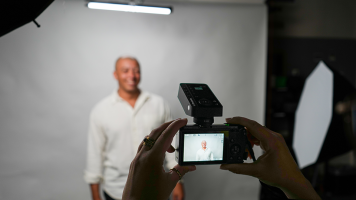
At first glance, studio photography and the compact camera may seem strange bedfellows. The type of work associated with the studio—still life, product photography, portraiture, macro photography—usually wants cameras with larger sensors and interchangeable lenses, especially in professional applications. Compact, point-and-shoot cameras, for their part, have their natural home in everyday, travel, nightlife, and street applications, where their discretion and size become virtues.
It might seem almost cruel to introduce the compact to the

Posted
Photographer Russell Graves discusses topics that you generally don't hear much about in photography school anymore.
0:00 - Intro
3:09 - Russell's background
5:07 - Exposure
10:02 - Knowing the fundamentals
21:07 - Calibrate your cameras
28:28 - Being prepared
30:22 - 50mm is how we see
37:09 - Looking for the best angle of light
42:21 - Manual focus is valuable
45:12 - Lenses are the limiting factor
48:30 - Shoot the moon at 200mm
50:58 - Bigger lenses aren't always a better option
54:19 - Depth of field preview
55:56 - Use flash
57:32 -

by Stepan Andranikian · Posted
Fashion photography undertakes the deceptively difficult task of capturing the nature and spirit of a garment while conveying the designer's underlying vision. Doing so successfully already requires immense skill and artistry, so it helps to have the right camera for the job. We’ll be looking at a few cameras suitable for fashion photography, as well as some camera fundamentals to help inform your future purchase. Let’s begin with essential features.
Camera Sensor
Your camera’s sensor should be your first consideration, because it is

by Rachel Leathe · Posted
Did you know that the first photograph ever taken was of a landscape?
“View from the Window at Le Gras” was captured by Nicéphore Niépce, in 1827. It features a very abstract view from Niépce’s window. Then, in 1839, Louis-Jacques-Mandé Daguerre made history with his image of

by Jill Waterman · Posted
“How do you make pictures about a person who doesn't exist anymore?” This was the fundamental question facing Jessica Hines while sorting through a box of her brother Gary’s letters, photographs, and other objects from his military service in Vietnam some 35 years after his return—25 years after his life ended in a battle with post-traumatic stress.
Photographs © Jessica Hines

by Todd Vorenkamp · Posted
Setting up your camera properly for night or low-light photography is a fundamental key to successful images. There are no hard and fast rules for settings for night photography because many of the settings you choose depend on the scene before you and how you want it to look in the final image. However, this guide will give you a foundation for setting up your camera to capture the wonders of the night.
Photographs ©Todd Vorenkamp
Exposure Mode

by Todd Vorenkamp · Posted
1. Shoot every day Like any skill, the more you do it, the better you can get. The best camera you have is the one in your hand, so if you aren’t out with your full DSLR kit, don’t be afraid to take great photos with your cell phone camera or a point-and-shoot. Photography is photography, make pictures with a camera. Any camera.
2. Always have your camera near Pull up a chair and I can describe two amazing scenes that have been indelibly embedded in my mind. Unfortunately, for the first, my camera was broken (I was at sea, far from

by Todd Vorenkamp · Posted
Welcome to the world of photography beyond what you can do with your smartphone! With an interchangeable-lens digital camera (DSLR or mirrorless) you can do so much more than when you’re using the camera in your phone. Even though it can be intimidating at first, there are some fun photographic challenges that even beginning photographers will enjoy. Not only are they relatively easy, these photo assignments will build photographic fundamentals for all your

by Todd Vorenkamp · Posted
Tunnel View in Yosemite National Park is one of the most scenic overlooks on the entire planet. Because of its sheer beauty, it is difficult to walk away from it with a bad photograph. (I have always said that it is easier to make a beautiful photograph of something that is already beautiful than it is to make a beautiful photograph of something that is not beautiful.) And, almost every camera-armed tourist who drives out the end of the Wawona Tunnel on State Highway 41 comes away with a very similar photograph—similar to the one that Ansel

by Jill Waterman · Posted
What better motivation can one give a fledgling photo student than a gift of their very own camera at the end of an introductory workshop? It’s this very gesture that sets FreshLens Chicago apart from the pack. Founded in 2017 by Shirley Nannini as Executive Director, with Denise Orlin as Assistant Director, FreshLens is a youth photography not-for-profit dedicated to serving under-resourced Chicago youth through a mix of intensive photographic instruction, confidence building self-assessments, and inspiring role models who demonstrate what

by Todd Vorenkamp · Posted
Are you currently a photography student? Are you enrolled in high school, college, or graduate-level photography classes this fall? Here is some unsolicited advice from professional photographic educators to take with you into the classroom or out into the field.
1. “It is totally natural to emulate other photographers who you admire as you start your journey with the medium of photography, but the sooner you can begin to make unique photographs that reflect what you are genuinely interested in, the more rewarding your journey will be. Be

by Jill Waterman · Posted
Here’s a hot tip: In addition to photo, video, and audio gear, as well as other tech products, B&H carries thousands of books and tutorials covering the fields of photography, video, audio and computers, plus inspirational titles to get your creative juices flowing. For all you bibliophiles out there, we’ve compiled this shortlist of must-have publications spanning photography basics, photo careers, marketing and promotion, business practices, teaching photography, lighting technique, specialty photo subjects, creative inspiration,

7,919 Views· Posted
In this B&H video, photographer David Flores explores the "trinity" of photography fundamentals: ISO, aperture, and shutter speed. Beyond the immediate goal of proper exposure, learning how to control all three settings to
by BH Event Space… · Posted
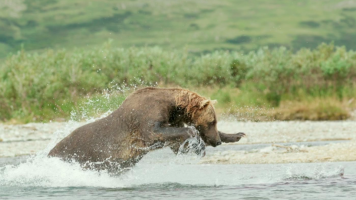
In this B&H Event Space video, Canon Explorer of Light Chas Glatzer shares his thought process behind the making of an image and the techniques he uses to produce consistently successful images in the field. Learn how to see and understand light, its quality, physical properties, and other aspects; and grasp how relating these elements to your subject and equipment will allow you to take control of your imagery.
In this presentation, Glatzer covers his proactive in-field work methodology in depth. He identifies four elements as paramount