
The summer doldrums are turning out to be anything but dull thanks to Canon's launch of the flagship EOS R1 and professional EOS R5 Mark II mirrorless cameras. These cameras mark a generational leap in imaging technology for Canon. The 1 Series and 5 Series are also some of the most popular and important cameras around and they set a high bar for professional shooters in many disciplines.
The Canon EOS R1 is the flagship mirrorless we have been waiting for
After the not-a-flagship EOS R3, Canon shooters have been waiting for Canon to drop the true mirrorless flagship and successor to the 1D series of DSLRs. The EOS R1 is that camera and the new technology packed into it clearly shows how this now the top-of-the-line offering.
Canon kept with the same plan they always have with the 1 Series—a relatively lower resolution pipeline with insane speed. This is in opposition to what we are seeing from competitors like the Nikon Z9 and Sony a1 that offer high resolution and high speed. That makes the R1 a more purpose built tool for traditional users of the 1 Series: sports photographers and photojournalists.
1 Series owners are of the type that can't afford to miss the shot because they often don't get a second chance. That's why speed, even at the cost of some potential resolution, is much more valuable. Canon also prioritized autofocus in the R1, using cross-type AF points for the first time on a mirrorless camera. The 24MP stacked CMOS sensor will deliver blazing-fast speeds of up to 40 fps in full resolution with tenacious autofocus that will stick to your subject like glue.

Canon didn't go all the way for a global shutter here, sticking with a fast implementation of rolling shutter. Now, we know there can be tradeoffs to image quality when it comes to global shutter today, so having rolling shutter still guarantees we are getting the results we expect from this level of camera for dynamic range and noise. All sample images of action don't show much in terms of rolling shutter distortion either, so this seems like a fine choice for the R1.
A new feature for Canon, that other brands have added recently, is a pre-continuous shooting option. This allows you to buffer a half second of shooting (up to 20 frames) with a half press of the shutter and then save them and keep shooting with a full press. This is huge for making sure you get the exact moment you need.
Video is also very good on the R1 with the option to shoot in raw in 6K at 60 fps. It is nice to see Canon unlock the full potential of their mirrorless cameras and not be afraid to add some pro-level cinema functions on them.
Finally, the R1 shows off in terms of body design. It has the usual controls and ruggedization of prior 1 Series cameras, but the biggest change here is in the EVF. This is a massive 9.44m-dot 0.90x magnification viewfinder. I don't think large viewfinders are as appreciated as they should be, but if you can look through this one you will enjoy an exceptional viewing experience.
It looks like Canon did a good job here, though we will have to wait and see what users think once these start getting into the hands of photographers in a couple months.
Canon EOS R5 Mark II is the pro mirrorless camera that can do it all
Versatility has been the key selling point of Canon's 5 Series of cameras. The EOS R5 Mark II continues that legacy while kicking things up a notch. The already versatile camera can now do even more.
Being a second-generation product I won't get too detailed with some basic specs like body design so I can focus on some of the highlights. The key change is a newly developed 45MP sensor with a stacked architecture. They kept the resolution the same, but made it faster and slightly better in terms of noise and dynamic range. They also boosted processing by adding the DIGIC Accelerator to the DIGIC X chip. This is how the R5 Mark II got its speed boost and some of its fun, AI-based features.
Considering the resolution, the top continuous shooting rate of 30 fps is impressive. It's almost a best of both worlds situation. Another best of both worlds is the stills/video hybrid nature of the camera. The R5 Mark II offers up to 8K 60p raw internally and brings some nice new functions for video, including proper waveform monitoring. It's a camera that can fit into so many different types of workflows.
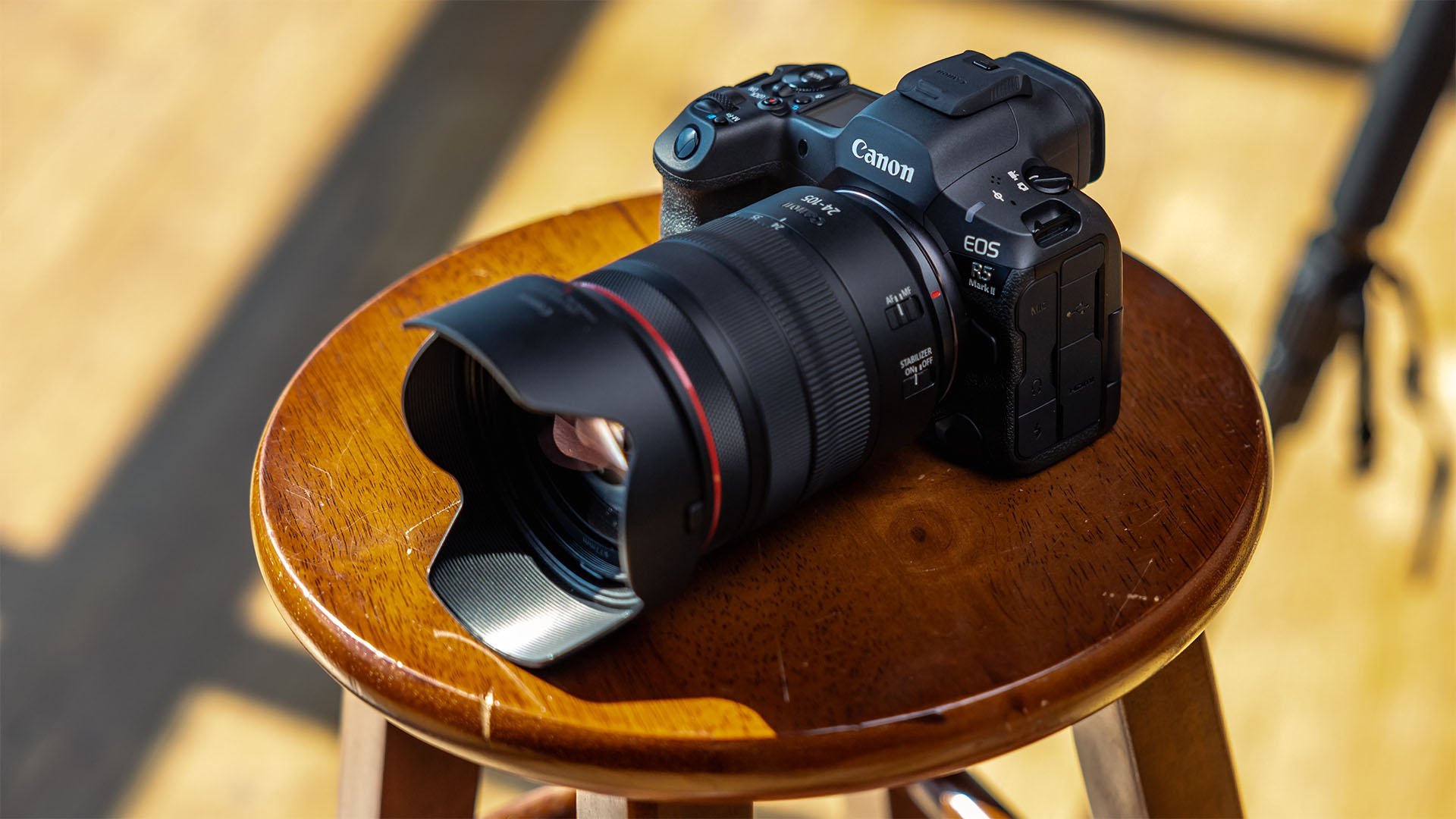
Honestly, this camera has some cool features, but it is a more of a everything is improved but the overall nature of the camera hasn't changed. It is still going to be the camera for everyday professionals since it can work for nearly every discipline of photography as well as the next, which is an amazing accomplishment.
Here are just some of the highlights:
-
45MP stacked sensor
-
DIGIC Accelerator
-
30 fps continuous and pre-continuous shooting mode
-
8K 60p raw, 4K 30p SRAW, 4K 120p 10-bit
-
The same 5.76m-dot EVF with Eye Control AF of the R3
-
In-camera upscaling to 179MP
Canon did a good job with the R5. It's a great match to the Nikon Z8 and Sony a7R V with plenty of advantages over both right now. It's kinda of the camera many people have been waiting for Canon to make since the competition got so stiff.
In other news…
-
DJI is leveraging their impressive wireless video transmission technology and making it available to all with the SDR Transmission.
-
Tascam is expanding their line of analog recording consoles with the 24-track Model 2400.
Don't expect anything as big as Canon's launch in the coming weeks, but we will be back whenever there is news to share on exciting new products.