
Sony's super-telephoto lenses have long been divided into two well-defined categories. At one end of the spectrum, you have a variety of relatively affordable super-zooms ranging from 100mm to 800mm. On the other end sit the primes, highly sought-after optics that are just as cumbersome as they are expensive. For years, these categories have been separated. That all ends today with the unveiling of not one but two ultra-lightweight lenses. Introducing the FE 400mm f/4.5 and FE 600mm f/6.3 G Master primes.
Size and Weight
It should come as no surprise that the FE 400mm f/4.5 GM and FE 600mm f/6.3 GM are remarkably lightweight. In fact, they're two of the world's lightest super-telephoto primes at just under 2.2 lb each. In the hands, this weight (or lack thereof) was a dream to work with. Both lenses have a center of gravity shifted toward the camera body, making them comfortable to carry and well-balanced when raised to your eye.


Collectively, the lightweight build and balance of these lenses make them much easier to pan when tracking fast action, even when the subject comes close. This balance is achieved by implementing just a single front lens elements. This optimized optical design not only keeps the weight down but shifts the center of gravity back toward the camera for a more balanced rig that's comfortable to carry.
Now, if there's a crown to be won for lightest super-telephoto prime, the 400mm f/4.5 wins out by a very slim margin (2.191 lb compared to the 600mm's slightly heavier 2.192 lb). Is this difference perceptible in hand? Absolutely not. However, the lightweight feel is very noticeable when compared to the much heavier FE 400mm f/2.8, which weighs around 6.4 lb.

Sharpness and Image Quality
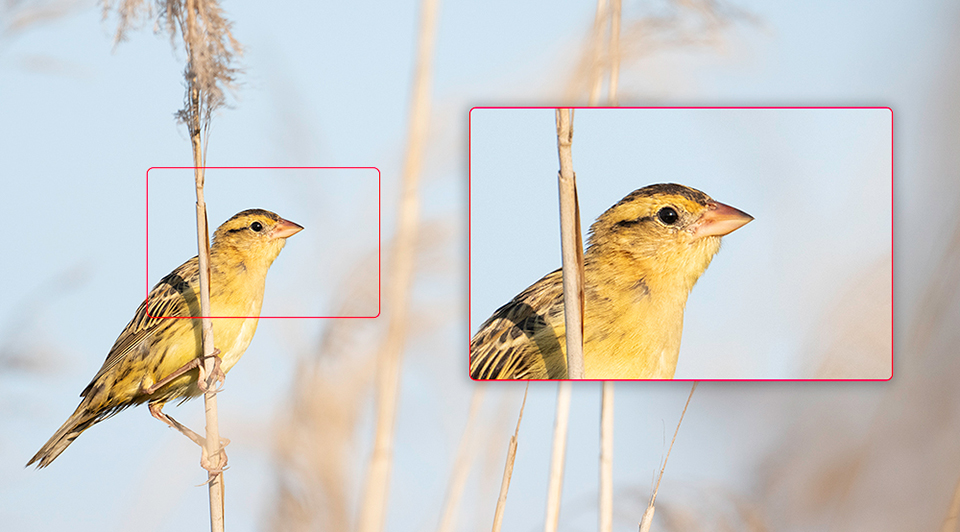
To no surprise, both lenses deliver exceptional image quality in both good and challenging lighting conditions. That is to be expected with prime lenses, as their simplified optical formulas deliver greater acuity. What wasn't expected was the fact that the images looked noticeably better when viewed on a larger screen at home.
Of course, this exquisite level of detail is made possible with the implementation of innovative G Master optics and Super ED and ED elements, which serve to suppress chromatic aberration and give images that crisp look we expect from Sony pro-level glass. Pair that with optical stabilization and an incredibly fast autofocus system, and you're gold.

When either the 400mm f/4.5 or the 600mm f/6.3 is paired with a megapixel-rich camera like the a1 II or the newly announced a7R VI, this sharpness really shines. The combination of quality and resolution provide increased flexibility when cropping, something us wildlife photographers are all too familiar with, whether we like to admit it or not.
Also of note is the inclusion of the Nano AR II Coating, which suppresses internal reflections and reduces flare and ghosting when shooting in backlit conditions. In my own experience, backlit images are tricky, no matter how advanced the gear or how good the camera. Of course, big primes handle these conditions like champs, but there's always a chance even the top-level gear gets tripped up. That said, these lenses excelled just as their larger, brighter apertured cousins do.

Speaking of brighter apertures: How do these lenses hold up when it comes to background rendering? Unsurprisingly, quite well. Both the 400mm f/4.5 and the 600mm f/6.3 feature an 11-blade diaphragm, which ensures smooth, beautifully rendered backgrounds Sony users have become accustomed to when using G Master lenses. Plus, the longer focal lengths naturally provide a narrower depth of field, which is always appreciated.

Autofocus Performance
Powered by two XD (eXtreme dynamic) Linear Motors, both the 400mm f/4.5 and the 600mm f/6.3 deliver exceptional autofocus performance, finding and tracking some of the toughest subjects. Both lenses are able to maintain tracking at up to 120 fps on the a9 III and subsequently make quick work of the 20-30 fps most of us average photographers will be shooting at.
I immediately noticed how quick these lenses were to grab initial focus compared to my 200-600mm zoom. While the bird activity was slow, the vultures I photographed were no match for the snappy focus acquisition of these 400mm and 600mm primes. The only aspect of the equation where any fault could be found was in me, the photographer, but these lightweight optics make tracking any subject a breeze.

Close-Up Performance
Macro capabilities are not generally something we think about when testing super-telephoto primes. Zooms are another story, as they typically offer significantly closer minimum focusing distances, especially as you begin to zoom out. That said, while testing these lenses, I tried focusing on close-up objects on a whim. This spec was not available at the time of testing, but I let my curiosity get the better of me.
Much to my shock, both lenses focused much closer than I was expecting. Is this feature a game changer? No, not really. But it is useful for those times your subject comes a bit closer than you were bargaining for. Are either of these lenses going to replace your FE 100mm f/2.8 Macro Lens? No, but they can snap a pic of a medium-sized flower or butterfly with no issue. Just take this New York aster below for example.

Stabilization
As with many long lenses, stabilization is a must. Both the 400mm f/4.5 and the 600mm f/6.3 come equipped with Sony's OPTICAL SteadyShot system with three modes. Mode 1 compensates for normal shake, while Mode 2 takes panning motion into account; Mode 3 is best suited for erratic subject matter, like birds. As you may have guessed, I photographed a few birds with these lenses, so I tried all three modes.

These modes are by no means new, but it seemed like a good idea to test this feature out of principal. The results were textbook, with Mode 1 working well for perched subjects and Mode 2 for more predictable flyers like the aforementioned black vulture that passed by. These birds are relatively slow and fly as un-erratically as a bird can fly, so basic panning was the only motion I needed to consider.
My next subject was a passing great blue heron. Again, it is not necessarily fast, but slightly more agile than a vulture. That said, when any bird or fast-moving subject passes close, the speed of your panning increases and you're going to need all the help you can get. Modes 1 and 2 were nearly indistinguishable when tracking any fast-moving bird. Some shots came out sharp, and if anything, Mode 2 had a few more keepers.

Mode 3 delivered more keepers, especially with the heron above, as it did a much better job keeping the bird centered in the frame. As with any action shot, sharpness comes from keeping the subject still in the frame, no matter how fast it's moving whether you're shooting at 1/2000, 1/400, or even slower. That's how skilled sports and wildlife shooters capture those stunning pan blurs!
Compatibility
Both lenses are compatible with both the 1.4x and 2.0x teleconverters, as one would expect from a prime lenses. The 400mm f4.5 becomes a 560mm f/6.3 when paired with the 1.4x and an 800mm f/9 when paired with the 2.0x. The 600mm f/6.3 effectively becomes an 840mm f/9 and a 1200mm f/13, respectively. I did not have the opportunity to test either lens with teleconverters, but if other G Master optics are any indication, it's safe to assume the final results will be just as sharp.
Durability
Both the 400mm f/4.5 and the 600mm f/6.3 come with the high reliability needed for outdoor shooting. The chassis is dust and moisture resistant, plus the front lens element features a Fluorine coating to repel water droplets, oils, and contaminants, all while making the front element a breeze to clean. Note that both lenses come with a padded soft carrying case as well.
Which Should You Get?
Deciding on which focal length is right for you is a highly personal choice. The difference between 400mm and 600mm is noteworthy, but only if your subject matter demands it. Consider what you'll primarily be shooting and decide if the added reach is too important to live without.
For instance, if you find yourself chasing small, distant subject matter likes birds, the 600mm f/6.3 is the way to go. That extra reach is essential to capturing frame-filling shots and keeping cropping to a minimum, which in turn preserves image quality.

Now, if you're a sports shooter or have a knack for getting closer to your subjects such as when on safari or dealing with relatively tame subject matter, the 400mm lens may be the best choice. The wider field of view is also better suited for fast action, such as birds in flight. Plus, the shorter focal length provides an ever so shorter minimum focus distance, which can be fantastic for small, close-up subjects.

Learn More
Sony now offers three levels of lenses for super-telephoto users. At one end sits their versatile lineup of zooms and the big exotic primes on the other. In the middle sits the new class of more affordable G Master lenses, making pro-level performance more accessible. The two new primes sit alongside the FE 100-400mm f/4.5 GM announced earlier this year in this new middle tier.
For those looking to lighten the load, or if you've been dreaming of a lightweight prime to get you into the world of wildlife photography, the wait is finally over. Even experienced wildlife shooters using the larger f/4 or f/2.8 variants of these lenses may benefit from the lightweight build as a hiking companion, or an alternative focal length to have over your shoulder in a pinch.
Both primes deliver incredible image quality and exceptional portability in durable package. If you're interested in learning more about either the FE 400mm f/4.5 GM or the FE 600mm f/6.3 GM, check out the detailed product pages.
