Telephoto Lenses

Sigma just announced the 50-120mm f/2.8 DC OS Contemporary telephoto lens, one of their most impressive compact zooms yet. But it’s not alone. Joining this uncompromising optical performer is a returning fan favorite, the all-in-one 16-300mm f/3.5-6.7 DC OS

0 Views ·Posted
Photographer Jeff Cable has photographed many years of the Olympics, personal events, wildlife, and various other genres. His choice of lens matter for each one. Jeff goes over some of his favorite images and breaks down how he got the shot and what lens he used.
0:00 Intro
3:17 Every lens has a use
9:40 Zoom vs. Prime - Photo review
48:30 Aperture
55:14 Upcoming photo tours / Closing
Sponsored by

Sony's super-telephoto lenses have long been divided into two well-defined categories. At one end of the spectrum, you have a variety of relatively affordable super-zooms ranging from 100mm to 800mm. On the other end sit the primes, highly sought-after optics that are just as cumbersome as they are expensive. For years, these categories have been separated. That all ends today with the unveiling of not one but two ultra-lightweight lenses. Introducing the FE 400mm f/4.5 and FE 600mm f

After a busy start of the year, Sony returns with yet another exciting tool for wildlife and sports photographers. Introducing the portable FE 100-400mm f/5.6-8 OSS Super Telephoto Lens, an affordable zoom offering photographers of every skill level a tool to easily bring distant subjects closer.
Sony FE 100-400mm f/5.6-8 OSS

0 Views ·Posted
Wide angles are a staple in landscape photography, but don't sleep on telephoto lenses. They are an underrated gear choice that makes your photos appear more grandiose. Sam is in the field sharing telephoto photography ideas and teaching how to utilize these types of lenses.
0:00 - A Lens Secret
0:28 - Why Telephoto Lenses?
1:08 - A Point of Interest
2:22 - Lens Compression
3:14 - Full Moon Photography
9:55 - Which Do You Prefer?
Sponsored by

The second generation of Nikon’s “Holy Trinity” professional-grade zoom lenses receives its second installment with the announcement of the new NIKKOR Z 70-200mm f/2.8 VR S II lens. Faster, lighter, smaller, and more refined than its F- and Z-mount predecessors, this S-line workhorse is an S-tier choice for professional multimedia creators in a broad range of applications.
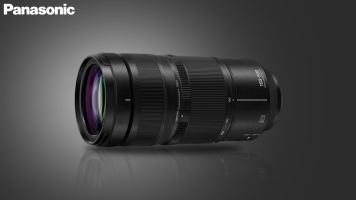
Panasonic is excited to announce the first ultra-telephoto powerhouse zoom for their full-frame S series, the LUMIX 100-500mm f/5-7.1 OIS. The smallest 500mm zoom available for a full-frame camera system at just 7.7 inches in length when collapsed and 2.83 lb. Don't let its compact size and portable build fool you though.
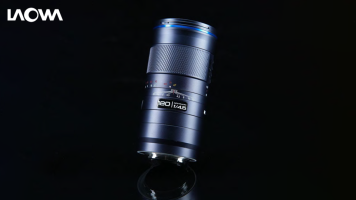
Venus Optics is excited to unveil the Laowa 180mm f/4.5 1.5X Ultra Macro APO lens. This is the first telephoto macro lens in Laowa’s ever-growing lineup, one that combines an advanced optical design with a versatile, lightweight package for a convenient yet powerful lens for all skill levels. The lens’s compact size is due in part to its f/4.5 aperture, a choice made to prioritize the portability of the lens. At half the weight of any comparable macro lens,
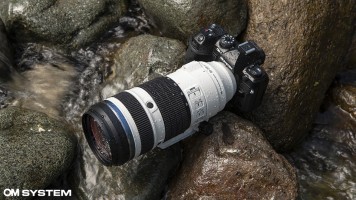
OM System has announced the breakthrough M.Zuiko Digital ED 50-200mm f/2.8 IS PRO—a fully weather sealed, all-purpose super zoom and the world’s first and only lens with an effective focal length of 100-400mm (35mm equivalent) and a constant f/2.8 aperture. Weighing only 2.37 lbs. and coming in at just over 8.8” long, this is the perfect companion to wildlife and nature photographers looking for an unrivaled, adventure

0 Views ·Posted
Learn how to improve your landscape photography with Sony Alpha Ambassador Autumn Schrock. Autumn shares valuable tips and tricks that will improve your landscape photography skills.
0:00 - Intro
2:05 - Gear does matter
7:13 - Go as often as you can
8:40 - Change your perspective
12:00 - Landscape vs. Portrait orientation
19:18 - Telephoto lenses
23:16 - It's not all about the photos
25:51 - Utilize scale
28:10 - Be happy with where you've been
30:48 - Less is more
33:39 - We're always learning
36:24 - Final thoughts
39:20 - Q&A

Sigma is announcing the full-frame mirrorless camera market’s first 200mm f/2 prime lens as part of its telephoto Sports series. The Sigma 200mm f/2 DG OS Sports, which will be available for L-mount and Sony E-mount cameras, aims to bring outstanding optical performance to indoor sports scenarios with accurate, high-speed autofocus, 6.5-stop image stabilization, and a large maximum aperture for light-gathering. Portrait

The bread and butter of sports and wildlife photography, super-telephoto lenses are a mainstay for shooters looking to both capture distant subjects and fill the frame with smaller subjects like birds. Super-telephoto lenses—lenses that typically start around 400mm—are also the type of lenses around which many shooters build their entire system; a good telephoto

Designed primarily for sports and wildlife photography, super telephoto lenses let you take advantage of long focal lengths, a narrow field of view, and shallow depth of field to fill the frame with distant subjects that are more isolated from the background. The narrow field of view also creates a compression effect, making the subject seem closer to the background than it is. With focal lengths

Viltrox continues to expand its repertoire in 2024, asserting itself in the high-end lens space with the AF 135mm f/1.8 LAB FE Lens for Sony mirrorless cameras. The LAB series’ debut lens is a competitor to Sony’s own 135mm f/1.8 G Master lens and features a medium telephoto focal length that has long been a favorite of portrait photographers. Like its counterpart, the Viltrox lens features a bright f/1.8 aperture that helps

Super-telephoto lenses and wildlife photography go hand-in-hand. These longer focal length primes and zooms allow you to get closer, seemingly, and fill your frame with distant subjects, like wild animals. Traditionally, these lenses also tend to house some of the most advanced and robust focusing systems, often feature built-in image stabilization, and usually sport weather-sealed exteriors. This past year was a fruitful year for wildlife lens releases, with many brands introducing a new super-telephoto or two to match the evolution and