Bird Photography

0 Views ·Posted
Photographing an osprey diving for a fish is one of the most exciting challenges in bird photography. In this video, Matt heads into the field to share his approach to finding and photographing ospreys, from choosing the right position and camera settings to tracking a fast-moving bird through a dive.
00:00 - How to Photograph Osprey
00:44 - Where to Find Osprey
01:14 - Photographing Osprey Responsibly
02:09 - Positioning Yourself for the Shot
03:05 - -Capturing an Osprey Catching a Fish
04:00 - Best Camera Settings for Osprey
05:03 - How to

Sony's super-telephoto lenses have long been divided into two well-defined categories. At one end of the spectrum, you have a variety of relatively affordable super-zooms ranging from 100mm to 800mm. On the other end sit the primes, highly sought-after optics that are just as cumbersome as they are expensive. For years, these categories have been separated. That all ends today with the unveiling of not one but two ultra-lightweight lenses. Introducing the FE 400mm f/4.5 and FE 600mm f

0 Views ·Posted
Isaac Grant comes to the B&H Event Space with his bird photography workshop. Combined with guided field experience, real-time feedback, and proven techniques that will help you shoot smarter, improve faster, and create stronger bird images in days, not years.
0:00 - Intro
3:59 - Bird photography is hard
7:03 - The biggest problem
10:00 - Workshops matter
15:36 - Guided field experience
17:31 - Confidence changes photographers
20:13 - Community matters
22:02 - How workshops help
29:00 - Anticipation
37:24 - Reading bird behavior
54:25 -

0 Views ·Posted
Photographing birds in flight is a truly challenging genre of wildlife photography. It’s also a lot of fun. Photographer Melissa Groo shares all the tips and techniques from gear to ethics so you can capture the beauty of birds flying.
0:00 - Intro
3:23 - Camera
13:42 - Camera settings
16:23 - Exposure triangle
21:44 - Pre capture feature
24:51 - Become a naturalist
31:05 - Direction of light
35:49 - The effects of wind on birds
38:28 - Brace yourself
41:57 - Ways to elevate your image
48:38 - Know the rules like a pro
50:46 - Importance of

0 Views ·Posted
Join Matt to see his entire photo editing workflow in order to take your bird images to new heights. Masking is how you can drastically improve your photo. Matt shows you how to utilize this Lightroom feature.
0:00 - Intro
0:24 - Spoonbill
11:16 - Red-Shouldered Hawk
20:56 - Eastern Phoebe
0 Views ·Posted
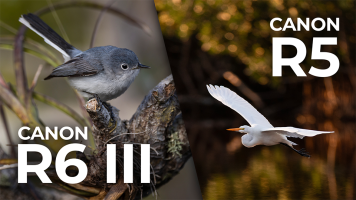
Both the Canon R5 and R6 III offer impressive features that make them perfect for wildlife photography. If you're struggling to choose and wondering what camera to buy, do not fret! Matt shows these two full-frame cameras in action, sharing how their specs will affect your real-life experience in the field.
0:00 - Intro
0:33 - R5
2:44 - R6 III
3:21 - Pre-Continuous Shooting
5:47 - Highest Shutter Speed
5:58 - Autofocus & Tracking Modes
6:32 - Ergonomics
6:51 - Battery Life
7:05 - LCD Screen & EVF
7:52 - Video
8:55 - Final Thoughts
0 Views ·Posted
In order to take epic bird photos, you need to be able to find them first! Matt is at Everglade National Park to show you how he prepares before taking bird photos, how he composes his images, how he works with lighting, and more.
0:00 - Intro
0:42 - How to Find Birds
4:53 - How to Spot Birds in Trees
6:47 - Best Lighting
8:30 - Angles & Backgrounds
10:19 - How to Add Depth
10:53 - Environmental Portraits
11:46 - Did Matt Complete His Challenge?
Sponsored by

0 Views ·Posted
Learn how to get the most out of your camera so you always take incredible wildlife and bird photos. Join Matt in the Everglades as he discusses how to set up your camera settings so you never miss the shot.
0:00 - Intro
0:45 - Autofocus Settings
3:41 - Spot Metering
4:19 - Shutter Speed
6:03 - Frames Per Second
6:52 - Pro Capture
7:58 - Focal Length, Primes vs. Zooms
9:59 - Putting It All Together/In-Field Example
12:08 - Final Thoughts
Sponsored by
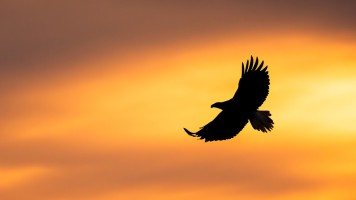
Through the cacophony of forest sounds, your ears home in on a buzzy, almost garbled ascending song. Perhaps you recognize it immediately, or maybe you need to confer with one of the trusty internet databases or apps. You train your eyes on the canopy, scanning for movement of any kind, when you see it: the cerulean warbler, a small rowdy songbird with wings slightly splayed from the body. Quickly, you lower your binoculars and train your camera on the little blue passerine before snapping a few frames.
The resulting photos clearly show the
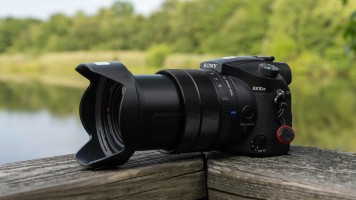
Let's face it: throwing a heavy camera over your shoulder can seem like a hassle, especially if photography isn't the main purpose of your trip. Those big mirrorless and DSLR cameras might stun with their incredible clarity, but not every outing calls for a "serious" camera. Still, there's a desire to capture fun photos, either for your own enjoyment, or to share with friends and family when you return.
Enter the bridge camera. Bridge cameras are an excellent, all-in-one solution for wildlife enthusiasts looking to capture images of their
0 Views ·Posted
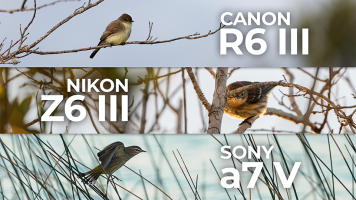
Looking for a full-frame camera for all your bird photography needs, but aren't looking to go overboard on spending? Matt shares 3 midrange camera options (the Canon R6 III, Nikon Z6 III, and Sony a7 V) for the photographer that is ready to take that next step. Buying a camera at this price point means investing in a system, so Matt will also discuss lens options based on your budget!
0:00 - Intro
0:55 - Sensors, Read Out Speeds, Frame Rates
3:12 - Pre-Capture
4:27 - Lenses/How to Choose a Lens
7:34 - Animal Autofocus (Camera & Lenses)
8

0 Views ·Posted
Recently, the B&H social media video team traveled to the Florida Everglades to film a wildlife and landscape photography series. Matt Matkin led the bird photography segment, sharing his personal approach to capturing birds in action along with a few memorable moments from the experience.
0:00 - Intro
2:43 - Why bird photography in the Everglades
7:29 - Equipment used
9:13 - Bird resources
12:55 - First impressions & tips
25:08 - Camera settings & composition tips
46:14 - Look for other wildlife
47:22 - Camera & lens

Bird watching and photography seem to go hand in hand. While there are some who prefer to enjoy the sights free of distraction, there are others who like to record their findings to share with others. To do that, we need a camera and picking one can be overwhelming. Many opt for the tried-and-true bridge camera, but these are limited in the quality they can deliver.
For

Birding is, by definition, the recreational hobby of observing and identifying wild birds in their natural habitat. Finding birds is the easy part. Just go outside and stop, look, and listen, and you’ll notice our feathery friends like you’ve never seen before. But how do we identify them? We need to consider a few physical attributes of the birds, from their overall shape to the length of their tail and more.
Birds come in all sorts of elaborate shapes, sizes, and color patterns that make them stand out, or in some cases, remain hidden from

I love the Sony A7 IV. That might be a strange way to begin a review of the A7 V, but an important fact to mention. When I first put my hands on a Sony camera years ago, I loved the customization they offered, and of course, I loved the glass.
Above photograph © Mathew Malwitz
How a camera fits in one's hand is very important, so when Sony unveiled a beefier camera, I was sold. It was the perfect blend of form and functionality that many (me, myself, and I) had long desired. It pushed the boundaries of what many once considered to be an all