Search results for: photography tips solutions how to clean a digital camera
About 36 filtered results
by Mathew Malwitz · Posted
As you begin to research cameras, you’ll likely hear some technical jargon about sensors. While it’s easy to ignore some elements of any devices, there’s no way to work around sensors. But what is a sensor and what does it do? In this guide, we’re diving into the often confusing world of imaging sensors. By time we’re done, you’ll have a better understanding of the most significant component in our digital camera.
About Sensors
What Is an Imaging Sensor?
At the heart of our digital cameras sits an imaging sensor, which serves as the digital

by Mathew Malwitz · Posted
Are you interested in the wide and wonderful world of photography? Well, you’ve certainly come to the right place! Check out this short checklist of a dozen items, designed to get you started in digital or film photography and headed in the right direction.
1. Inspiration
The first thing you need is a bit of inspiration. This may seem obvious, and odds are, if you’re reading this, you’ve already checked that box. Consider what exactly you’re interested in photographing, as this will help you make more informed decisions when purchasing gear

by Todd Vorenkamp · Posted
How unfortunate is it that some of the best photographic opportunities present themselves when it's miserably cold outside? It doesn't matter what kind of camera equipment you're using; proper preparation and knowledge of your gear and environment are essential to helping ensure success when you're out in the cold, making photographs.
Before we talk photography, let me say this: be smart. Cold causes hypothermia and frostbite. There is no potential

by Todd Vorenkamp · Posted

by Todd Vorenkamp · Posted
Image “sharpness” has been the goal of many photographers over the years. Some photographers seem to nail the “razor-sharp” or “tack-sharp” image every time, while some struggle to capture a truly sharp image.
Photographs ©Todd Vorenkamp
Before we start, know that there are basic ways photos end up not being sharp.
1. Movement Either the camera, or the subject is in motion during the capture.2. Optics/Electronics Soft focus, soft lens, etc.3. Atmospheric The amount and quality of air between the camera and subject.
Here we will break down all

by Shawn C. Steiner · Posted
Time lapses feel a lot like photography during capture stages and a lot like video during the editing process. Creating them is a common progression for photographers looking to dip their toes into video and motion because you can start making high-quality time lapses with your current still photo equipment. If you are starting to tackle time-lapse projects, applying some video tricks can help smooth out your final product.
The Absolute Basics
I’m hoping that by the time you make it to this article you already have a basic understanding of how

by Todd Vorenkamp · Posted
Shallow depth of field (DOF) is one of the visual effects that many photographers seek in their everyday photographs. To accomplish this, there is the grail quest for lenses with larger and larger maximum apertures. In the world of macro and

by Todd Vorenkamp · Posted
The art of photographing the wristwatch is known as one of the most challenging aspects of still life photography. Between the relatively small size of the timepiece, reflective sapphire and acrylic crystals, shiny elements on the watch face, matte leather or nylon straps, etc., there are a multitude of surfaces with different properties and reactions to light and the camera.
Photographs ©Todd Vorenkamp
If you are a lover of the wristwatch or a horologist, you

by Allan Weitz · Posted
If you haven’t touched your cameras since the leaves turned color and fell from the trees, it’s time to break out your gear, clean it up, and get everything ready for a new season of picture taking. In case you haven’t noticed—spring is coming down fast! If you are an outdoor photographer and are thinking of ways to upgrade your gear, see my article Ten Ways to Upgrade Your Gear for Outdoor Photography.
For

by Bjorn Petersen · Posted
While many of us are waiting to get back outside and shoot, now would be a great time to take care of some preparatory measures to make sure your photo workflow will be as efficient as possible once things are back up and running. It’s one thing to have all of the gear you need for any shoot, but it’s another to have it all dialed-in, cleaned, and ready for use. Here are some measures from which all photographers can benefit.
Backup, Format, and Organize Your Memory Cards
If your desk, shelves, drawers, and camera bags look anything like mine

by Bjorn Petersen · Posted
There is no doubt that digital photography is here to stay, and film has certainly seen better days, in terms of availability and affordability. However, what if you’re a digital photographer who simply wants to shoot a roll of film every once in a while, for fun? Film photography has a distinct look that, even with the latest and greatest 50MP cameras, cannot be duplicated by digital imaging. It’s subjective to say whether one look is better or worse, but there is no denying that there is a unique quality to film. Back in the halcyon days of

by Todd Vorenkamp · Posted
Is it strange to sit back and think that buying a film camera is a new experience to many—even most—photographers? Just 20 years ago, almost everyone was buying and using film cameras. Today, there are legions of photographers who have never shot a single roll of film. Luckily for us, film photography still exists and there are both film and film cameras that you can buy with which
by Allan Weitz · Posted
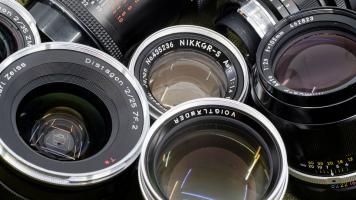
How “good” are vintage lenses when used on modern digital cameras? In a word, vintage lenses are “fine,” though I would have to immediately follow that statement by adding, “It depends,” because there are always exceptions to the rules, though even in these cases, the lens in question often works fine albeit with a technical or optical shortcoming of sorts.
Original photographs © Allan Weitz 2020
When adapting older-generation film camera lenses to DSLRs and mirrorless cameras, most perform well in terms of sharpness, color fidelity, color

by Stan Moniz · Posted
Being a photographer and a filmmaker, I've gravitated heavily toward the art form of time-lapse photography. It's the perfect blend of photography and videography, the best of both worlds. Because I mix this art form up with my undying love for capturing the night sky, I’m incredibly passionate about this process and sharing it with others.
Time-lapse photography is capturing consecutive photographs over a long period of time and then playing them back quickly in a series so that slow action appears to happen faster. Examples include clouds
by Allan Weitz · Posted
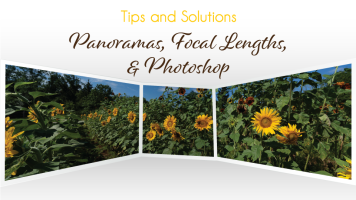
Panoramas are visually interesting, and that’s why Panorama modes can be found on many consumer cameras. Simply set the camera to Panorama mode, frame your shot, and follow the panning instructions in your viewfinder. Move slowly, evenly, and keep your camera level with the horizon. If your camera is on a tripod, so much the better. Do it right and you get a terrific panoramic image of up to 360 degrees, depending on how you set your camera.
I have long been a fan of panorama imaging, you can imagine my surprise when I realized my