Search results for: photography tips solutions how to scout a location for your next shoot
About 11 filtered results
by Todd Vorenkamp · Posted
When the moon passes directly between Earth and the sun, those on Earth are treated to one of nature’s greatest spectacles—a total solar eclipse. It is a phenomenon that almost every observer would like to capture in a photograph.
Due to the rarity of the event, the short duration in which to capture it, and the dynamic nature of the subject, it is one of those photographic opportunities that requires the proper gear, setup, planning, and practice.
Eclipse and solar

by Jess Santos · Posted
Thinking back to my first time photographing the stars, let’s be real: I had no idea what I was doing. I spent the afternoon watching video after video, and after several hours felt confident enough to attempt it. Now keep in mind I had done the research on settings, but completely skipped over the planning phase. I didn’t run into one video that talked about things like the moon phase or dark skies, some pretty important information to know when getting into astrophotography. Nonetheless, a couple friends and I headed out at eleven o’

by Jill Waterman · Posted
Making pictures by night is a curious practice. While specialists of this subject embrace it as a deep-seated passion and have a never-ending quest for technical and creative advancement, those more familiar with daytime photography are often unaware that tried and true photography rules often need to be adapted or even overlooked at night. With this in mind, consider the following tips the next time you venture out in the darkness, to help you to adapt.
1. Take a Chance and Explore the Unknown
What’s my exposure time? This is the number one
by Bjorn Petersen · Posted
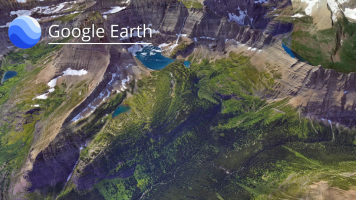
Many genres of photography benefit from planning your shots beforehand, whether that means sketching ideas in a studio, taking some casual smartphone photos beforehand, or creating a schedule and shot list for a shoot. For landscape photographers, planning is an essential part of the process, mainly because it will improve your efficiency and help you get the shot you need by being in the right place at the right time. For planning a specific shot, nothing beats having personal experience with a location to be familiar with where to go, and

by Paige Denkin · Posted
For the past six months, Paige and Corey have traveled across the country. Here are some of their key tips, takeaways, and travel lessons.
What is boon-docking?
Boon-docking typically refers to off-grid camping, most commonly done in a vehicle or trailer. When boon-docking, you have few common luxuries, live respectfully off the land and pack out anything you brought with you. You have no electric hookups, no plumbing, and usually no Wi-Fi or cellular service. Boon-docking locations vary, some being easier to access than others, so

by Paige Denkin · Posted
It’s common knowledge that things won’t go according to plan. Deadlines will be missed; projects will go awry, and part of the adventure is learning to roll with the punches. But this felt like more than a few punches—we felt defeated. Our renovation process took a turn for the worse, not once, but twice. After five months of heartbreak, heated arguments, and two renovation companies with less than noble intentions, our 29' Airstream ended up in my childhood backyard. Our timeline had us on the road by mid-January, but life had other plans for
by Brian Zwiebel · Posted
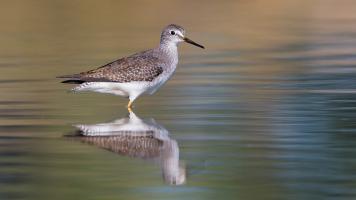
Bird photography opportunities ebb and flow throughout the year. The anticipation of the returning birds of spring migration is palpable, while the breeding season of May and June is full of opportunities. But soon, the summer doldrums kick in and leaf-out makes finding most song birds quite difficult. The heat and humidity drive even the most hardcore bird photographers indoors to their air-conditioned homes, where they spend their days organizing and processing images from the spring.
But summer into fall is a great time to photograph a

by Allan Weitz · Posted
I picked up my first camera in September, 1966. In the five decades since then, I’ve come to understand a number of truisms about the art and craft of picture taking.
The following are 50 tips I’ve compiled, based on my professional and personal experiences shooting with film and digital cameras, ranging from 8mm Minox spy cameras to 20 x 24" studio salon cameras.
My list is broken down into two sections: Basic and Advanced. Some of these tips are obvious, others less so, but they all hold true as guides for better picture-taking habits.
Basic
by Ken Kaminesky · Posted
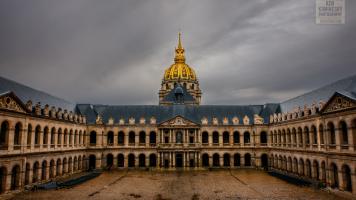
For travel photographers, the path to getting the perfect shot is often strewn with hurdles. Through trial and error, as well as a lot of learning the hard way, I've ended up being able to walk away with some of my favorite photographs, thanks to proper planning and preparation. At other times, I’ve relied on stealth and a little bit of good luck to come away with a good photo. Sometimes, though, it’s just not meant to be.
When I began photographing travel imagery, I did not have a clue on how to secure permission to photograph in restricted

by John Harris · Posted
And I’m not a pioneer of any style: I am just taking the kind of photos I like to take, using the principles of composition embraced by Cartier-Bresson and the street photography style forwarded by Klein and Winogrand, and applying them to a wedding.”
Some may beg to differ—after all, the “Ascough style” is a phrase often thrown around, referring to his black-and-white documentary wedding photography, and he is often mentioned as being one of the best wedding photographers in world. He is one of the
by Gabriel Biderman · Posted
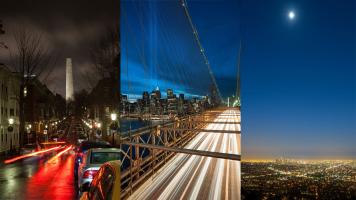
The greatest challenge in travel photography and in photography in general is capturing the essence of a person or place. The world is smaller than ever and almost everyone is traveling and taking pictures. So how do you separate yourself from the pack?We are often told that the best time to photograph is during the magic hours of dusk and dawn. The lighting can be very gentle, even, with wonderful shades of yellow and blue dancing together. However, I think more magic can be found when we photograph at night and extend our exposure into the