Search results for: photography tips solutions reflectors for photography
About 26 filtered results
by Mathew Malwitz · Posted
First, a disclaimer: Like composition, lighting portraits is a subjective exercise. A setup that works for one situation may not work for the next, and lighting that one photographer adores might repulse another. Cultivating a personal lighting style involves an awareness of conventional approaches and willingness to go beyond what everyone else is doing. Study portraits

by Luke Rollins · Posted
There comes a time in a photographer’s life—usually after some consistent success with an on-camera flash—when they say to themselves, "I’m ready to make my own light on demand." Thus begins a seemingly never-ending journey—first mastering the basics, then trying to put some feeling and expression into their photos.
Assuming you’re versed in

by Mathew Malwitz · Posted
Lighting is the key to all photography. While elaborate, multi-light setups may appear to be the standard, the creative photographer can produce a seemingly endless range of images using just one light source. This guide is designed to help those beginners out there build the perfect one-light kit for portrait photography.
Why One Light?
I completely understand why multi-light “studio in a box” kits are tempting to beginner and budget-conscience photographers. Why spend hundreds of dollars on one light when you can get three lights complete

by Mathew Malwitz · Posted
One of the most effective ways to improve your portraiture is by controlling the light, and one of the most effective ways to control your light is to move it. Seems like a simple enough concept, but it can be daunting at first, especially if you're using a speedlight or an on-camera flash. Despite its misleading name, an on-camera flash can, very easily, be used off the camera. The "on-camera" part simply refers to its form factor

by Shawn C. Steiner · Posted
When you start getting extremely close to your subject, you may run into some difficulty with lighting. This could be because your large lights can't get into position easily, you can't get the type of lighting you want, or you are so close that you are casting a shadow. There are solutions to these problems, and each has its own unique capabilities and look that will help you bring your macro photography up a notch.
Let's start things off with something you probably already have in your bag, an

by Todd Vorenkamp · Posted
Photography is all about capturing light. In fact, the etymology of the word “photograph” is basically “light drawing.” To make a photograph that we can see, we have to control both the amount of light that is exposed to a photosensitive surface, be it film or a digital sensor, and also control the sensitivity of that surface to the light. In this series, we will discuss a bit of the physics and characteristics of light and then how a camera and lens combine to control exposure by using what is commonly known as the “Exposure Triangle.”

by Todd Vorenkamp · Posted
There are many articles on the Web about specialized lighting for macro photography. As awesome as some of these ring lights and macro flashes are, they become just one more thing to cram

by Cory Rice · Posted
Chosen for their power and valued for their efficiency, monolights have long served as the light source of choice for portrait photographers. Whether working in studio or on location, these all-in-one strobes can play nearly any role in a lighting setup. Add the wide range of modifiers available to shape their output, and it becomes hard to think of a more valuable lighting tool in the portrait studio. This article introduces the equipment you will need to get up and running

by M. Brett Smith · Posted
Portrait photography, or portraiture, remains one of the most popular genres of photography today—and for good reason. Portraits are compelling; they are evocative. Portraits tell a story; they elicit an emotion. Shot correctly, a portrait can reveal the true essence of a person, who they are and what they feel. According to Godard, portraiture is tantamount to capturing the soul. About what other medium or form of expression could you say such a thing?
As with most genres of photography, portraiture is not beholden to any one specific

by Howard Gotfryd · Posted
It’s summertime, so naturally, barbecues and family gatherings are on the roster for many of us. Summer is a time for rest and relaxation, good weather, and dining al fresco. There is a good chance you’ll want to document your picnics, barbecues, and the food and beverages you’ll be serving. We all love to do that, especially in recent years. If you want your food photos to stand out while keeping your workflow simple, here are a few tips that may help you.
Working with Available Light
Direct sunlight can be harsh as a single source for food
by Cory Rice · Posted
With digital cameras and editing software constantly improving, photographers are able to get away with a lot more today than they could in the past. Better sensors, flexible ISO ranges, raw image processing, and ever-advancing lens technologies have all contributed to a more forgiving margin of error for the photographer—or, to put it more optimistically—greater creative possibilities. For the portrait photographer, this means you don’t have to invest in a studio’s worth of gear to create compelling photographs of your sitters. Some will say

by Cory Rice · Posted
Mastering studio lighting can feel like a Herculean feat when you’re just getting started. Like any aspect of photography, it requires patience, practice, and plenty of mistakes before it comes naturally. In an effort to shorten your learning curve, we’ve rounded up 10 common issues that beginners encounter and how to fix them.
Technical Issues
Lighting setups can be as simple or complicated as your heart desires—or your shot requires. However, before you can begin to think about how to use your lights creatively, you need to understand how

by Cory Rice · Posted
Collecting studio lights can become an addictive vice for the adventurous portrait photographer. Once you realize all that can be done with one light, you will soon want to add another, and another, and another. With each additional light come new techniques and creative possibilities. For portrait photographers, one of the most commonly used multi-light setups is three-point lighting. This tried-and-true approach to

by Cory Rice · Posted
When Nicéphore Niépce invented the first permanent photographic process in the early 19th century, he named it heliographie—or, sun-writing. Nearly two hundred years later, the sun continues to provide a quality light source to photographers at a fraction of the cost of its competitors. Like any creative decision, using natural light for portraits has its pros and cons. Its popularity stems from the facts that it is free, accessible,
by Cory Rice · Posted
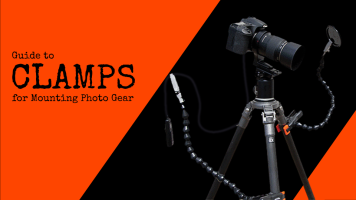
On film sets, an entire department is devoted to securing lights, modifiers, and other equipment properly. Most still photographers rarely need the level of production that filmmaking demands—however, knowing which mounting and clamping tools are best suited for a particular job can greatly simplify any photographer’s life. As a bonus, many studio clamps are more or less woodworking tools with baby pins built into their design, so stocking up can also come in handy for home improvement projects. Below is an introduction to some of the