Search results for: photography tips solutions understanding lens distortion
About 11 filtered results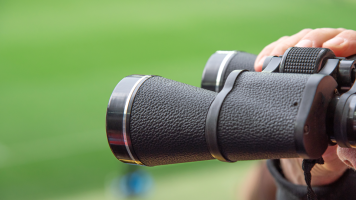
by Mathew Malwitz · Posted
When choosing binoculars or scopes, a term that should be heavily considered is "exit pupil." What is exit pupil, and what does it do? In optics, we're often focused on magnification and light-gathering capabilities, and these are essential for understanding how optics works, but overall viewing experience shouldn't be discounted.
If you look at any optic at arm's length, you'll see the small pinpoint sized window of

by John Harris · Posted
It would be foolish to claim that there is only one way to take a portrait, but there are some accepted norms and basic camera settings that you should understand if portraiture is to become your area of photographic interest. Remember though, as you walk down your creative path, that a portrait is more than a headshot, more than a beautiful photo of your subject; it is an opportunity to get to know someone, to have a visual conversation with a person, and to use your photographic skills to pass that understanding of the person on to the

by Mathew Malwitz · Posted
Portraiture: It’s one of the most popular and prevalent forms of photography. Although it may seem simple on paper, it comes with its own unique obstacles. Of course, you’ll want to be familiar with your gear. This is essential to all working photographers, but it allows you to focus your efforts on the genre-specific challenges you’ll face.
When photographing people, you’ll find that some folks are photogenic, while others are not. Your job as a photographer is to break down the barriers set by your clients and to put them in the most

by Todd Vorenkamp · Posted
So, you just bought a shiny, new, and maybe expensive, lens for your camera, and being the savvy consumer, you did your homework. You pored over customer reviews on the B&H Photo website, read online reviews splattered all over the Internet, grabbed a copy of every photo magazine that reviewed the lens, bookmarked dozens of websites, and now have the lens’s MTF curve charts burned into your retinas.
Now, your lens is here and it is time to go out shooting.

by John Harris · Posted
Landscape photography is often considered the realm of the wide-angle lens, but as my editor made clear in the pitch for this article—“It isn’t all about wide-angle.” And she is right: As photographers, we tend to grab the 35mm (or wider) lens when we are inspired by our vistas. Could it be the sheer scale—the vastness of the oceans and mountains—that enchants us? And is it human folly to try to encapsulate what cannot be confined? Do we want to replicate what our natural angle of view perceives, or, perhaps, is it the distortion created by

by Allan Weitz · Posted
The term “bokeh” was made popular in the late 1990s by Mike Johnston, the editor of Photo Techniques magazine, who produced a series of articles on the subject for his publication. Based on the Japanese term “boke-aji,” it was used to describe the quality of the blurry or hazy portions of a photograph. The term quickly weaseled its way into the lexicon of desirable lens attributes. The funny thing is, many photographers still aren’t quite clear as to what bokeh really is.
Resolution, contrast, color quality, and distortion are lens qualities

by Todd Vorenkamp · Posted
Shutter speed is a measurement of time that a camera's shutter is open—allowing light, usually after it has passed through a lens and through the aperture diaphragm, to strike a photosensitive surface, like film or a digital sensor.
This article is part of a multi-part series of about photographic Exposure.1. Introduction: The Exposure Triangle2.

by Allan Weitz · Posted
Sometimes, the phrases, acronyms and strings of numbers or number-letter combinations used to identify photographic hardware or techniques can be daunting to the uninitiated neophyte photographer.
We've prepared a list of the basic terms. Have we left any out that you think should be added? Please let us know!
0-9 | A | B | C | D | E | F | G | H | I |

by Todd Vorenkamp · Posted
The job of a photographic lens is to capture light and bend it toward the film or digital sensor. The refraction of light exerts a variety of side effects on the image projected onto the film or digital sensor. Your understanding of how this bending can affect the image may factor into how you compose your images.
Anomalies and Lens Distortion
Glass, crystal, liquid, or plastic lenses made for photography are never “perfect”—just like the lenses in our own eyes. Photographic lenses often comprise multiple lens elements. Because of the way

by Bjorn Petersen · Posted
If you spend much time perusing the Lenses section of the B&H website, or follow along with the latest announcements of new glass, you're likely to run into a range of phrases that are not inherently known to those with less than a keen, honed understanding of photographic and optical geekery. Scientific-sounding words like aspherical elements, chromatic aberration, coma, low dispersion, and high refractive index to the layman often lead to imprecise thoughts

by Todd Vorenkamp · Posted
The primary measurement of a lens is its focal length. The focal length of a lens, expressed in millimeters, is the distance from the lens’s optical center (or nodal point) to the image plane in the camera (often illustrated by a "Φ" on the top plate of a camera body) when the lens is focused at infinity. The image plane in the camera is where you will find your digital sensor or film plate. If you are an optical engineer, this is important