Search results for: photography tips solutions using polarizing filters
About 24 filtered results
by Luke Rollins · Posted
Content creation has exploded into a multi-billion-dollar industry with no signs of slowing down. While it’s true that anyone with a smartphone can become a content creator, the shift toward polished productions might have you browsing some more professional gadgets. Luckily, affordable, easy-to-use gear is widely available for every kind of content creator. Let’s explore some options you might consider snagging for your new hobby or upcoming project.
Best vlogging cameras for content creators

by Todd Vorenkamp · Posted
Solar eclipses are awesome spectacles of nature that are irresistible to photographers. Besides eclipses, the star at the center of our solar system is an amazing photographic subject—even when it is not being partially or totally blocked by the moon. If you want to photograph a solar eclipse, or just photograph the source of our fragile planet’s warmth and light, you need a solar filter for your

by Shawn C. Steiner · Posted
Pop on a pair of (decent) sunglasses and not only are your eyes less strained, things just look better. The reason for this is likely the polarization effect. Colors may appear more saturated, bright blue skies can take on a deeper hue, and some pesky reflections just vanish. All of these can benefit certain photographs and make the circular polarizer filter one of the best—and most difficult—filters to use.
Exactly What Does a Polarizer Do?
It’s

by Mathew Malwitz · Posted
For macro photographers, having the right gear is essential. Magnification and lighting are key, but you don’t necessarily need the biggest, priciest macro lenses out there to get close-up shots. If you’re a macro photographer yourself or buying a gift for one, we have some excellent recommendations for every budget.
Gifts Under $50
1. Close-up macro filters (like this

Posted
Filters are an integral part of photography, but it can be confusing to know which filters to use, when to use them, and why you should even use them in the first place. Join Sony Alpha Ambassador Autumn Schrock as she shares her approach to filters for landscape photography so you can figure out what you might need before you buy.
0:00 - Today's Video
1:30 - Types of Lens Filter Formats
3:37 - Clear Filters
7:41 - Circular Polarizer
15:18 - Neutral Density Filter
21:03 - Neutral Density Polarizer
23:20 - Variable Neutral Density Filter
25:55

by Mary Latvis · Posted
Welcome to Filmmaking 101, where we offer some tips on how to go about creating your movie masterpiece. Read on to discover suggestions for your pre-production, production, and post-production phases.
Pre-Production
Scriptwriting
You have your idea for an arthouse masterpiece or an action-based blockbuster; now how do you translate that into a script―the backbone of your production? You can use MS Word, Google Docs, or another document program. But using dedicated screenwriting software provides the standard formatting, outline tools,

by Allan Weitz · Posted
If wanderlust is starting to get the best of you, consider upgrading your camera gear before heading out on your next outdoor adventure.
1. Clean Your Gear
Your first order of business should be to make sure your camera bodies and lenses are clean and in proper working order. To learn more about cleaning and optimizing the performance of your cameras, camera sensors, lenses, and other photo essentials, refer to the tips I offer in

by Bjorn Petersen · Posted
One of the most picturesque subjects of the year, fall foliage offers a chance for photographers to show off their landscape shooting chops and revel in some of the most distinct and pleasing colors nature has to offer. Marking the change of season from summer to autumn, and indicating colder temperatures to come, this brief period, where leaves change from green to rust, is worth celebrating, viewing, and photographing.
Above photograph: Taken with Sony FE 85mm f/1.8 Lens
Photographing fall foliage and autumn landscapes doesn't

Posted
Polarizer, neutral density, graduated neutral density, reverse neutral density, or variable ND filter? Professional landscape photographer Mahesh Thapa shares his expertise on, and experience with, using lens filters. You'll learn why you should (or shouldn't) use them, how to use them, and when to use them.
Curious to try lens filters for yourself? Let us know in the Comments section, below.
Sponsored by

by Allan Weitz · Posted
I’ll never forget the first time I looked through the viewfinder of a camera fitted with a 20mm ultra-wide-angle lens. Everything looked amazing and I blew several rolls of film shooting everything I saw along the way. Prior to using this “exotic” lens, I had never shot with anything wider than the 50mm normal that came with my first 35mm camera.
The sobering part came when I developed the film and started eyeballing the results of my first outing. In a word, they were underwhelming, but I kept at it until I figured out how to use ultra-wide

by Allan Weitz · Posted
For many people, the word “landscape” typically conjures up images of snow-capped mountains, mighty rivers, and flower-covered meadows awash in the light of golden sunsets. But what if these photo utopias are beyond the bounds of a reasonable driving distance? What if your choices of places to photograph is limited to your immediate neighborhood or town? Are you skunked when it comes to landscape photography? The answer is, “No, not at all.”
Photographs © Allan Weitz 2021
Let’s start by defining our goal. A random Google check for a definition

by Bjorn Petersen · Posted
There is a lot of talk about lighting and photography, and specifically how learning to use light can make you a better photographer. This is true, of course, but is also a notion that’s more often applied to working with artificial lighting, such as for portraits or products, where you can work in a studio with a strobe or LED to fine-tune how your shot looks. When it comes to landscapes, on the other hand, most likely you won’t have the ability to or just won’t want to use artificial lighting for your scenic shots. This is part of the

by Cory Rice · Posted
Before computers and digital cameras, lens filters were among the indispensable tools filling every serious photographer’s bag. Fast forward to the present and the first things that come to many minds when they hear the words “photo filter” are overused color profiles and distorted selfies on social media. Today, editing software can simulate the effect of many types of lens filters, reducing the need for photographers to invest in and carry around entire collections of additional glass. However, there are still a number of filters that cannot
by Dawn Wayand · Posted
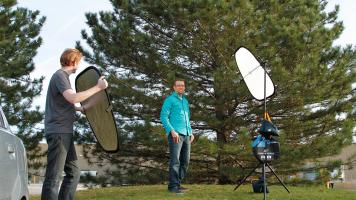
Generally, photographers are taught to shoot in the early morning hours, or around the “Golden Hour” (sunset/twilight hour) for the best light, because the light of midday afternoon is too harsh or too bright for making well-balanced exposures. However, if we were limited to just those nominal number of hours per day to capture a photo, we would miss many opportunities for great photos and decisive moments.


by Cory Rice · Posted
You've been studying star charts for weeks. You’ve read “Tips for Buying a Telescope,” picked out, and purchased your first telescope. You can hardly contain your enthusiasm while setting up your new scope. Finally, the moment arrives—you take your first magnified look at the night sky, prepared to be blown out of this world. It is a beautiful sight. Yet after the initial awe wears off, you can’t help feeling a