Search results for: photography tips solutions best trail cameras
About 20 filtered results
by Luke Rollins · Posted
Whether you’re the designated photographer at a friend’s night out or a professional working an event, a compact, point-and-shoot camera can be a strategic choice for creating a distinctive look for your images. Depending on where you’re starting, the move to a compact camera can be either a step up from the smartphone or an embrace of a more limited feature set. In either case, the best event and party photography with a compact camera says one thing: you had to be there.
The number one advantage to using a compact camera is social. The
by Mathew Malwitz · Posted
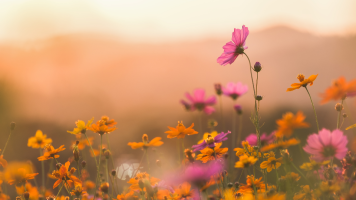
If there’s one question fledgling photographers often ask, it’s “How did you get such a nice background?” Backgrounds are an essential element of a photograph that are often neglected. In fact, it’s safe to say that a background is as important to a composition as the subject itself. After all, a distracting one will detract from an image.
In this guide, we’re going to cover the many methods used to capture clean, smooth backgrounds in our images. This will encompass the settings and gear involved as well as the in-the-field techniques you can
by Mathew Malwitz · Posted
Through the cacophony of forest sounds, your ears home in on a buzzy, almost garbled ascending song. Perhaps you recognize it immediately, or maybe you need to confer with one of the trusty internet databases or apps. You train your eyes on the canopy, scanning for movement of any kind, when you see it: the cerulean warbler, a small rowdy songbird with wings slightly splayed from the body. Quickly, you lower your binoculars and train your camera on the little blue passerine before snapping a few frames.
The resulting photos clearly show the

by Mathew Malwitz · Posted
Who doesn’t love a close-up shot of a flower or bumble bee? Some of the most beautiful aspects of nature are quite small and require special tools to capture them in a meaningful way. Whether it be of a cute little insect visiting our garden, or miniature figurines you paint and sell, we need a camera that can focus close and deliver good, quality results.
Before you panic, hear us out. We don’t need to get carried away with complicated lenses and accessories, and can just enjoy yourself with a simple compact,
by Mathew Malwitz · Posted
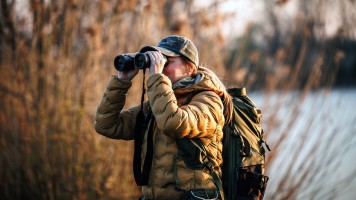
Birds, they’re all around us. If you haven’t paid much attention to them, you’re not alone. But, once you do, you’ll have a hard time stopping. If you haven’t yet dabbled in bird watching, known colloquially as birding, we have just one question. Why not? Birding is the perfect way of partially disconnecting from the digital world we find ourselves in and connecting with nature through observation, and one of the most relaxing pastimes imaginable.
If you’re fascinated by our feathery friends but don’t know where to start, we’ve got you covered

by Todd Vorenkamp · Posted
Before you venture out to photograph your first lunar eclipse, you should get some practice taking photos of the moon. If lunar photography is varsity-level stuff, lunar eclipse photography is all-pro. There are some unique challenges to the art, and great ways to get creative results, but the basics of lunar photography apply. Unlike

Posted
How do you locate the Milky Way in the sky? What is the best phase of the moon to photograph? How do you focus your lens in the dark? Astrophotography is magical yet challenging. Luckily, Autumn Schrock (@autpops) is here to be your guide to capturing the night sky.
0:00 - Introduction
1:35 - Preparation and Planning
4:42 - Camera Settings
11:56 - Reflection Image
14:38 - Composition
15:34 - Barn Image
16:38 - Car Trails/Long Exposure
18:40 - The Possibilities
Did you find these tips helpful? Let us know in the Comments section, below.

by Todd Vorenkamp · Posted
Welcome to Part 3 of our journey into the world of Intentional Camera Movement (ICM) photography. In this final chapter of the 3-part series of articles, we voyage back into the mental aspects of creating ICM art, as well as take in some tips for some of the more common ICM subjects and finish with inspirational words from some of the masters of the craft.
Above image © Morag Paterson
Approach
Because ICM eschews many of the lessons we have tried so hard to learn in photography over the years, the approach and process are very

by Todd Vorenkamp · Posted
Welcome to Part 2 of our deep dive into the world of Intentional Camera Movement (ICM) photography. In this second part of the three-part series of articles, we look at the kinds of gear that ICM artists recommend, as well as the technical side of the art including camera settings and techniques.
Above image © Ceri Herd
Camera
Gear is not a limiting factor in exploring ICM photography—you can even use a smartphone, provided you have a way of controlling the shutter speed. For repeatable, deliberate results, you will want to have a camera that

by John Harris · Posted
There is no wildlife or bird photography without a camera and lens, but I am here to tell you not to buy another piece of gear. It is not the camera or lens that will make you a better photographer; rather, the three things that will improve your wildlife photography are: to know your subject better, to know your gear better, and to know yourself better.
Subject
Of these three, I think the first to address is to know your subject better. And that means research—reading, tutorials, conversations—and time in the field, with or without your

by Todd Vorenkamp · Posted

by Jill Waterman · Posted
Making pictures by night is a curious practice. While specialists of this subject embrace it as a deep-seated passion and have a never-ending quest for technical and creative advancement, those more familiar with daytime photography are often unaware that tried and true photography rules often need to be adapted or even overlooked at night. With this in mind, consider the following tips the next time you venture out in the darkness, to help you to adapt.
1. Take a Chance and Explore the Unknown
What’s my exposure time? This is the number one

by Jill Waterman · Posted
After bonding over a mutual love for exploring and some crazy outdoor adventures during college, Berty and Emily Mandagie honed their respective photography and writing chops before starting their blog, The Mandagies, in 2016. In the past five years their eponymous brand has grown into one of the Internet’s leading Pacific Northwest travel resources, leading us to invite them onboard as our next B&H Creator of the Week.
In our conversation below, the Mandagies share their love for the Oregon coast

by Bjorn Petersen · Posted
Using flash is one of the technical aspects of photography that’s difficult to understand, mainly because it’s something you cannot really see with your own eyes. Working with natural light, you can usually envision how your shot will turn out, and then when you become a bit more skilled, you can even envision how the effects of aperture and shutter speed will affect your images. Working with flash further complicates our visual relationship to what we’re photographing, since it’s an additional level of abstraction we’re adding to the mix

by Rachel Jones Ross · Posted
There are few natural phenomena that inspire the imagination as much as the Northern Lights. For most landscape photographers, capturing the aurora is a bucket-list shot. Because it’s such a rare opportunity, and can come and go very quickly, it helps to be armed with a few pointers before heading out to shoot.
What Causes the Aurora?
The aurora is directly related to activity on the sun. Solar storms on the sun send charged particles hurtling through space. When those charged particles reach Earth, they interact with atoms and molecules in