Search results for: video tips solutions led lighting for video
About 13 filtered results
by Lindsay Finnegan · Posted
Are you new to food photography or looking to advance your lighting techniques? This article takes you through how to use existing light to your benefit as well as how to create it yourself. Both approaches will yield similar results, but each has its own unique advantages. It’s up to you which path to take.
Natural: Work with Window Light
The simplest way to photograph food is to shape light that already exists

Posted
Cinematographer Shane Hurlbut really lights up a room, literally! In this video, he takes you step-by-step through his process, covering topics such as which types of lights to use for foreground and background, adding color, and best placement of equipment, as he shares his cinematography techniques and tips for lighting a room.
Share your takeaways from this video, along with your own tips and tricks for lighting a room, in the Comments section, below.
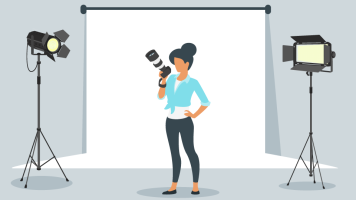
by Cory Rice · Posted
LEDs have become an increasingly popular lighting choice for creators who work in both photo and video. Continuous, portable, and loaded with features, LEDs are some of the most versatile lighting options on the market. Unlike other continuous sources, which often require generators to work on location, most new LEDs feature the option of battery power so you can take them virtually anywhere you go. Couple that with their comparably light weight and you have an excellent location light whether you are working in a reception hall or out in the

by Cory Rice · Posted
Mastering studio lighting can feel like a Herculean feat when you’re just getting started. Like any aspect of photography, it requires patience, practice, and plenty of mistakes before it comes naturally. In an effort to shorten your learning curve, we’ve rounded up 10 common issues that beginners encounter and how to fix them.
Technical Issues
Lighting setups can be as simple or complicated as your heart desires—or your shot requires. However, before you can begin to think about how to use your lights creatively, you need to understand how
by Steven Gladstone · Posted
If you look on the B&H website under Lighting, you will notice the category Continuous lighting, which is separate from strobe or flash lighting, which is most commonly used with still photography. Continuous here refers to lighting units that are not strobe units, and these are mostly used in film and video, as well as theater. Once, this type of lighting was

524 Views· Posted
In this fifth and final video of the "Strobe Lighting" Series, we discuss working with multiple strobe lights together. David Flores shows you two-point lighting, how to substitute a secondary light source, the difference between a key light and fill light, and lighting ratios when using studio strobe lights. We hope you've enjoyed this series on studio strobe lighting for beginners!
Need help picking out a strobe light? Click here.

636 Views· Posted
Which light modifier is right for you? In this fourth video, David Flores continues our "Strobe Lighting" Series by demonstrating the different types of light modifiers, such as bounced light, softboxes, umbrellas, beauty dishes, grids, colored gels, and snoots. These strobist photography techniques will take your studio lighting to new dimensions!
Need help picking out a strobe light? Click here.
For more videos from the "Strobe

1,114 Views· Posted
In the first video of our "Strobe Lighting" Series, watch and learn as David Flores teaches you studio strobe basics, such as different types of studio strobes, watt seconds, lighting settings, and when to use strobe lights. What's the difference between pack and head, monolight, and battery powered strobe lights? Keep watching to learn more about studio lighting for beginners!
Need help picking out a strobe light? Click here.

3,962 Views· Posted
Jake Estes checks out the new Luxli Timpani, a versatile, colored light that gives you a great deal of flexibility when shooting in a wide variety of film applications. Its diverse light modes, including CCT, RGB, GEL, SFX, and more, provide a plethora of effects, from lightning to candlelight and explosions. The addition of control via Bluetooth makes the Timpani a powerful lighting solution for almost any professional setting.

by Mary Latvis · Posted
The 672-LED Luxli Timpani 1 x 1’s accurate color reproduction, 4650-lumen output, Bluetooth app control, and compact form offer a versatility that suits a host of lighting needs. Exactly match a pre-existing tone in RGB Color Mode, select from the Timpani’s 150 classic Lee gel filter looks in Filter Mode, or use the Timpani’s CCT Mode to output your choice of color temperatures in 50K increments. See our infographic below for a

by David Adler · Posted
Around the time professionals started to adopt LED lights into more serious lighting setups, I was in college and working part-time at a photo/video equipment rental house in New York. One of the most popular rental items, lighting-wise, was the ubiquitous Litepanels 1x1, now long discontinued and replaced. It was big enough to provide a decent throw, while being lightweight and small enough to cram into a small soft case with other panels. For the professionals who abided by these lights, gone were the days of lugging around huge lighting

5,787 Views· Posted
Effective lighting doesn’t have to be complex; it just has to serve the story. In the following video, Chase Kubasiak, from Zacuto, shows four simple cinematic lighting looks and how they were created. The video covers popular sci-fi, noir, romance, and horror looks, with Kubasiak providing a detailed breakdown of the techniques and equipment used for each. Throughout the process, you’ll learn some simple, yet effective, solutions that can be applied to a variety of lighting scenarios. We hope you enjoy the video, and invite you to view the


12,771 Views· Posted
In the following video, Doug Guerra takes on the ubiquitous on-camera light and demonstrates five other ways to use this normally utilitarian fixture. Using the Litepanels Brick to illustrate his points, Guerra explains the general advantages of freeing the on-camera light from your camera, while highlighting some of the strengths of the Brick light unit itself. So sit back, enjoy, and let these five suggestions inspire you to