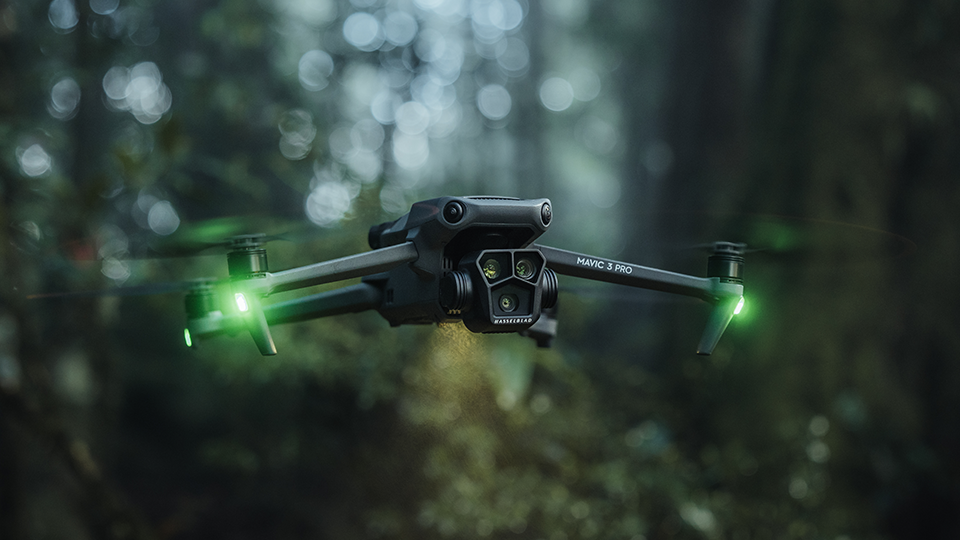
Taking to the skies to capture breathtaking footage has never been easier. Modern drones are not only incredible filmmaking tools they are also becoming more affordable and accessible. Filmmakers looking to take flight will want to find something that can capture cinematic imagery with ease. Fortunately, there are plenty of options available today. Whether you are a first-time content creator, professional filmmaker, or anywhere in between there is a drone for you.
What Makes a “Cinema” Drone

The conversation about whether or not a drone can produce cinematic images begins and ends with the camera system. Fortunately, image quality is determined by the same factors in the air as it is on land. When talking about creating cinematic images, we’re looking at a few key factors:
- Image Sensor
- Lens(es)
- Resolutions & Frame Rates
- Stability
When it comes to the image sensor bigger is always better. Larger sensors can more easily capture images with shallow depth of field — a signature piece of the cinematic look. However, when shooting from a drone getting subject background separation isn’t usually the most critical component—dynamic range is much more important when capturing sweeping landscapes and getting a “professional” look in your drone footage. Larger image sensors are known for delivering images with more dynamic range and less noise, resulting in those stunning vistas for which aerial video is known.

A sensor is nothing without the lens in front of it. Drones offer a variety of options though the most common is usually a main camera with a wide-angle optic that allows pilots to capture beautiful landscapes with ease. If you’re looking for more variety in your shots, then a drone with multiple cameras and lenses—much like the arrays on modern smartphones—is going to provide that versatility. You can also opt for a zoom lens, which offers focal length options and the ability to pull off some unique camera tricks like a dolly zoom for unique effects.
Besides focal length, aperture is worth looking at as well. Fixed apertures are common, making shooters rely on ND filters and other camera settings to nail down exposure. Variable apertures can help tune the look while keeping cinematic frame rates (read about the 180-degreee shutter rule for more info). Faster (read: larger) apertures will also let in more light resulting in cleaner, less noisy footage and making it easier to shoot in challenging conditions, for example around sunrise and sunset which are great times for capturing drone footage.
It is worth mentioning that some drones will offer the ability to use your own lenses or camera system, which is going to provide filmmakers with the most control and best possible quality.

Resolution is an easy one these days as practically everything from the past few years is going to sport 4K and that is all you’ll need. Some high-end drones will offer 6K or even 8K shooting—which can provide advantages in overall detail as well as cropping room in post-production—but not even many pros will see huge advantages there. What are more valuable to check out are frame rate options. More limited drones will cap out their 4K at 30 fps while more advanced offerings will offer speedy frame rates at those UHD settings. Slow motion is a useful tool beyond just getting slowed down action, it can be used to smooth out jitters in the footage and make shake less noticeable.
This leads us to stability. Drones don’t just get stable footage without the techno-wizardry of gimbals. Making sure a gimbal has more axes of stabilization and perhaps a higher rating of compensation will ensure that footage stays stable even when a gust of wind comes blowing in or when you are trying some more acrobatic moves. A newer option is drones that offer the ability to switch from horizontal to vertical orientation—social media content creators should check out this feature.
Beyond the core camera hardware, there are plenty of other functions that can make a drone better suited to aerial filmmaking than others. These are the key features:
- HDR & Log Gamma Profiles
- Codecs
- Obstacle Avoidance
- Filmmaker-Specific Functions

Dynamic range is one of the most important indicators of professional and cinematic imagery and HDR and log gamma profiles are the best way to realize the full potential of your imaging system. These shooting profiles will both squeeze as much information into the image as possible and make the clips well suited to modern post-production workflows and color grading. And, as we mentioned earlier with the sensor conversation having a wider dynamic range is key to getting professional looking footage. A blown-out sky or crushed shadows are a dead giveaway of poor shooting technique or more limited equipment.
Having a robust codec is critical for making the most of your footage. Even the best image sensors and lenses can only be as good as the codec used to record the footage. Raw is an option on some high-end drones and is the best of the best though it does come at the expense of storage with its very high data rates. Intermediate codecs like ProRes will work well for post-production. Also, going with modern compressed codecs like HEVC/H.265 combined with a high bitrate and 10-bit depth will result in great quality without the massive file sizes.

While not specifically a feature designed for filmmaking, obstacle avoidance is incredibly useful for all drone pilots. Packing an array of sensors around the drone makes it so that you can worry more about getting the shot right and less about the trees you are navigating through. Also, obstacle avoidance sensors make the drone safer to operate and that is always a huge plus. Another benefit of all these sensors is that drone makers have started using them for automated flying functions that are designed for filmmakers.
This brings us nicely to filmmaker-specific functions. Built into many drones are programmable shooting modes and functions that will allow pilots to program a move like a dolly or a circle or even a follow by analyzing the footage, locking onto a subject, and taking off. The sensors will keep the drone from crashing into something while also making sure the move itself is smooth and movie ready. It is also worth checking out if other filmmaking techniques, like time-lapse and hyper-lapse, are available in the drone as these more traditional techniques become much more difficult to pull off while manually piloting a drone.
Best Cinema Drone for Serious Filmmakers: DJI Mavic 4 Pro
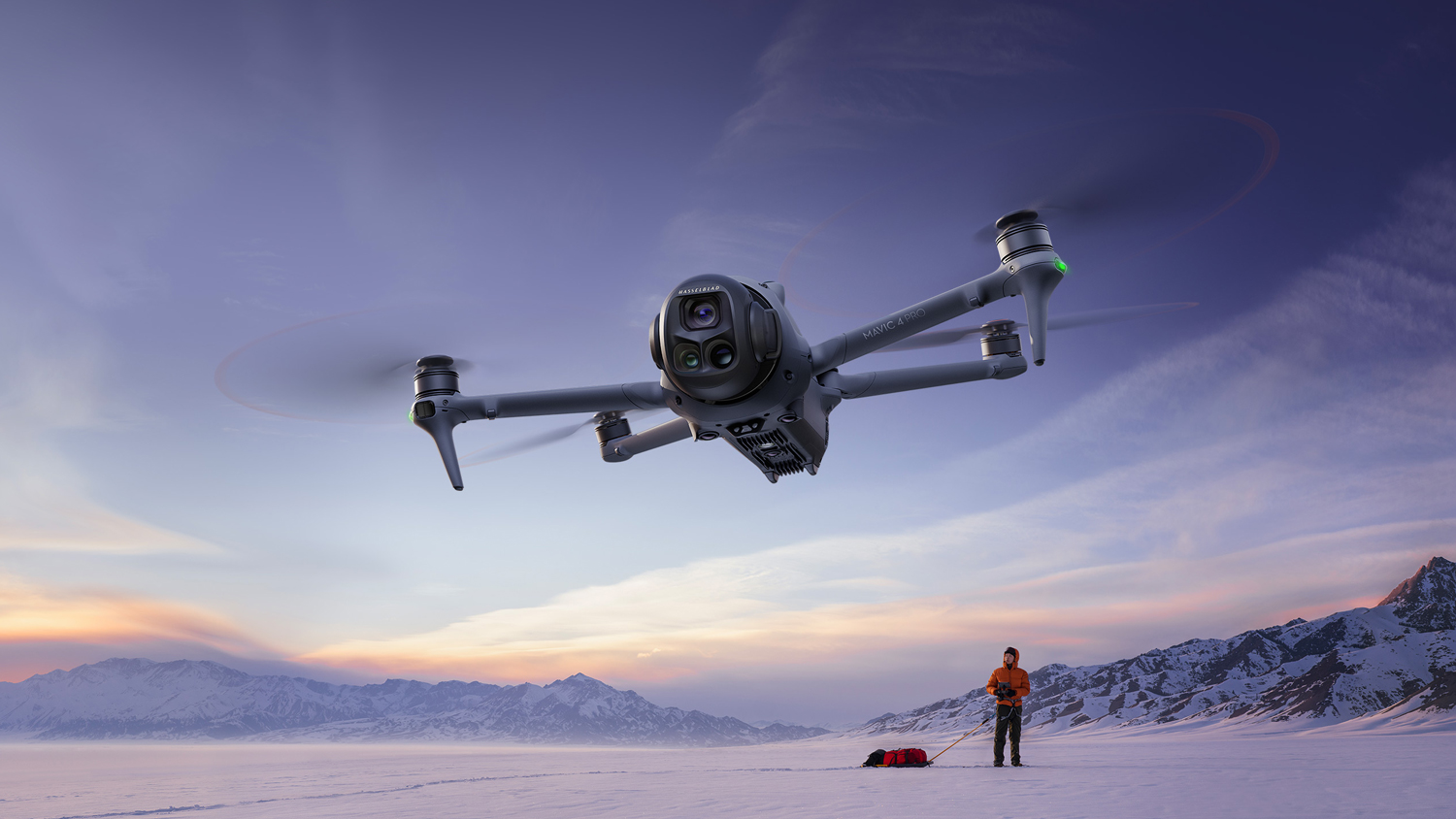
The word “pro” is right there in the name of the DJI Mavic 4 Pro Drone with Fly More Combo and for good reason. It is the absolute best self-contained drone for filmmaking available today. The Mavic 4 Pro platform features an impressive Triple Camera Array which start a Hasselblad camera and Four Thirds sensor—massive for compact drone systems. The ball-shaped Infinity Gimbal provides 360˚ rotation, letting you create aerial Dutch angles and other dramatic, gravity-defying movements. It also offers 70° upward shooting, enabling you to capture awe-inspiring framing of mountains and tall urban structures. The quality from the main camera is stunning and the dual telephoto cameras add variety with 6x and 24x zoom options. Making sure we hit the highlights, the Mavic 4 Pro offers 6K 60 fps, DCI 4K 120 fps, 100MP still photos, 10-bit D-Log M color mode, HLG HDR, Night Shots, Hyperlapse, and an almost endless list of other features. This drone checks all the boxes we listed above and the “Fly More” Combo grants you just that—the ability to operate longer with the inclusion of 2 additional batteries, a parallel charger, and 3 spare propellers.
Best Cinema Drone for Even More Pro, Full-Frame Filmmaking: DJI Inspire 3
Can’t give up the full-frame sensor or lenses of your terrestrial camera system? For that you’ll want to step up to the DJI Inspire 3. Featuring the Zenmuse X9-8K gimbal camera, filmmakers will be able to bring their own lenses, provided they adapt to the DJI DL mount—and make use of the system’s full-frame image sensor. This is essentially the same camera as the Ronin 4D-8K, which has found its way on some Hollywood film sets as a testament to its quality. This full-frame sensor can record in 8K raw at up to 75 fps and is unmatched by self-contained drones in terms of dynamic range and detail. Operators who want an additional or spare drone for their fleet can now opt for the DJI Inspire 3 Drone Standard Combo, which includes 4 batteries but not the controller, cables, etc. that come with the drone kit above.
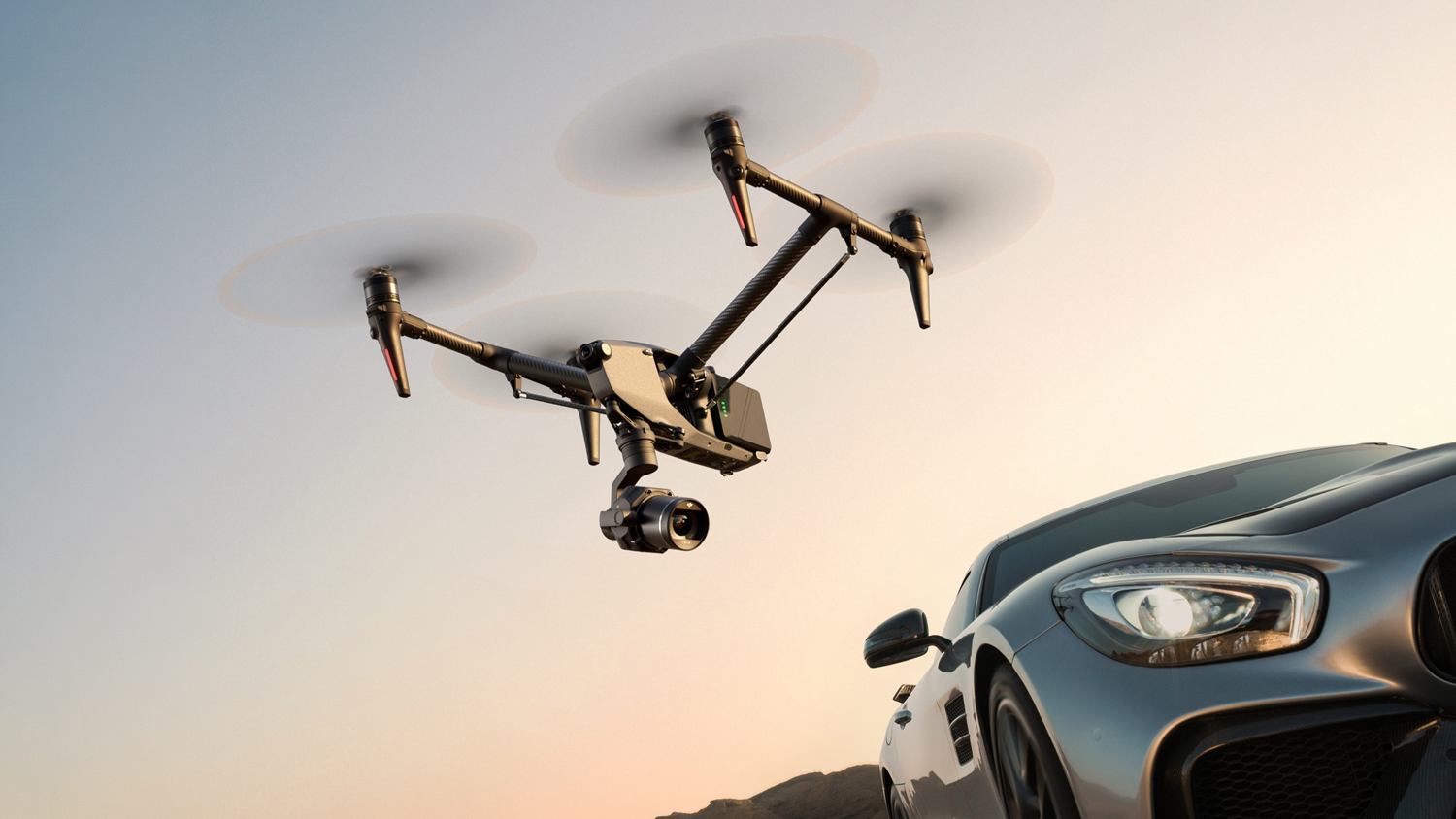
Raw, 8K, full-frame, and your own lenses? The Inspire 3 is a tough drone to beat if you are looking for the best you can get without bringing your own camera to the party. The downsides of the Inspire 3 are the price and the size. This isn’t a drone you can easily throw into your backpack on a whim and even the batteries you’ll need to keep this thing in the air are going to weigh you down.
Best BYOC (Bring Your Own Camera) Cinema Drone: FREEFLY Alta X Gen2 & Inspired Flight IF1200
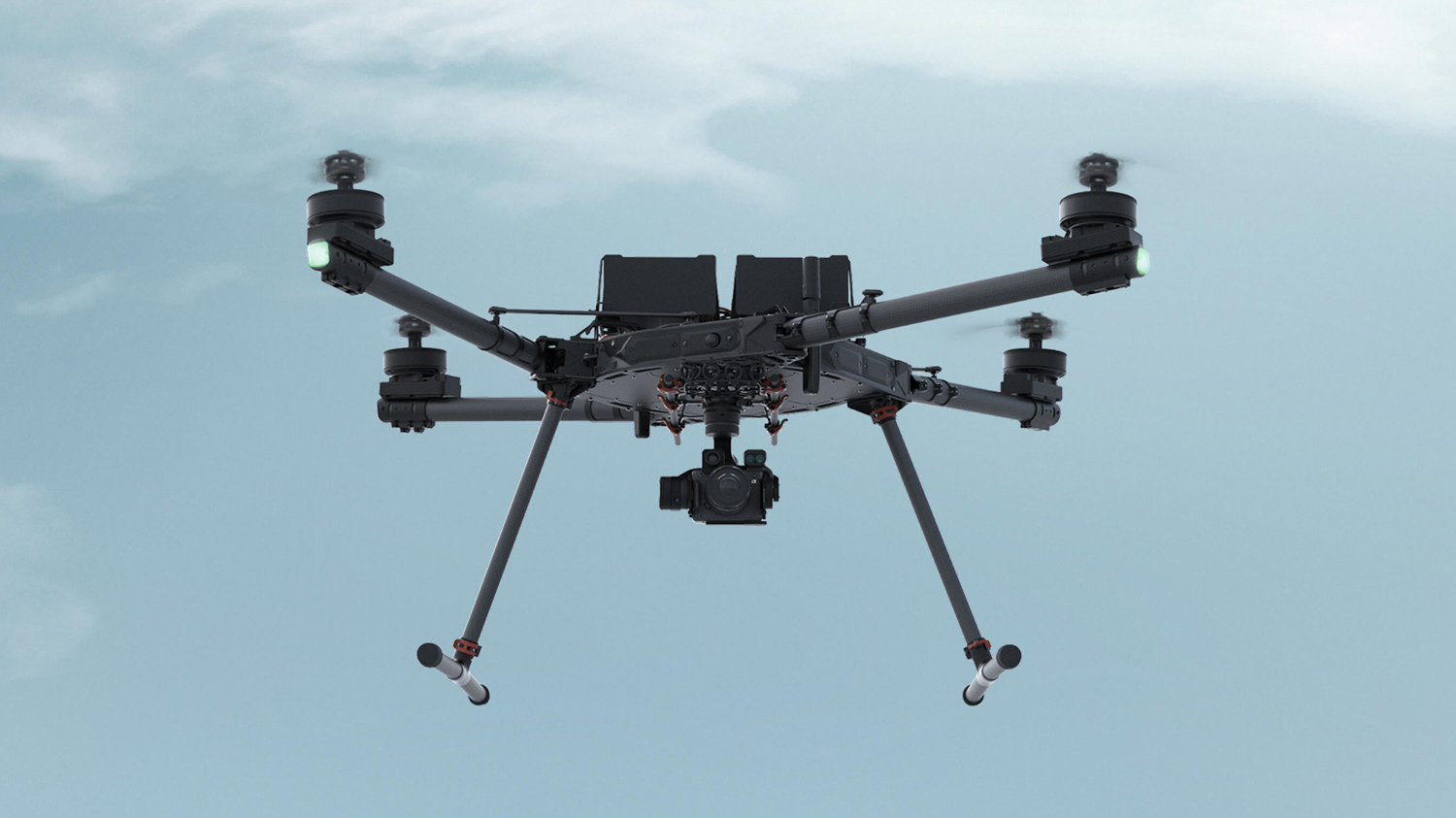
We are stepping into ultra-high-end aerial imaging by looking at drones that allow you to bring your own camera system. Drones like the FREEFLY Alta X Gen2 and the Inspired Flight IF1200A Hexacopter are powerful platforms that allow you to bring your own gimbal and camera. FREEFLY is system agnostic, enabling you to use it with your mirrorless or cinema camera as well as with some interesting ultra-high-speed cameras from FREEFLY. The Alta X Gen2 will be more versatile for professional cinema rigs as it has a max payload rating of 35 lb. The Inspired Flight IF1200A has a hexacopter design for increased stability, a 19.1 lb max payload, and a flight time of over 30 minutes with an 8 lb payload—suitable for longer takes using a smaller cine-style camera. If your production contract requires NDAA compliance, the IF1200A fits that bill and the Alta X Gen2 is available with that option.
Best Cinema Drone for Everyday Content Creation: DJI Air 3S
Coming back down to reality for the rest of us is a good pick for everyday content creation: the DJI Air 3S. This drone hits the sweet spot of drone functionality, size, and price. Relatively affordable, relatively compact and lightweight, and still loaded up with more pro-level features like a Dual Camera System, the Air 3S is going to be the best pick for most people and especially for travel.
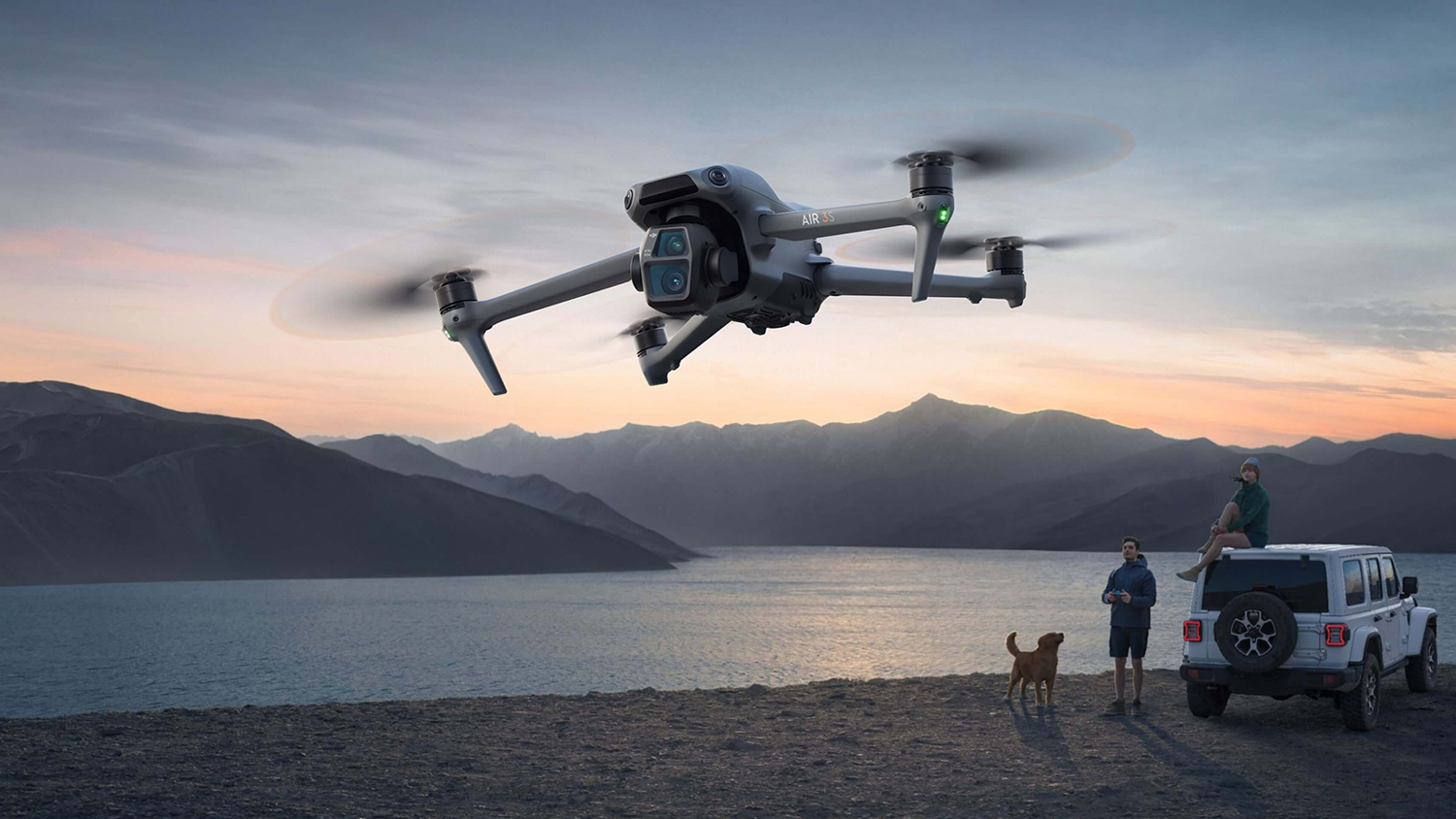
A 1” sensor for the main wide-angle camera provides excellent image quality for photos and video while a 70mm secondary camera provides a unique tele perspective that allows shooters to get even closer to their subject. The cameras both boast 14 stops of dynamic range and 4K 60 fps HDR (and 120 fps non-HDR) recording, which are some pro-level features. Tack on 45 minutes of flight time, excellent obstacle avoidance even at night, and tons of automated tracking and capture modes and most shooters will be very happy with the Air 3S as their primary drone.
Best Cinema Drone for Backpackers and Social Media Mavens: DJI Mini 5 Pro
The main trick of the DJI Mini 5 Pro is the size—it’s under 250g while keeping impressive features like 4K 60 fps HDR recording, 42GB of internal storage, 360-degree obstacle sensing, and 36 minutes of flight time. That is enough to convince many to go for it, especially those with limited space in their pack, like hikers and outdoors enthusiasts. The coolest gimmick, however, is the gimbal’s ability to rotate the camera 90˚ for true vertical shooting. Make full use of that sensor to capture social media ready footage of the highest quality.
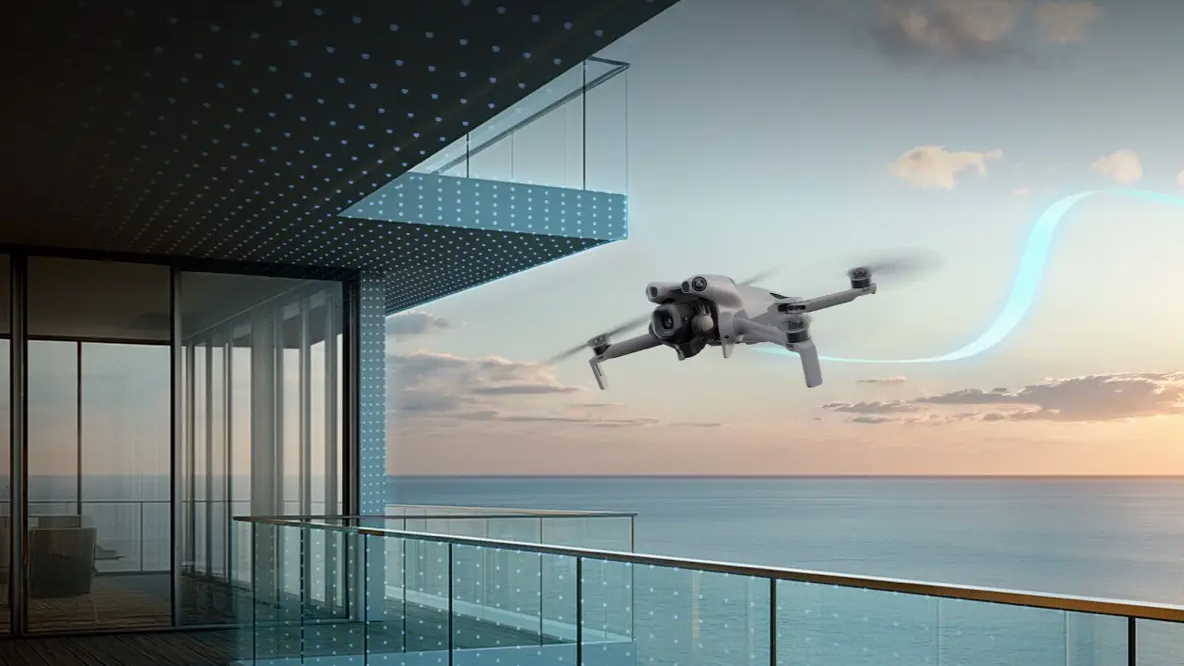
The 1” CMOS sensor isn’t quite as big as the bigger drones but DJI leverages a fast f/1.8 aperture and Dual Native ISO Fusion to make sure dynamic range isn’t compromised on this model. This is tiny drone with image quality that punches well above its weight class.
Best Drone for First-Time Fliers: DJI Mini 4K
Weighing less than 249 g — the magic number for recreational flight without FAA registration —the DJI Mini 4K is an affordable and accessible drone option for first-time fliers. Despite the ultra-compact size, the Mini 4K offers great image quality in, you guessed it, 4K resolution that makes it a capable option for shooters just beginning their drone journey. It’s a basic drone though there are enough features taken from DJI’s high-end models that make it fun and enjoyable for content creation.
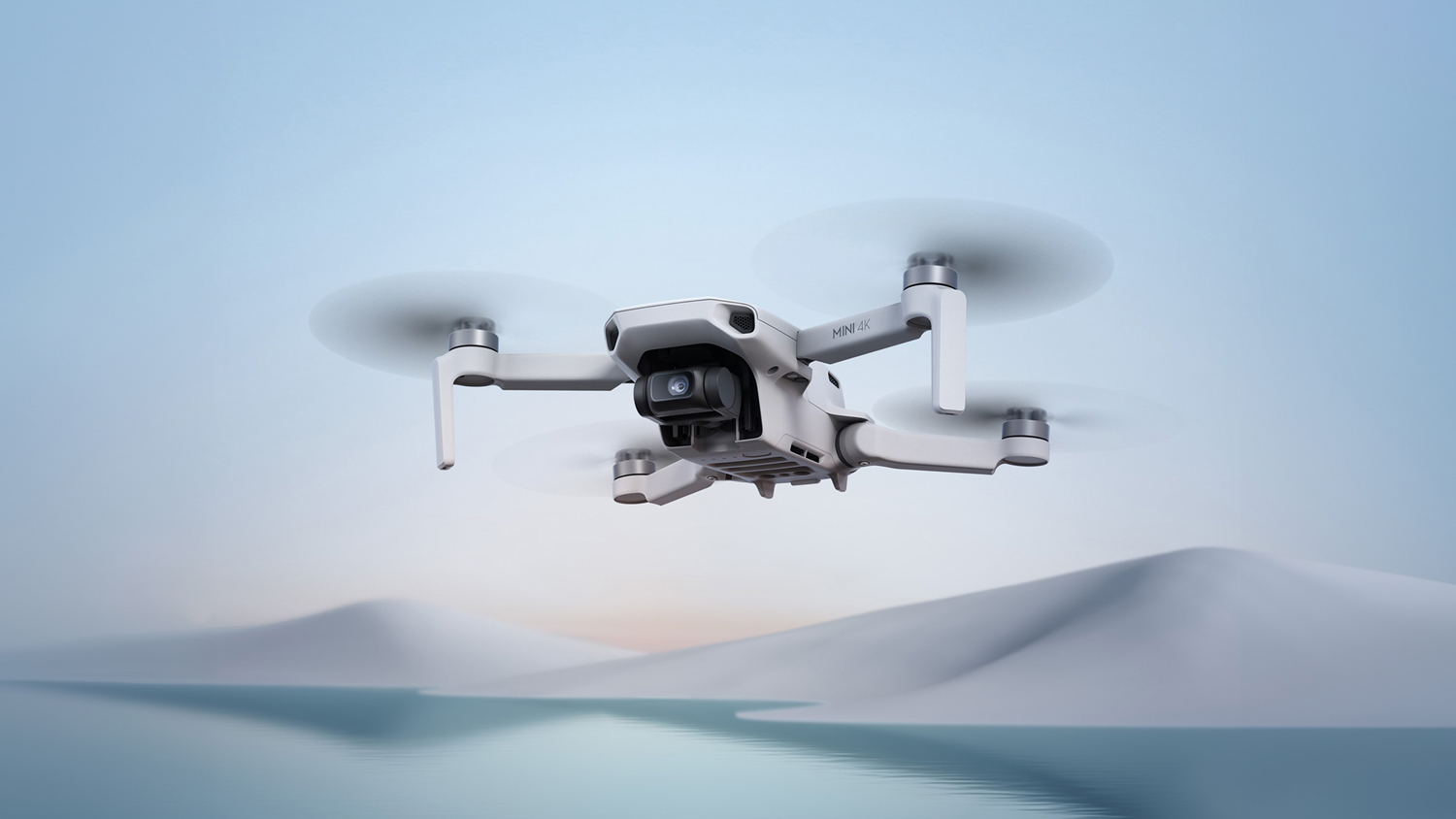
A side benefit is the affordable price point. Nobody ever wants to crash a drone—even the “cheap” ones. But if we’re being honest with ourselves, we need to accept that it’s always a possibility. A lighter and more affordable drone will not only soften the blow to your bank account but also to whatever object is in the path of the drone which makes it a safer option as well. Learn here and move up to something serious when you are comfortable.
Learn more about these drones on the B&H site and check out the Explora page for the latest videography news, tips, and reviews. If you still have any questions about what drone is right for you, please reach out to our expert sales team via chat, phone, email, or by stopping by the B&H SuperStore in New York City.
